 InkAI
InkAI 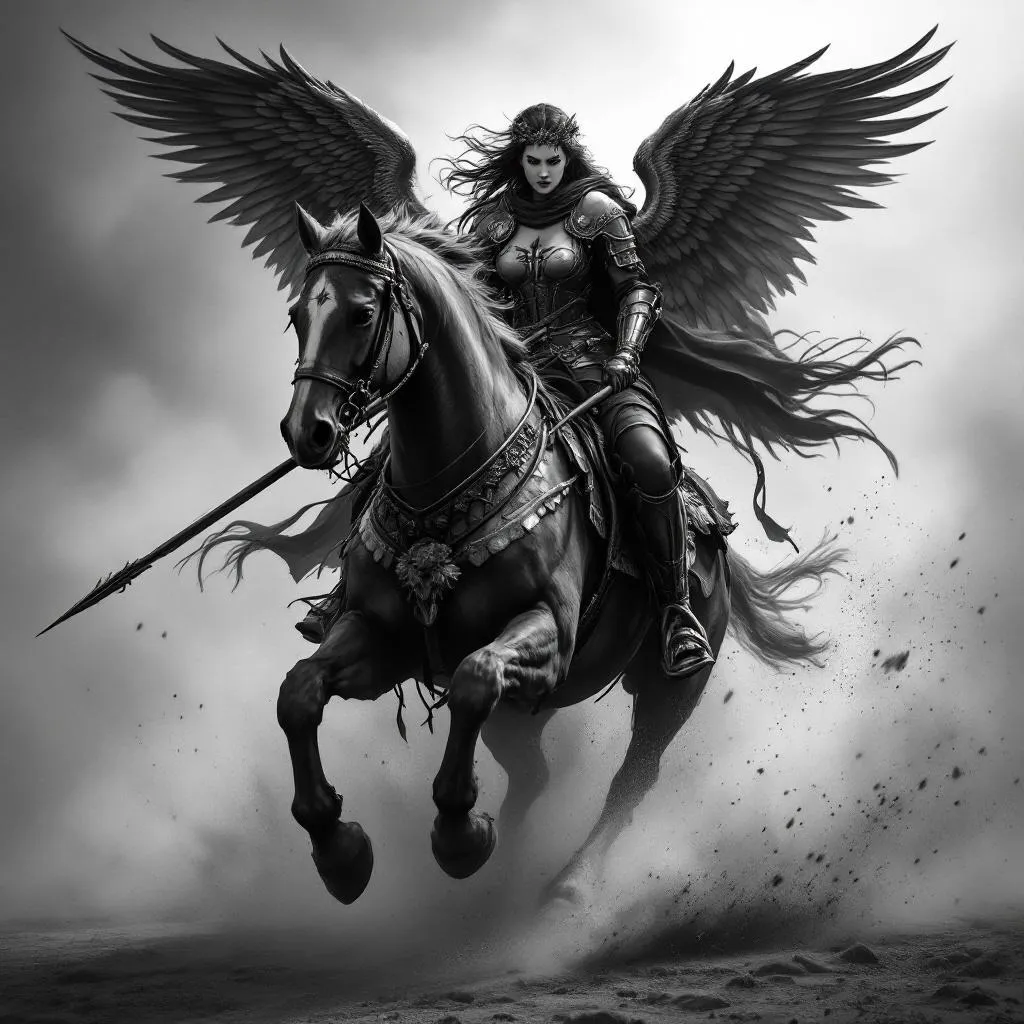
Tattoo Meaning & Symbolism
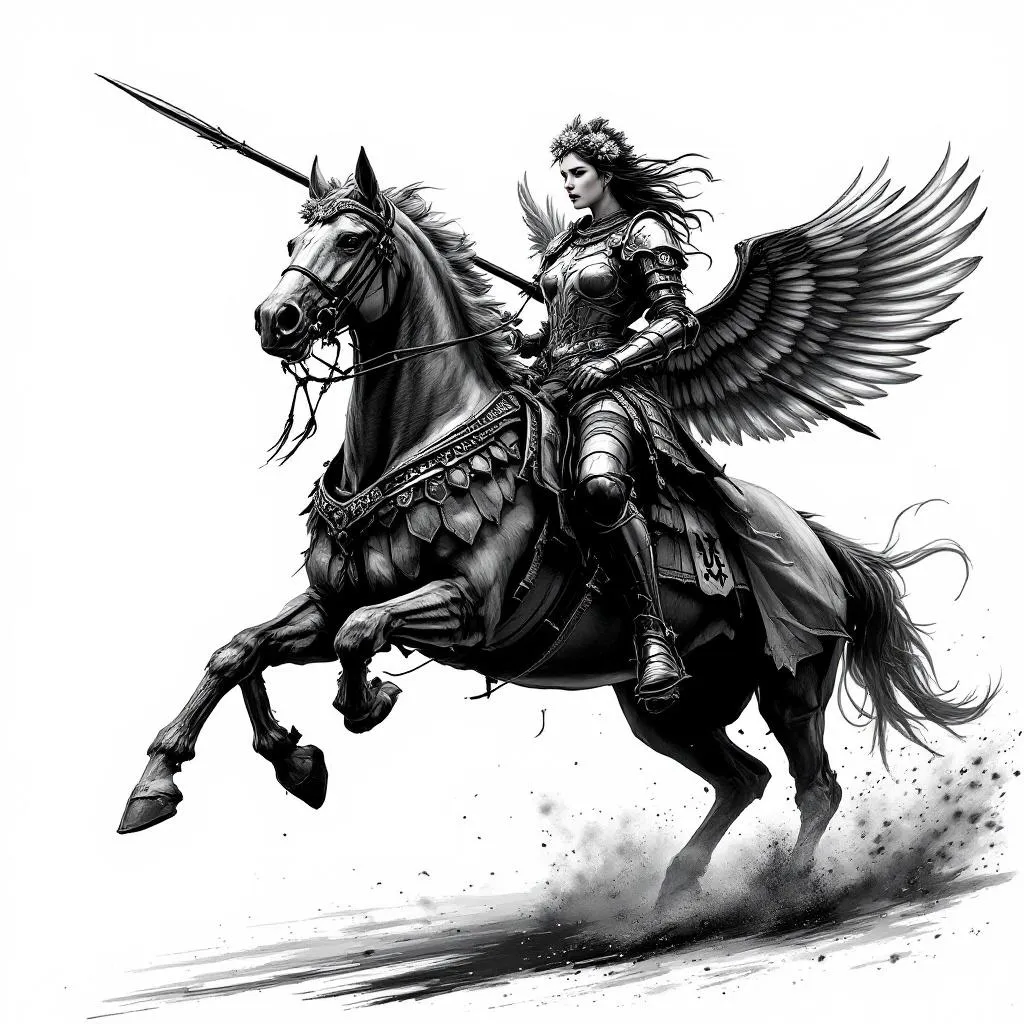
This design presents a female warrior mounted on a charging war horse, a composition that reads as a narrative of active resistance, personal sovereignty, and triumph through struggle. The Ukrainian Tryzub emblazoned on both the rider’s chest armor and the horse’s barding ties the image directly to Ukrainian national identity, symbolizing statehood, lineage and spiritual continuity. The spear with two severed heads functions as a stark emblem of hard-won victory and the brutal clarity of justice in battle; in a personal reading it can represent past adversaries overcome or burdens released. The flower crown on the warrior’s head—visually reminiscent of a traditional Ukrainian vinok—creates an intentional contrast: it softens and humanizes the figure, asserting femininity, cultural rootedness and the preservation of beauty even amid conflict. The historically accurate Polish Winged Hussar wings echo a legacy of cavalry valor and discipline; their rigid wooden frames and structured rows of long feathers suggest martial order, speed and airborne menace rather than fantasy. Overall, the diagonal forward-cutting pose of the horse and the visible twist between shoulders and hips dramatize momentum and agency: this is not a passive icon but a force moving through and reshaping its world.
Tattoo Style & Placement
This tattoo is best executed in realistic black and grey with high contrast and cinematic lighting to preserve the strong silhouette and fine historical details. The composition demands a large, elongated canvas so the horse’s diagonal motion and the wing frames can read at full scale without compression—ideal placements are a full back panel, a large thigh wrap, or a rib-to-hip piece that follows the body’s natural curve. On the back, the diagonal trajectory can cut across the scapula and down toward the opposite hip, emphasizing the horse’s twist between shoulders and hips. On the side ribcage or thigh, the design can exploit the body’s verticality to show the horse cutting across the frame; these placements also allow the wings to sit close to the rider’s shoulder blades or flank, echoing the intended proximity to the body. Fine-line rendering for facial anatomy, armor detail, feather rows and the Tryzub requires crisp needlework and bold contrast for longevity; plan for a larger needle grouping for shadow blocks and a tighter grouping for the delicate feather and spear details. Dust, ground impact and directional motion should be etched with textured shading and negative-space highlights so the sense of speed survives fading over time.
Personal & Cultural Significance
Placing the Tryzub on both armor and barding makes the piece overtly national and can signify personal identification with Ukrainian heritage, defense of homeland, or a tribute to ancestors and contemporary struggles. Combining that symbol with Polish Winged Hussar wings layers historical cavalry symbolism onto a modern, feminine warrior—the wings reference a specific 16th–17th century cavalry tradition with curved wooden frames and regimented feather rows, invoking elite horsemanship and battlefield dominance rather than mythic flight. The flower crown anchors the figure in folk tradition and can indicate reverence for cultural ceremonies, rites of passage, or a dedication to the endurance of beauty and life. The severed heads are a heavy, provocative element; within cultural or familial contexts they can represent vengeance, justice, survival, or the defeat of oppressors, but they will also be seen as confrontational in many public settings. Because of these layered meanings, it’s important to discuss with the client the exact phrasing of national symbols, the historical accuracy of the wings, and the ethical implications of violent motifs to ensure the final tattoo aligns with their personal narrative and cultural respect.
Similar Tattoo Ideas
- Full-back Polish Winged Hussar scene with mounted lance and banner
- Diagonal side-rib Ukrainian lancer in black and grey with vinok crown close-up
- Thigh-wrapped dynamic charging horse showing torso twist and dust trail
- Female warrior portrait in plate armor with Tryzub breastplate and floral wreath
- Realistic spear-and-trophy composition focusing on weaponry and ceremonial trophies
Conclusion
This tattoo is a cinematic, historically informed statement: a feminine warrior who merges Ukrainian national identity, Polish Hussar martial tradition, and personal triumph into a single, forward-driving image. The success of the piece depends on scale, anatomical fidelity, and careful rendering of the wings’ wooden frames, the horse’s diagonal twist, and the Tryzub iconography. When executed in high-contrast black and grey with attention to silhouette and ground impact, the design reads as both a personal declaration and a visually arresting epic—simultaneously delicate in its floral crown and uncompromising in its motion and symbolism. Discuss the cultural specifics and the depiction of violent elements with your artist so the finished work reflects intention, respect and lasting visual power.
您可能喜欢的相似设计
试戴
Preparing your design...
