 InkAI
InkAI 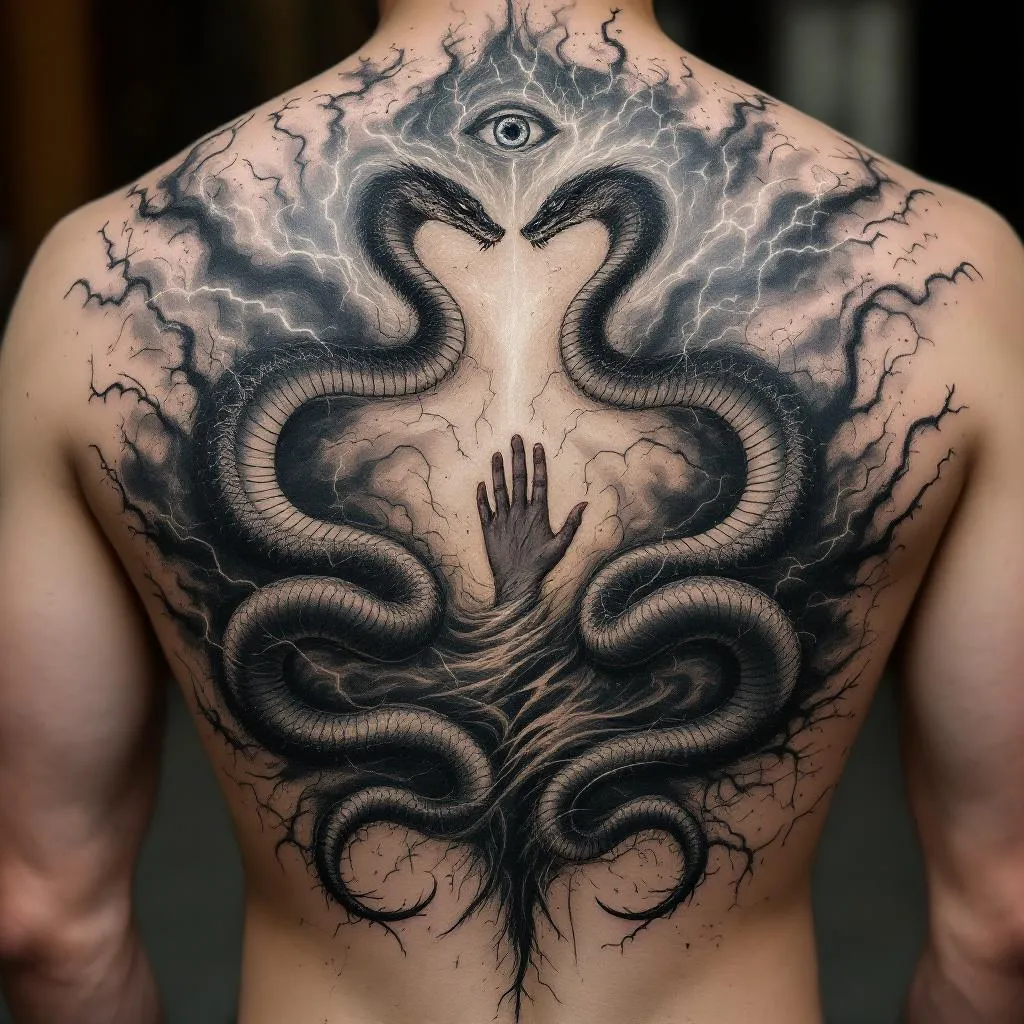
男模特满背纹身
Watercolor style
✨ 设计你的梦想纹身设计描述
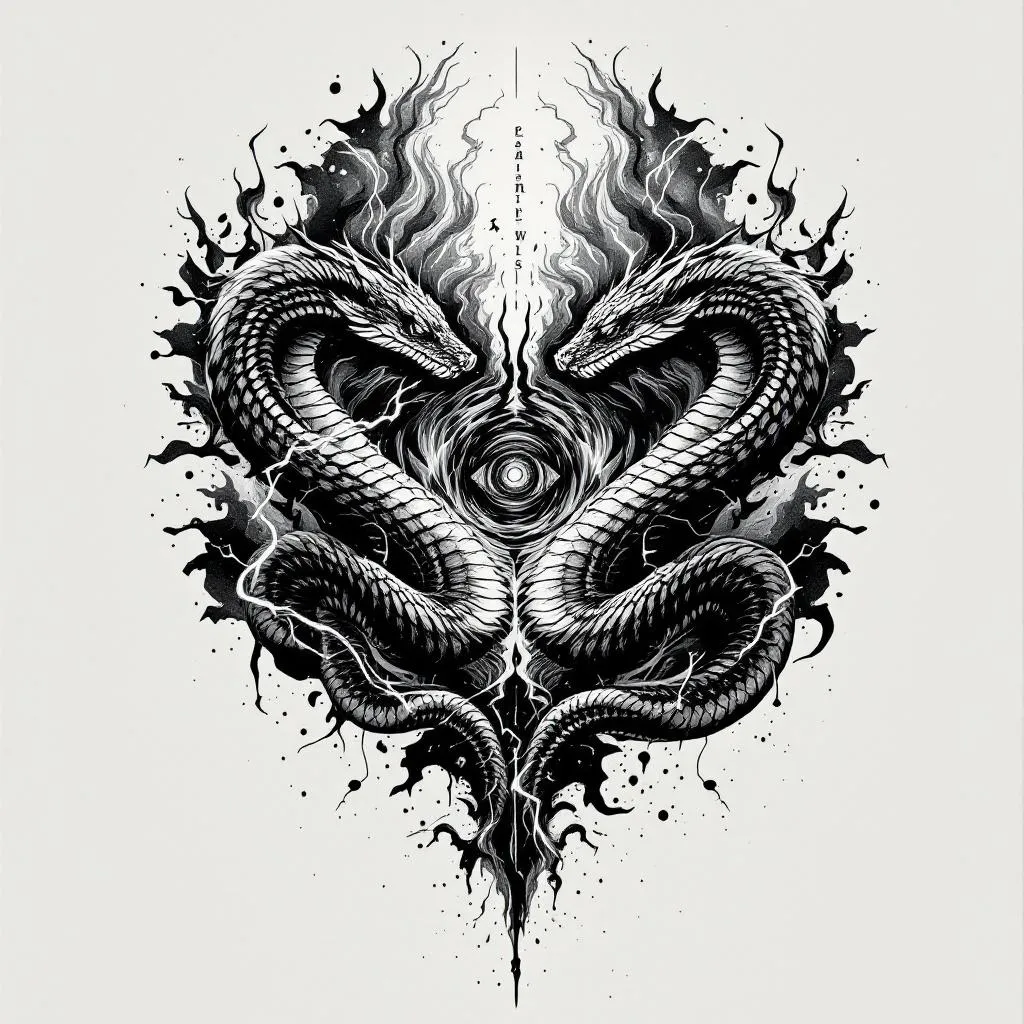
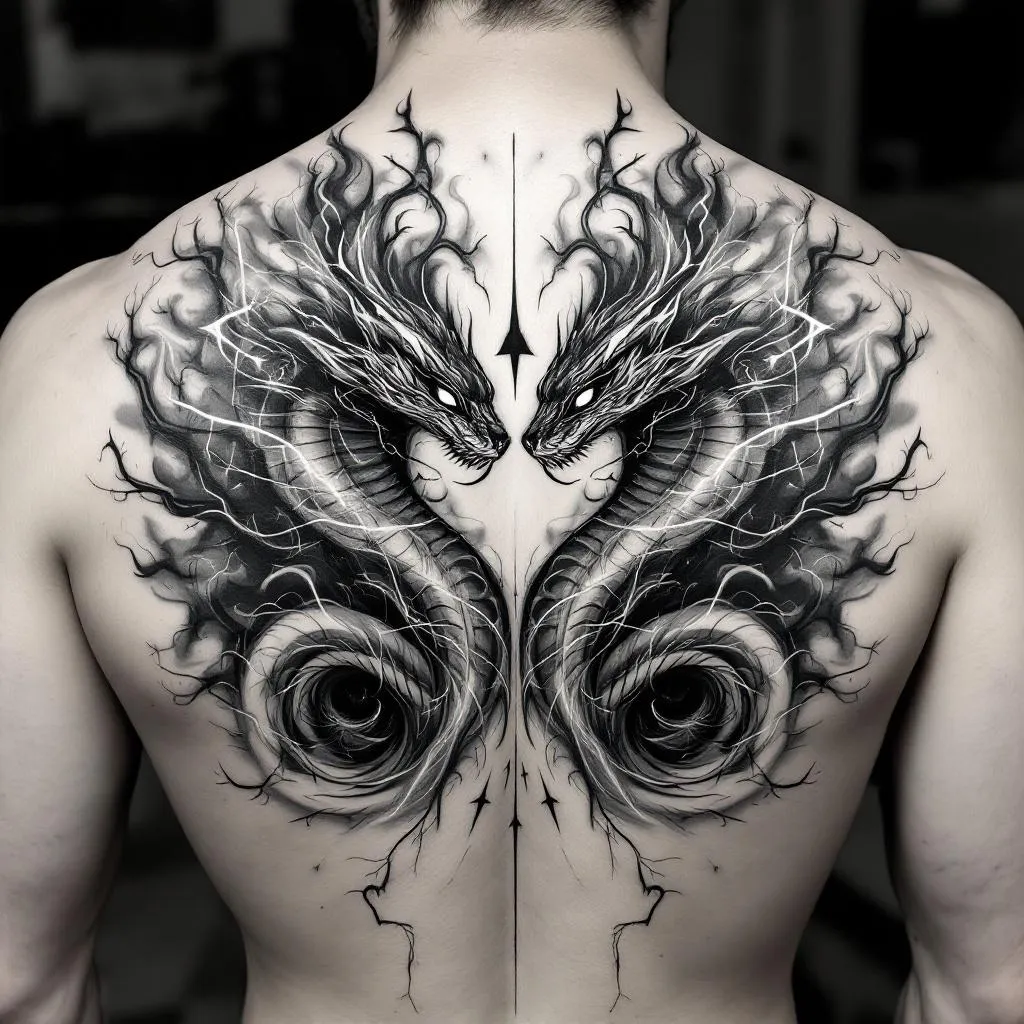
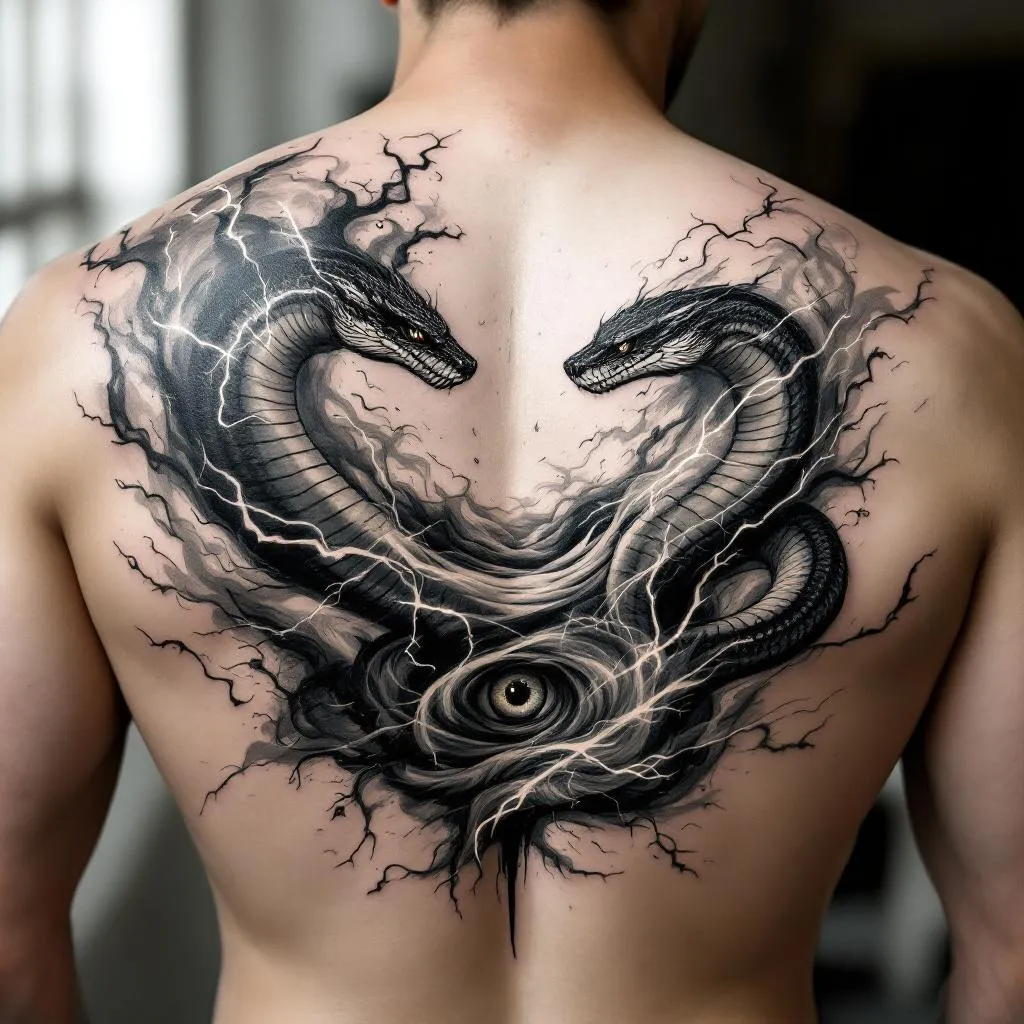
Male model with a full back tattoo featuring two mirrored cobras in an abstract, dynamic design. Black and gray with subtle color accents, a central hand, eye energy motif, and a derealization vortex, all set in negative space to express inner conflict and surreal awareness.
Tattoo Meaning & Symbolism
This full-back composition of two mirrored, slightly stylized cobras converging toward a central derealizing vortex is designed to read as a visual conversation about inner conflict and emergent awareness. The facing cobras are not aggressive portraits but minimalist mirror-forms that symbolize dual aspects of the self—tension versus acceptance, defense versus curiosity. Their sinuous movement through the chaotic environment (lightning, swirling wind/tornado energy with faint traces of fire or water) represents emotion and cognition in motion: sudden shocks of insight (lightning), cyclical rumination (tornado/wind), and subtle tempering forces (fire or water hints). The central distorted space — a vortex that seems to bend or dissolve reality — is the tattoo’s emotional core, a surreal depiction of derealization, ungraspable thought, or a transformational interior rupture that both separates and unites the mirrored snakes. Minimal symbolic motifs — a faint eye-energy and a simplified hand outline tucked into the flow — act as whispering anchors: seeing the self differently and the human impulse to reach toward understanding. Integrated, slightly distorted micro-text woven into the lightning or wind serves as personal mantra or fragmentary thought, a literal inscription of the internal voice that rides the composition’s currents. Overall, negative space and airy composition make silence as meaningful as ink, conveying that absence and restraint are part of the design’s psychological language.
Tattoo Style & Placement
Executed primarily in black and grey with very small, intentional color accents, this design is optimized for a full-back placement. The mirrored cobras sit along and just off the spine so their symmetry reads strongly from the center line; their heads align near the upper thoracic area or shoulder-blade zone so the eyes and small color accents catch movement when the wearer turns. The chaotic elements — lightning forks, swirling wind bands and tornado energy — wrap laterally across the scapulae and taper downward into soft fading abstract areas that use stippling, feathered greys, and thin linework rather than heavy solid blacks. Line-weight variation is essential: crisp, detailed lines for the cobra scales and eye energy; soft, airy washes and dotwork for the surrounding chaos and the vortex edges. Microtext should be executed with very fine needles and low contrast so it reads only on close inspection; avoid heavy block lettering. Maintain open corridors of negative space between major elements to preserve the minimalistic, breathable feel and prevent overcrowding on the full-back canvas.
Personal & Cultural Significance
On a personal level, this tattoo functions as a map of psychological states: confrontation and reconciliation (the mirrored cobras), ephemeral crisis or dissociation (the derealizing vortex), and the small, human gestures toward seeing and touching meaning (the faint eye and hand outline). Culturally, the snake is a layered symbol: it carries connotations of transformation, vigilance, kundalini energy, and regeneration across many traditions. This design intentionally stylizes the serpents rather than replicating any cultural-specific iconography, allowing the wearer to adopt the universal themes without invoking a single religious or mythic narrative. The minimal color accents can carry personal cultural or emotional references (a tiny crimson spark for ancestral memory, a teal pulse for calm), but the work’s restraint makes it adaptable to individual histories and belief systems while avoiding overt cultural appropriation through overt religious imagery.
Similar Tattoo Ideas
- Mirrored minimalist serpents with a yin-yang negative-space center
- Abstract tornado with an embedded eye and microtext spiraling inward
- Pair of stylized wolves facing a dissolving geometric moon
- Split phoenix wings around a small surreal vortex, subtle red/orange accents
- Minimal hand outline interacting with floating, fragmented script
- Two koi mirrored through swirling water/storm energy with tiny blue highlights
Conclusion
This full-back design balances emotional intensity with compositional restraint: mirrored cobras and a central derealizing vortex read as both conflict and metamorphosis, while negative space and selective detail keep the piece airy and wearable over time. For best results, collaborate with a tattoo artist who excels in fine-line work, soft grey washes, and microtext, and plan the placement to follow spinal and scapular anatomy so the symmetry and movement remain coherent with the body. Small color accents should be pre-planned and tested for longevity. The final piece will be a contemplative, surreal statement — simultaneously minimal and deeply personal — that reveals more the closer you look.
您可能喜欢的相似设计
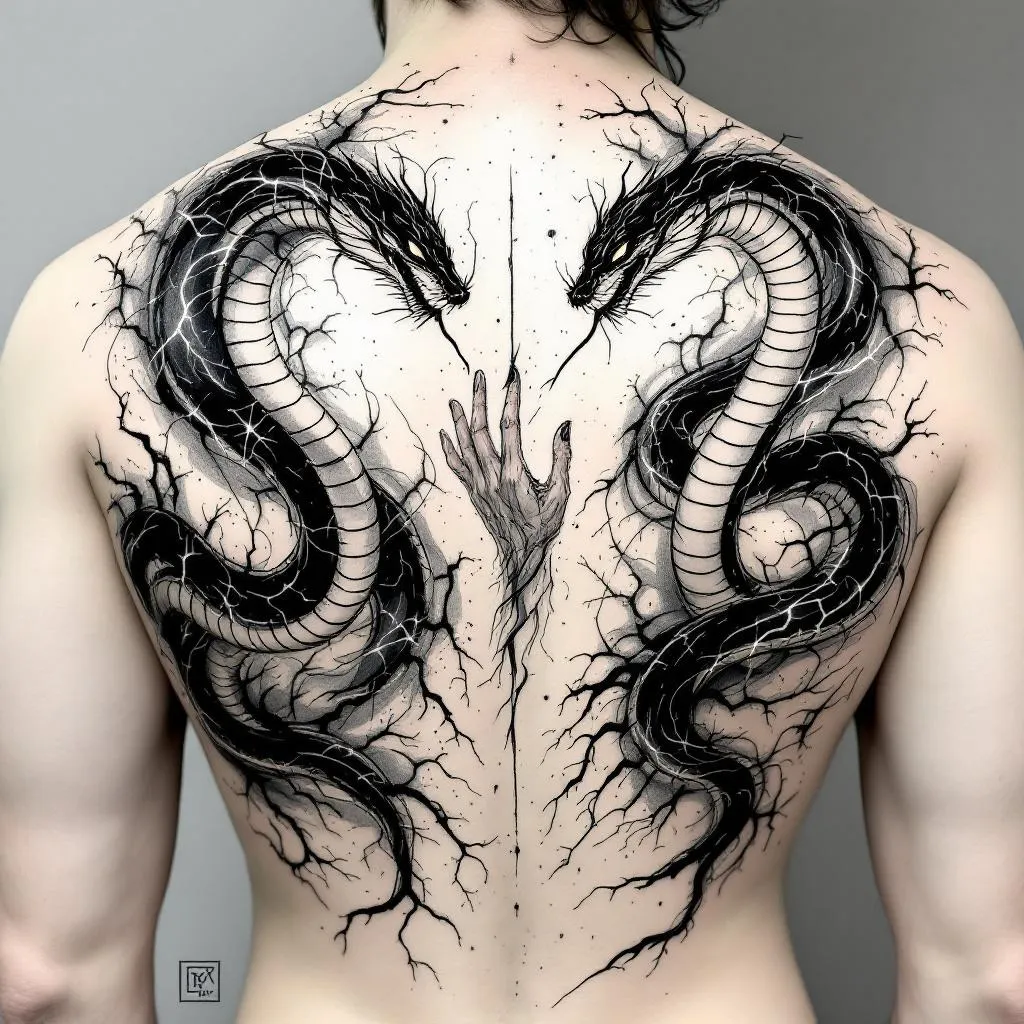
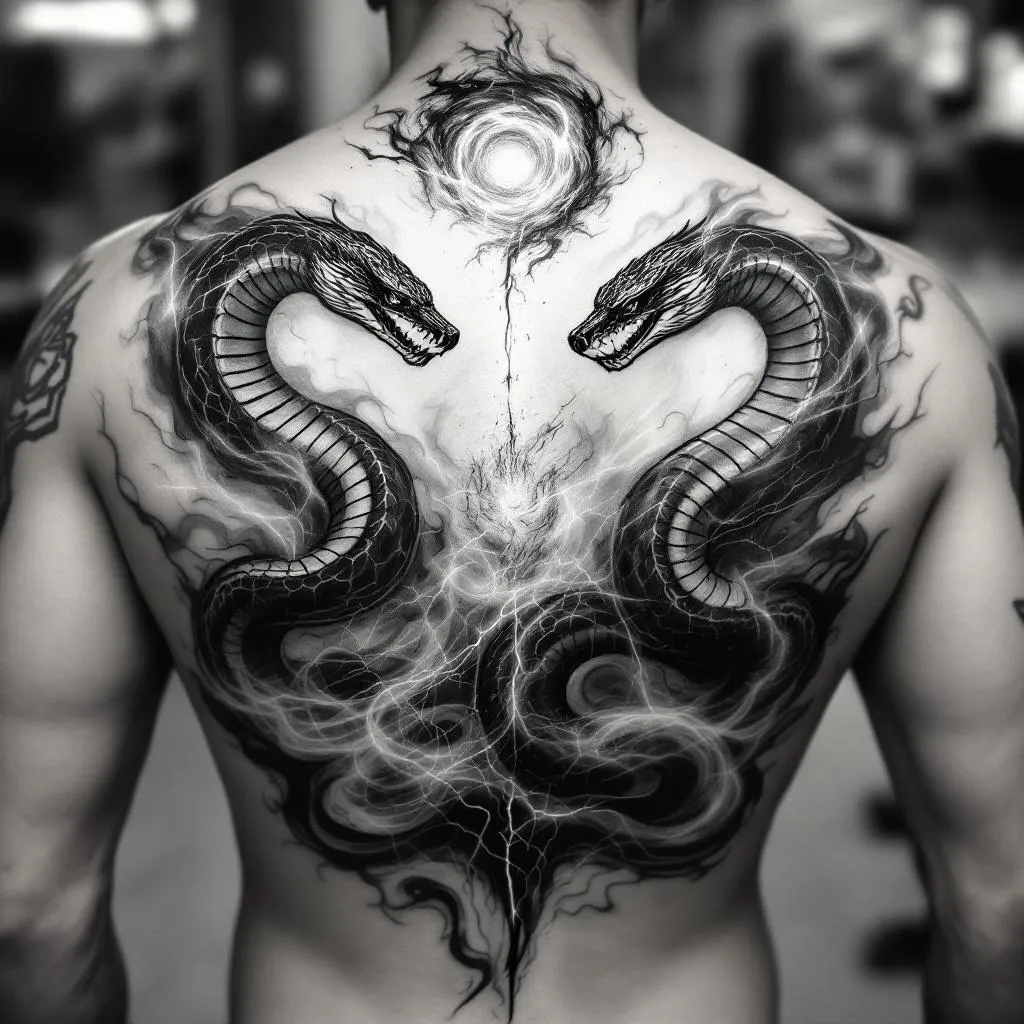
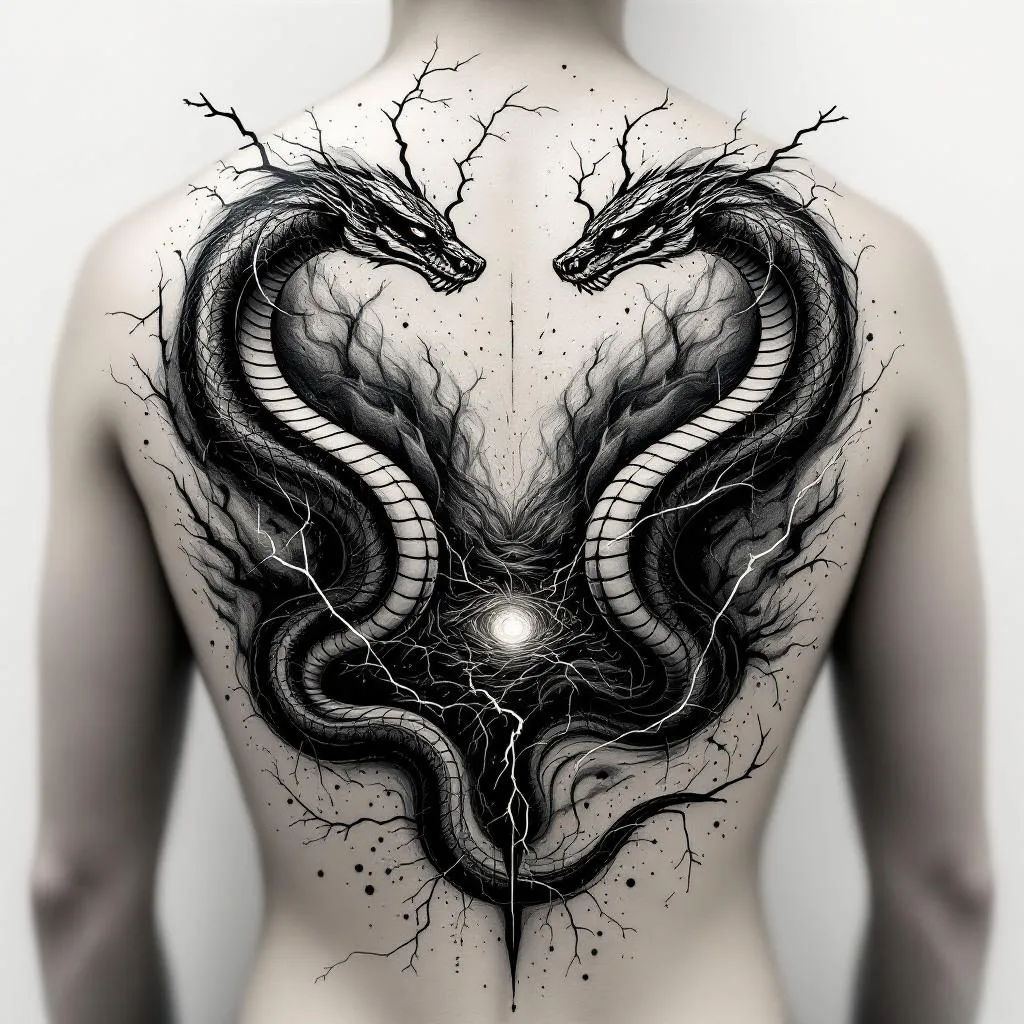
试戴
Preparing your design...
