 InkAI
InkAI 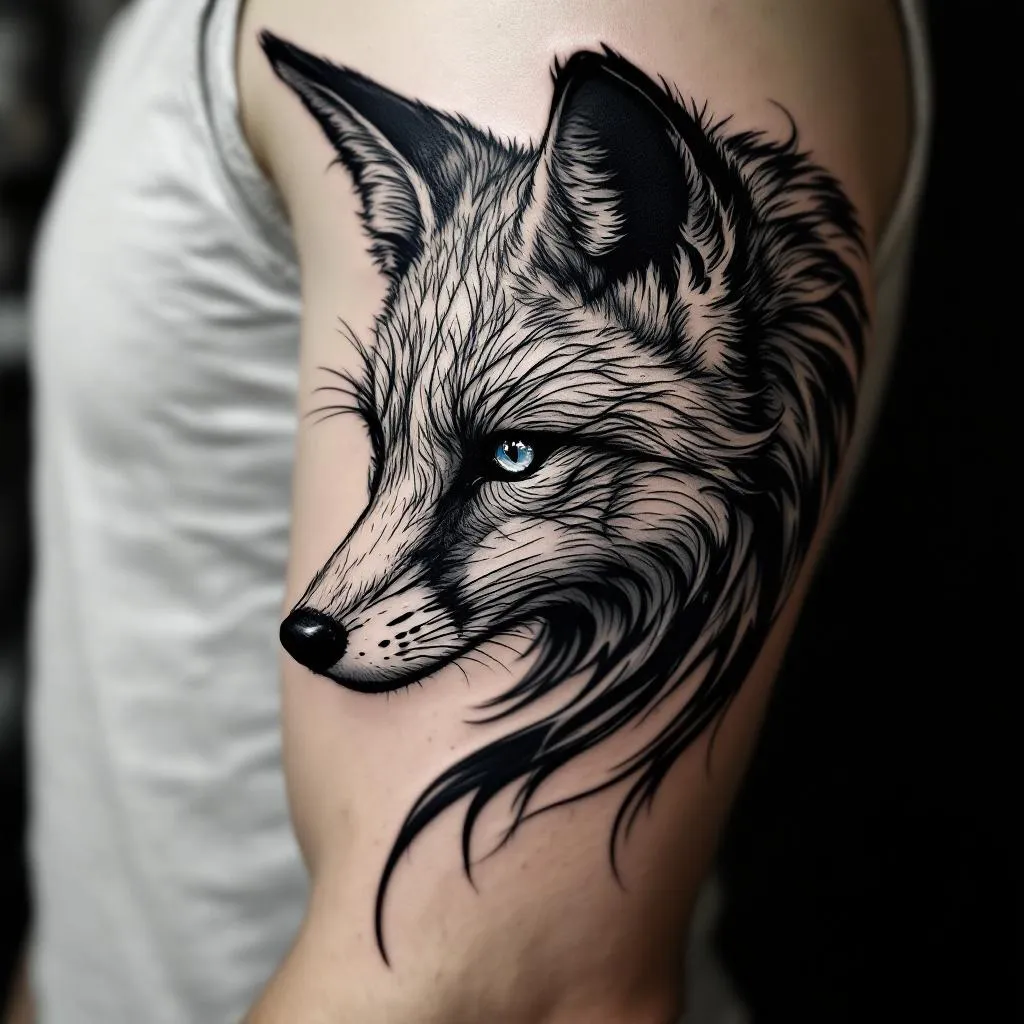
九尾狐纹身图案
Arm placement
✨ 设计你的梦想纹身设计描述
A stunning nine-tailed fox tattoo depicted in a heavy blackwork style, featuring intricate detailing and bold lines. This captivating design, located on the arm, showcases the fox's striking features and symbolic significance.
Tattoo Meaning & Symbolism
A nine-tailed fox rendered in heavy blackwork combines two powerful layers of meaning. The fox itself is a symbol of intelligence, transformation, and liminality: a creature that moves between worlds, often a shapeshifter and a keeper of secrets. The specific number nine amplifies those themes — in East Asian myth the ninth tail is the mark of a fully awakened, ancient spirit, representing accumulated wisdom, longevity, and near-divine power. In a personal reading, this design can signal a hard-won maturity, mastery of one’s instincts, or an embrace of complexity and paradox: part trickster, part guardian.
The heavy blackwork execution intensifies those connotations. Solid black fields and stark silhouettes emphasize permanence, bold intention, and a visual statement that reads from distance. Where delicate linework might suggest fleeting cleverness, heavy blackwork reads as deliberate authority — the fox is not ephemeral here, it is monumental and unambiguous in purpose.
Tattoo Style & Placement
This specific tattoo is best visualized as a high-contrast composition: broad, uninterrupted black fills for the body and tails, with careful use of negative space to define fur edges, facial features, and the separation of nine tails. Tapered tail shapes can be carved out with clean negative-space lines or thin skin breaks between heavy fills so each tail remains distinct even when clustered. Small areas of dotwork or skin breaks can add subtle texture without compromising the bold black aesthetic.
Because the design requires room to read — nine separate tails and the fox’s posture — ideal placements are larger, relatively flat canvases: upper back, chest, full or half-sleeve, thigh, or across the ribcage. For visibility and flow, arrange the tails to follow the body’s natural curves (along the shoulder blade, wrapping down the arm, or fanning across the ribcage). On smaller placements like the forearm or calf, simplify tail count or exaggerate spacing so the nine tails stay legible in heavy blackwork.
Skin tone and aging matter: heavy blackwork holds up exceptionally well across skin tones, but on darker skin choose larger, bolder shapes and more negative-space separation so details don’t blur over time. Line thickness should be adapted to placement to ensure tails and facial features remain crisp as the piece ages.
Personal & Cultural Significance
This design sits at the intersection of personal mythmaking and East Asian folklore. In Japanese tradition the nine-tailed fox (kyūbi no kitsune) often appears as a powerful yokai and, when benevolent, a messenger or avatar of Inari, associated with prosperity and protection. In Chinese stories the nine-tailed huli jing can signify spiritual elevation or, in some tales, dangerous seduction; in Korean myth the kumiho is often a morally ambiguous or malevolent figure. Choosing this motif invites dialogue with those myths: are you adopting the protective, wise aspect, the cunning trickster, or a hybrid of both?
Because the image carries sacred and mythic weight in multiple cultures, consider how you frame it. If incorporating religious symbols (torii gates, Inari regalia, temple seals) or textual elements, research their meanings and consult with an artist sensitive to cultural context to avoid unintentional disrespect. Personalize the piece with biographical elements — a specific pattern in the tails, a hidden glyph, or a background motif — to make the fox not just a mythic reference but a distinct symbol of your narrative.
Similar Tattoo Ideas
- Nine-tailed fox silhouette with negative-space tail separations
- Kitsune mask in heavy blackwork, tails hinted behind the mask
- Inari fox guardian with torii gate silhouette in blackwork
- Huli jing with flame-like tails and heavy black fills
- Fox skull rendered in bold blackwork with nine tail shapes fanning out
- Nine-tailed fox half-sleeve combining solid black and patterned negative space
- Geometric heavy-black fox where tails are separated by angular voids
- Minimal nine-tailed fox wrist or ankle silhouette (simplified for small scale)
- Kitsune and crescent moon composition, blackwork body with dotwork moon texture
Conclusion
A nine-tailed fox in heavy blackwork is a striking emblem of power, transformation, and carefully chosen visibility. It reads as both ancient myth and modern statement: a creature of cunning and consequence, made monumental by deep black fields and decisive negative space. If you’re considering this piece, plan for scale and flow so all nine tails remain distinct, work with an artist experienced in large-area blackwork, and decide which cultural threads you want to honor or reframe. Done thoughtfully, this design becomes a fiercely personal talisman — bold, enigmatic, and unmistakably alive.
您可能喜欢的相似设计


试戴
Preparing your design...
