 InkAI
InkAI 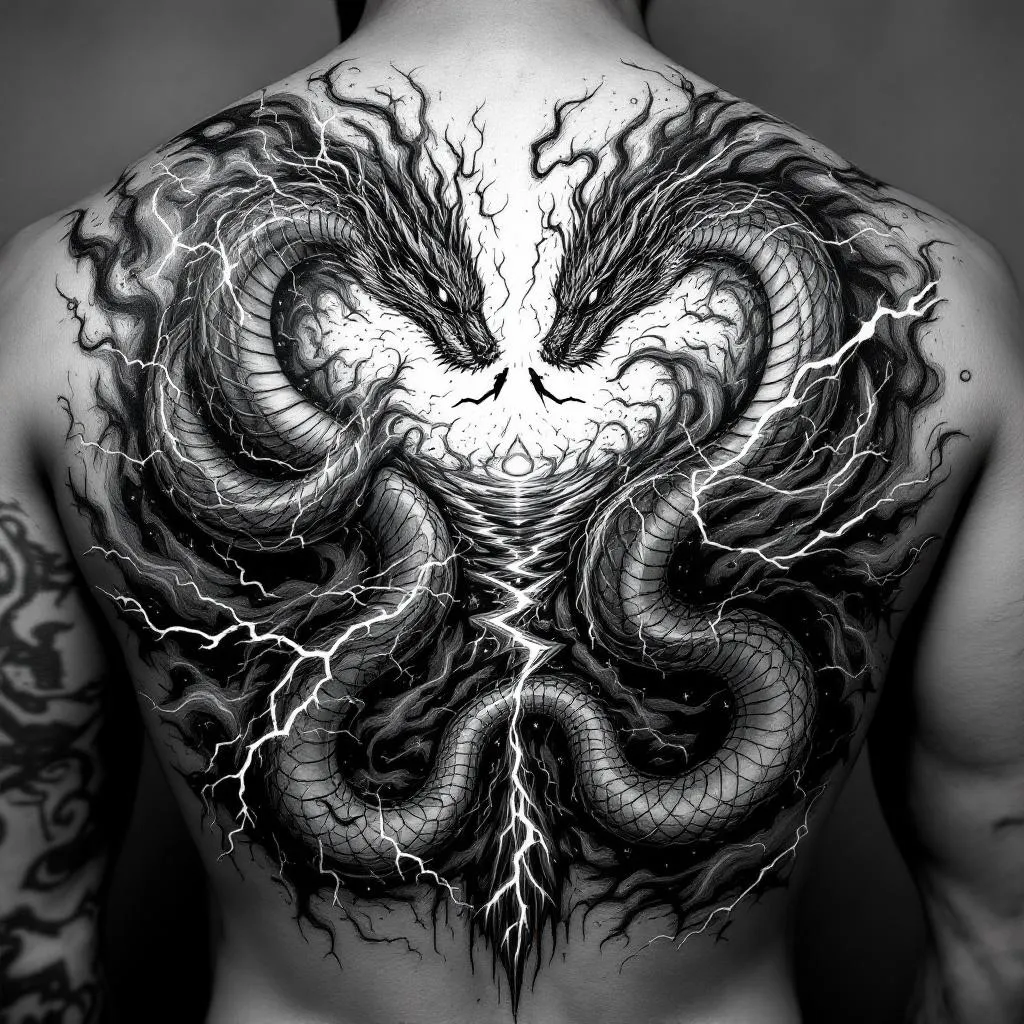
Género no especificado, espalda completa, tatuaje de dos cobras
Geometric style
✨ Diseña tu Tatuaje SoñadoDescripción del diseño
Back piece tattoo design featuring two mirrored cobras in a dynamic abstract composition. Model gender: unspecified. This black and grey piece explores inner conflict and awareness as the serpents weave through a chaotic field of lightning and swirling wind energy with subtle hints of fire or water. At the center sits a surreal derealization vortex that distorts space, while barely visible symbolic details like a faint eye energy or a simple hand outline emerge. Integrated, short text flows within the lightning and wind, slightly distorted. The style uses negative space, airy composition, and a balance of detailed cobra sections with soft fading abstractions. No realistic faces or heavy solid black fills; it remains emotional, surreal, and meaningful, with tiny color accents for emphasis.
Tattoo Meaning & Symbolism
This full-back composition centers on two mirrored cobras confronting each other across a central derealized vortex. The cobras, slightly stylized rather than fully realistic, represent the dual forces of inner conflict and heightened awareness—each head poised as if both adversary and mirror. Their mirrored stance suggests the psychological confrontation between competing parts of the self: defense versus vulnerability, instinct versus reflection.
The chaotic environmental elements—lightning streaks, swirling wind/tornado energy, and faint hints of fire or water—function as externalized emotional weather. Lightning slices through the composition as sudden insight or trauma, wind/tornado forms depict persistent mental turbulence, and the subtle fire/water cues denote the push-and-pull of passion and calm. At the center, the surreal vortex or distorted space acts as a derealization motif: reality bending, dissolving boundaries, and the sensation of being pulled into an ungraspable interior. Small symbolic additions—a faint eye energy and a simplified hand outline—are woven into the flow to indicate perception and agency: the eye as ongoing awareness watching the collapse of certainty; the hand as the still-present capability to reach back toward grounding.
Integrated micro-text hidden within lightning or wind lines becomes a whisper of personal mantra or fragmented thought, intentionally distorted to echo the derealization theme—readable only when inspected closely, reinforcing that meaning is both present and slipping away.
Tattoo Style & Placement
This design is conceived specifically for a full back canvas, with the vertical axis of the spine serving as the mirror line between the two cobras. The composition leverages negative space across the shoulder blades and lower back so the image breathes rather than becoming a dense panel. Black and grey is the dominant palette: crisp, detailed rendering for the cobras’ scales and eyes, soft grey washes for wind and vortex gradients, and very minimal color accents (for instance a tiny teal glint in an eye energy or a single ember-orange flash within a lightning shard) to draw the eye without breaking the monochrome mood.
Technically, the piece mixes tight linework and dotwork in the cobras’ detailed sections with large, soft fadeouts in the tornado and derealization areas. The lightning and wind lines carry the small integrated text, slightly warped to follow flow. The artist should use varied needle groupings: fine liners for text and delicate scale edges, small round shaders for the eye energy, and magnums for the soft atmospheric fades. Placement-wise, the cobras’ hoods can anchor near the upper trapezius just below the neck, their bodies sweep down and curve with the natural luminosity of the erector spinae, and the vortex sits centered over the thoracic spine to emphasize the sensation of being drawn inward.
Personal & Cultural Significance
While cobras carry culturally specific meanings—divinity and protection in Indian and Southeast Asian traditions, and regal guardianship in some Egyptian iconography—this design reframes the snakes inwardly. The mirrored cobras do not invoke worship but internal dialogue: the indigenous meanings of transformation and vigilance inform the piece while keeping the narrative personal and psychological rather than religious.
The derealization vortex taps into modern experiences of dissociation and existential disorientation; placing it centrally on the back makes the piece a visual map of lived mental states rather than a literal myth. The faint eye energy nods to ongoing self-observation (mindfulness, hypervigilance, or witness consciousness), and the hand outline symbolizes both the desire to act and the reminder that agency remains possible even when reality feels unstable. For someone who has navigated intense internal conflict or periods of altered perception, the tattoo reads as both testimony and talisman: a layered visual story that acknowledges turmoil while locating strength and awareness within it.
Similar Tattoo Ideas
- Single cobra rising through a spiraling wind void with micro-text in the spiral arms
- Two koi fish mirrored around a dissolving, watercolor-style center to represent balance and change
- Pair of stylized ravens facing a fractured mirror vortex, combining negative space and feather detail
- Abstract human silhouette being pulled into a soft-edged tornado with a subtle eye motif above
- Minimalist double-serpent ouroboros encircling a small, distorted planet or void
Conclusion
This full-back design is emotionally intense and intentionally ambiguous: two mirrored cobras and a central derealization vortex together map the friction between inner conflict and present awareness. The black-and-grey approach with selective color accents and deliberate negative space creates an airy yet charged visual that reads as both narrative and experience. Executed carefully—balancing detailed focal areas with soft fades, integrating micro-text as part of the energy, and respecting the spine as a compositional axis—this tattoo becomes a dynamic, wearable meditation on struggle, perception, and the continuing capacity to observe and reach for grounding even as reality shifts.
Diseños similares que te podrían gustar


Probar
Preparando tu diseño...
