 InkAI
InkAI 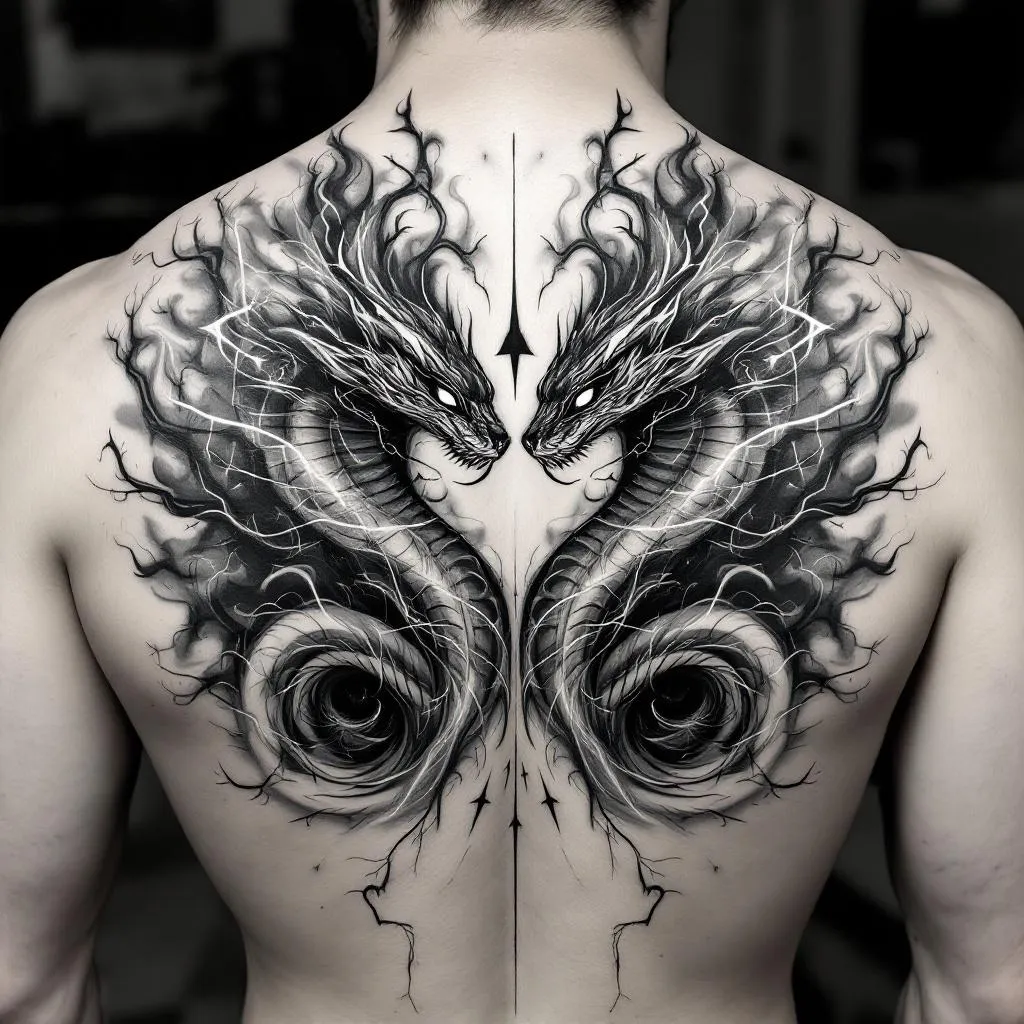
Modelo masculino, costas, tatuagem de duas cobras
Watercolor style
✨ Desenhe Sua Tatuagem dos SonhosDescrição do Design
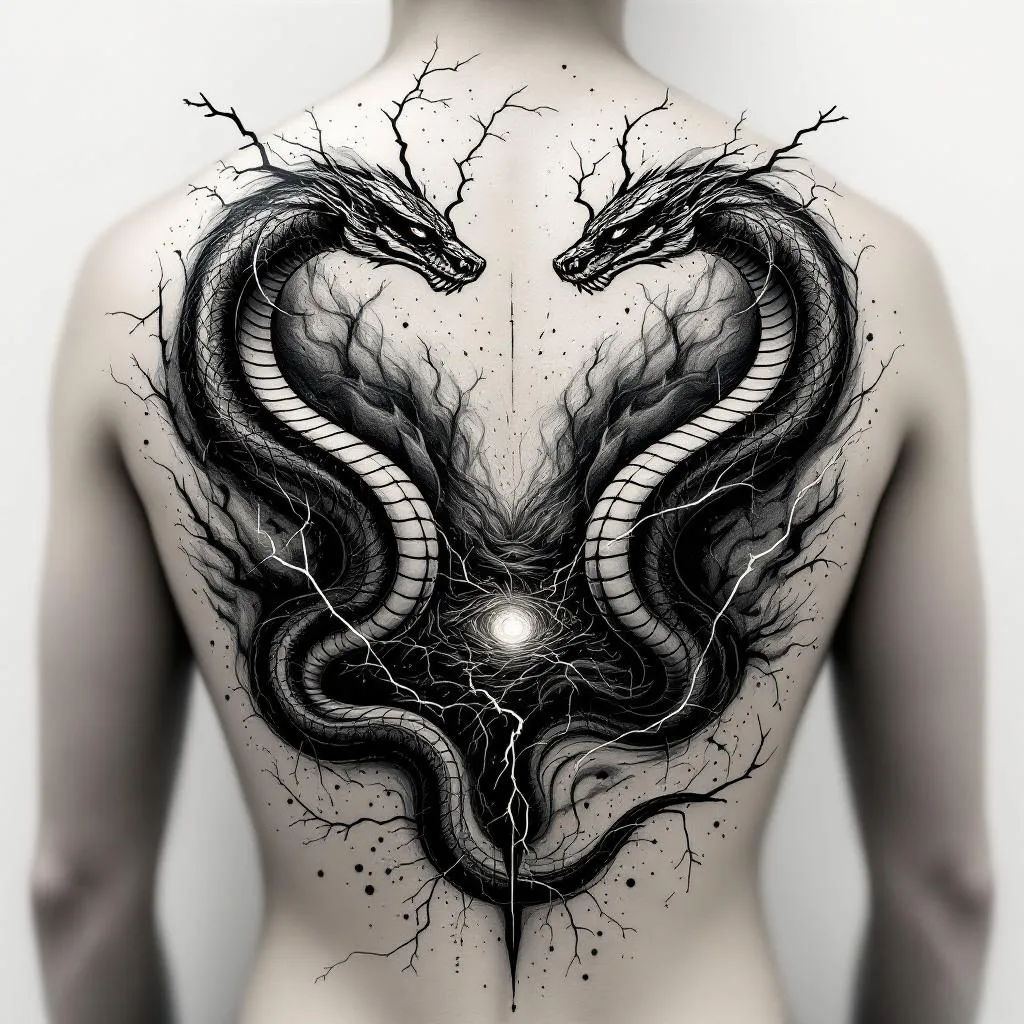
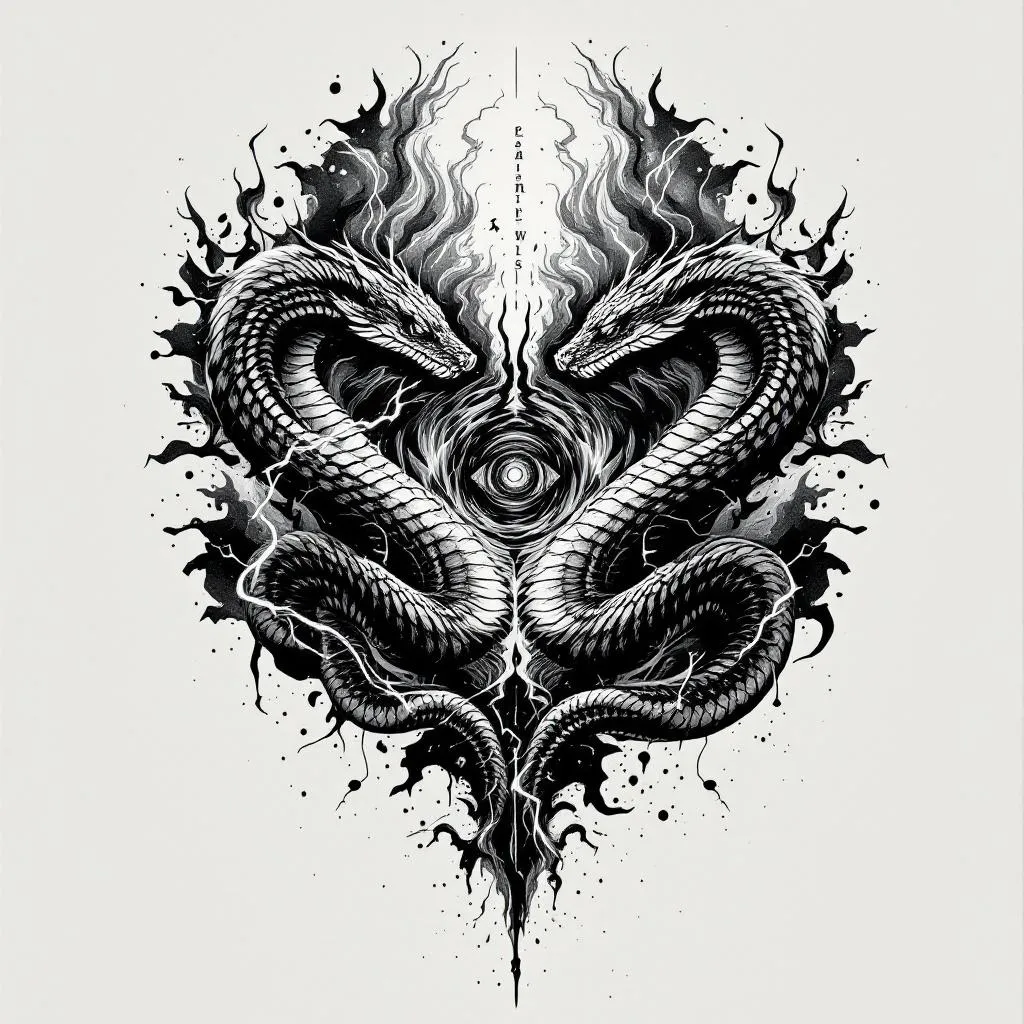
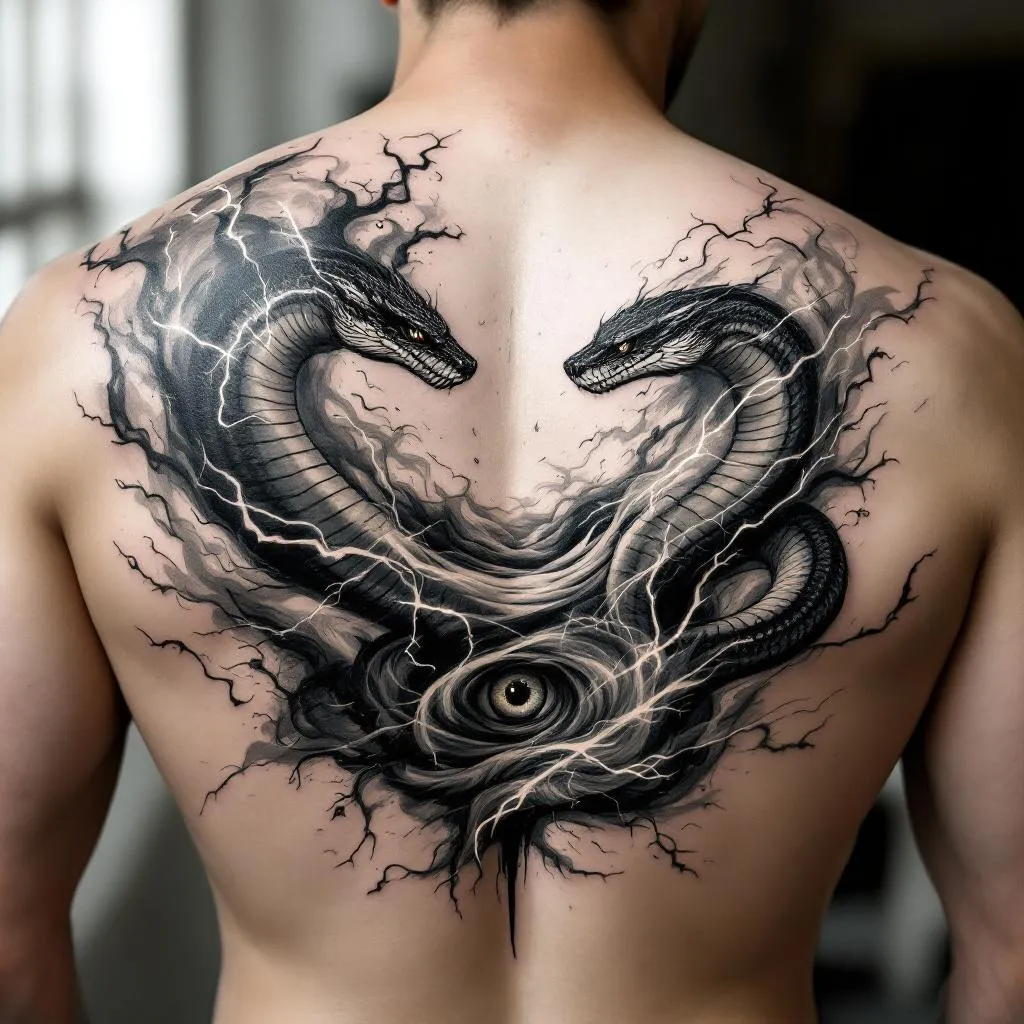
Male back tattoo design featuring two mirrored cobras in black and grey, abstract and dynamic. Centered derealization vortex creates a surreal inner-conflict vibe with negative-space, airy layout and soft fading areas. Subtle energy elements like lightning and wind, tiny integrated text, and minimalist eye or hand accents in minimal color. Not overcrowded or heavily filled—emotional, intense, and meaningful.
Tattoo Meaning & Symbolism
This full-back composition of two mirrored cobras facing each other centers on inner conflict and heightened awareness. The cobras are intentionally minimalistic and slightly stylized: their hoods flare in measured arcs, fangs retracted, eyes focused inward toward a central vortex. Mirroring expresses tension and reflection—two opposing impulses, nervous energy, or facets of self that confront one another. The chaotic environment—lightning-like calligraphic strokes and a swirling wind/tornado energy—represents mental turbulence and shifting perception, while subtle hints of fire and water speak to competing instincts (heat, passion) and cooling reflection or fluidity.
At the geometric center, the surreal derealization vortex serves as an ungraspable focal point: reality bending, dissolving, and refracting the surrounding forms. The faint eye-energy and simplified hand outline are minimal symbolic anchors of consciousness and agency—an observer’s presence and an ability to reach through confusion. Integrated small, slightly distorted text woven into the lightning or wind lines acts as private mantra or fragmented thought, deliberately legible only at close range. Overall, the piece is about confrontation that produces awareness rather than destruction.
Tattoo Style & Placement
Designed for the entire back, the composition runs along the spinal axis: the vortex aligned with the thoracic spine, cobras mirrored on either side tracing the contours of the scapula and ribs, hoods rising toward the upper back/nape and tails tapering toward the lower back. Executed primarily in black and grey, the piece relies on high-contrast microline, fine stippling, and soft feathered shading rather than heavy solid blacks. Negative space is a core tool—skin-breaks define hood edges, wind channels, and the vortex’s halo, giving an airy, breathable feel.
Detail is concentrated in the cobras’ hoods and the energy streams immediately surrounding the vortex; these areas use tighter linework and controlled textures. Broader, softer abstract regions fade gently into skin tone with wash-like grey gradients. Color accents are tiny and strategic—one teal in the vortex core, a single ember-red glint in an eye-energy, or a cool blue droplet along a water hint—to punctuate without dominating. Recommended tattoo approach: multiple sessions focusing first on layout and microline, then tonal shading, and finally minimal color highlights and text integration.
Personal & Cultural Significance
Cobras carry layered cultural meanings—protection, danger, awakening (kundalini), and transformation—and here they are translated into a contemporary, introspective narrative. Mirrored serpents have traditionally symbolized duality and the reconciliation of opposites; in this design they embody inner conflict that catalyzes awareness rather than an external threat. The vortex/derealization motif references altered states of perception and the unsettling but sometimes clarifying experience of reality feeling “unfixed.”
Minimal symbolic elements—the single eye-energy, the simplified hand outline, and the embedded fragmented text—bring personal, almost ritual significance: the eye as witnessing presence, the hand as choice and agency, and the text as a private incantation or caution. Artistically, the design sits at the intersection of surrealism and modern minimalist tattooing: emotionally intense, symbolic, and restrained—intended as a long-term, contemplative back piece rather than a decorative flash.
Similar Tattoo Ideas
- Mirrored serpents along the spine with a central crescent vortex
- Minimalist cobra pair with a single tear of color at the hood center
- Spine-centered tornado energy with integrated microtext in the swirls
- Surreal derealization mandala with faint eye motif and negative-space framing
- Dual-snakes and soft wind ribbons that fade into skin tone toward the shoulders
- Abstract wind-and-lightning backpiece with tiny hand-outline near the lower thorax
- Black-and-grey cobras with isolated ember-red accents in the eyes
Conclusion
This full-back tattoo balances emotional intensity and visual restraint: two minimalistic cobras facing a surreal vortex create a powerful symbol of inner conflict transformed into awareness. The design’s reliance on negative space, mixed detailing, and tiny color notes keeps it airy and wearable while preserving depth and meaning. For best results, collaborate closely with an artist experienced in fine-line work and large-scale compositions—test the scale with a printed stencil, plan sessions for linework first, then tonal washes, and reserve the smallest details and color accents for the final pass. When completed, the piece reads as a personal map of confrontation, perception, and subtle empowerment.
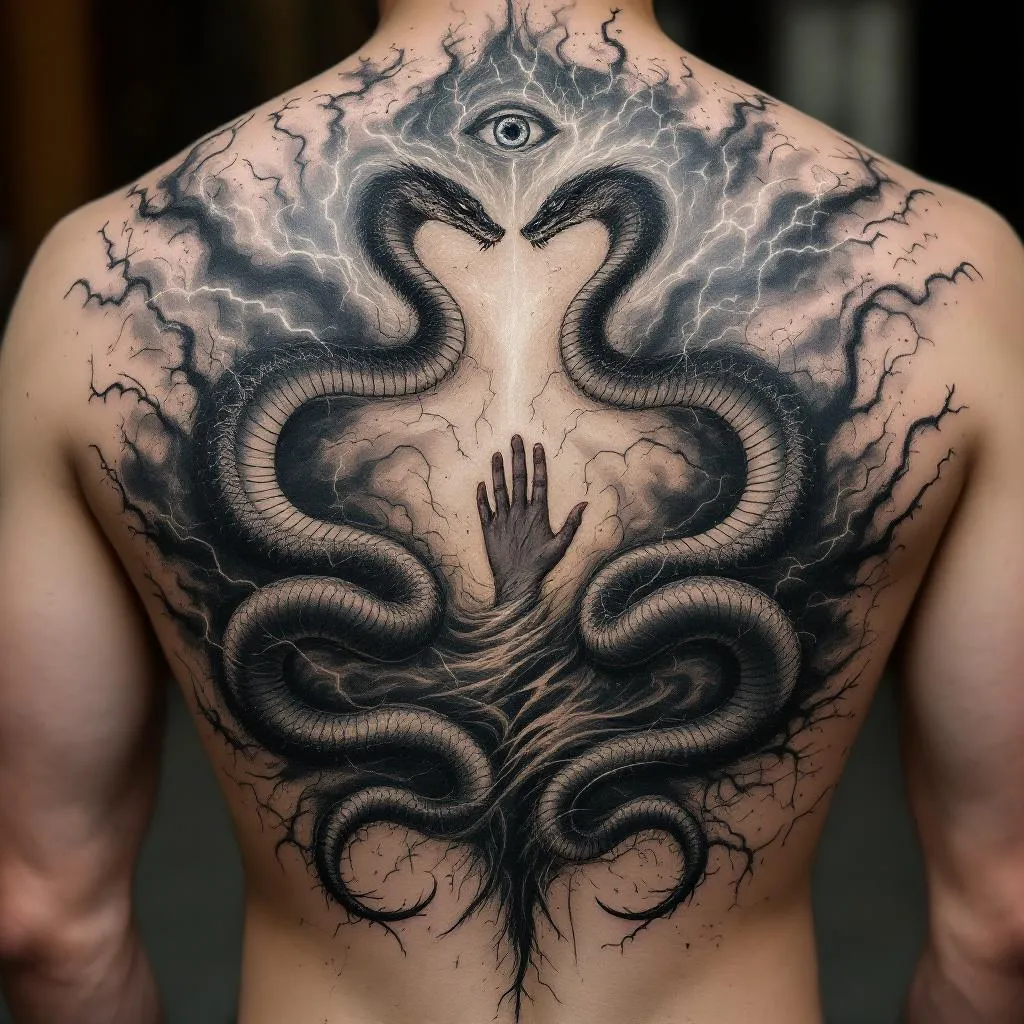
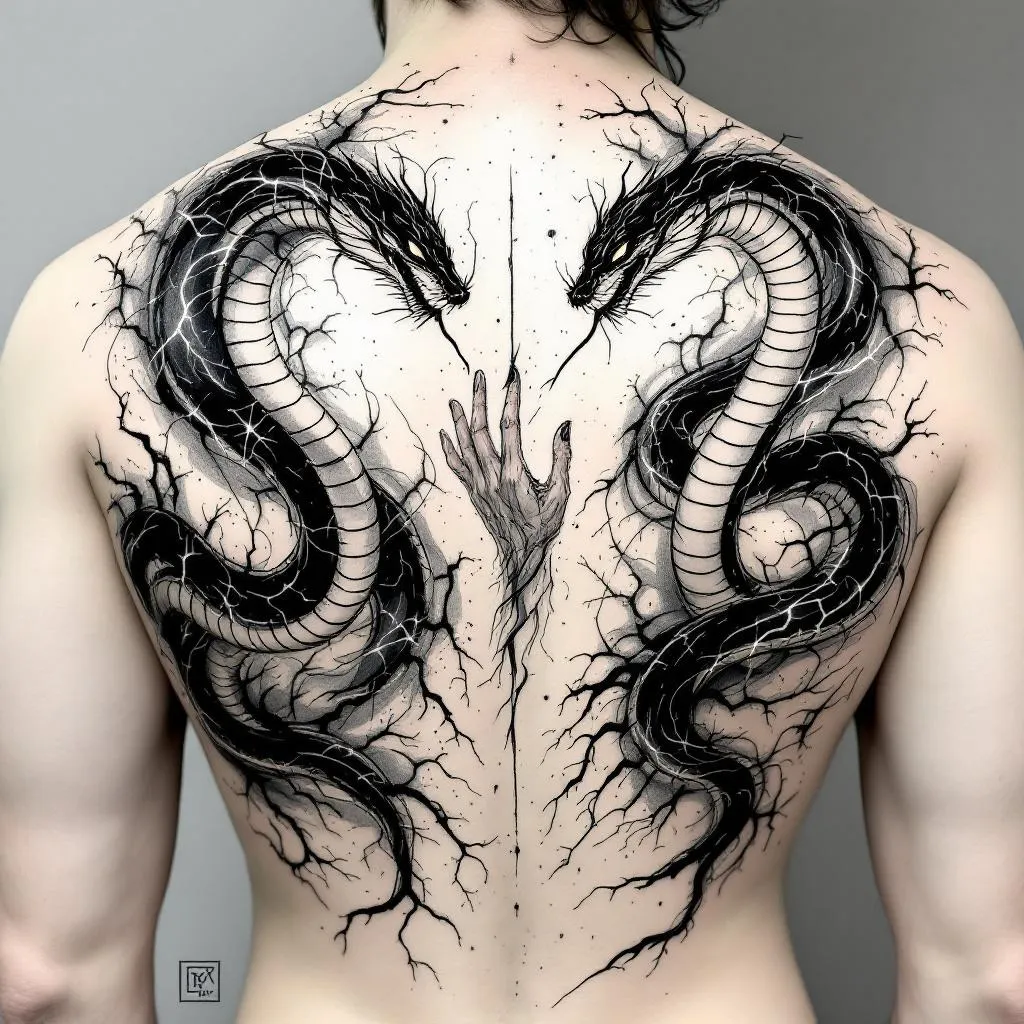
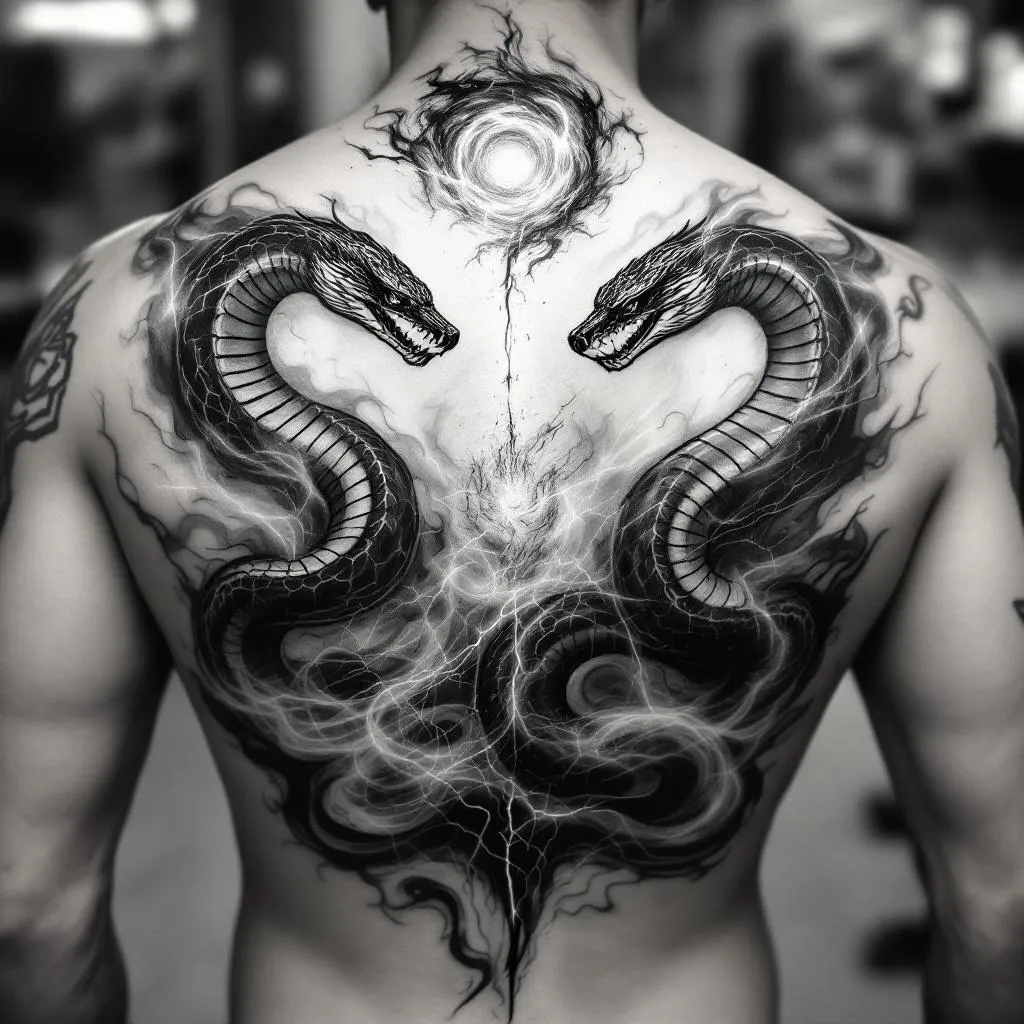
Designs Similares que Você Pode Gostar
Experimente
Preparando seu projeto...
