 InkAI
InkAI 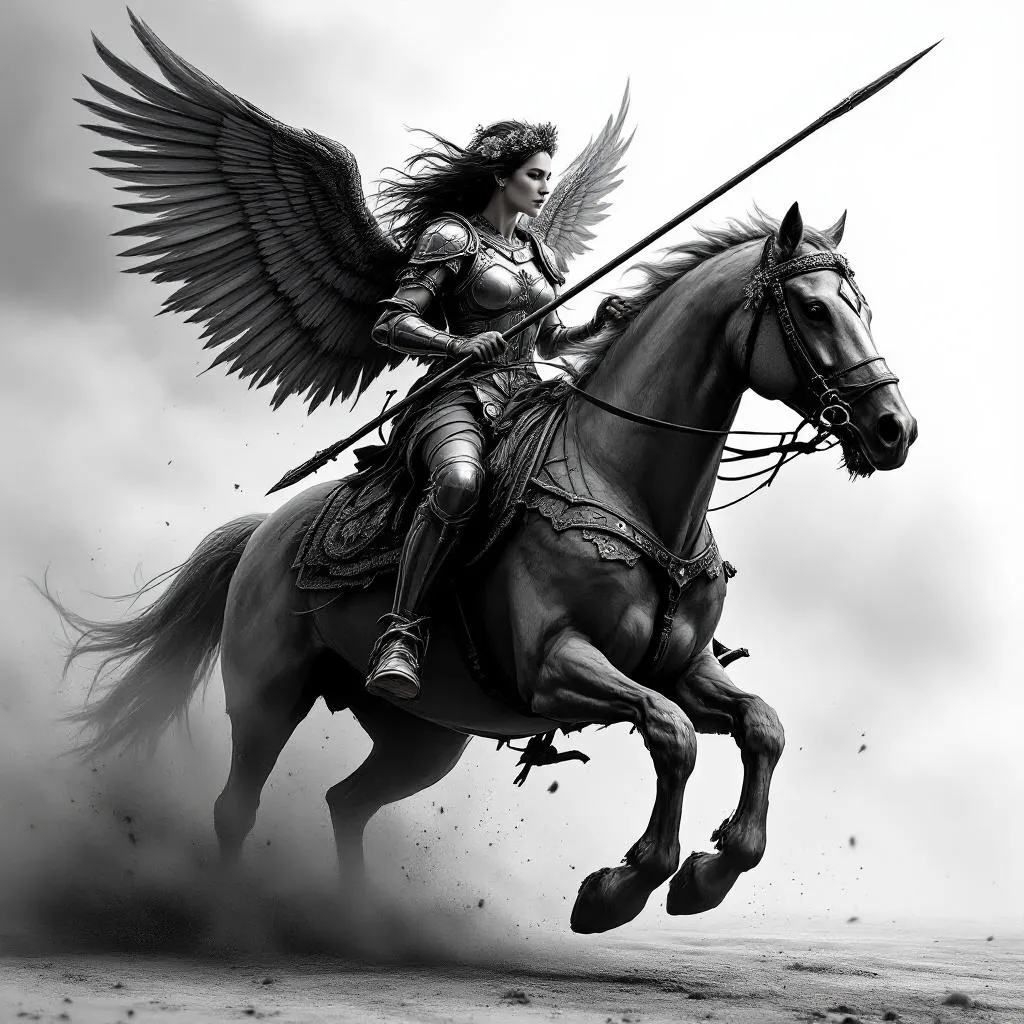
Tattoo Meaning & Symbolism
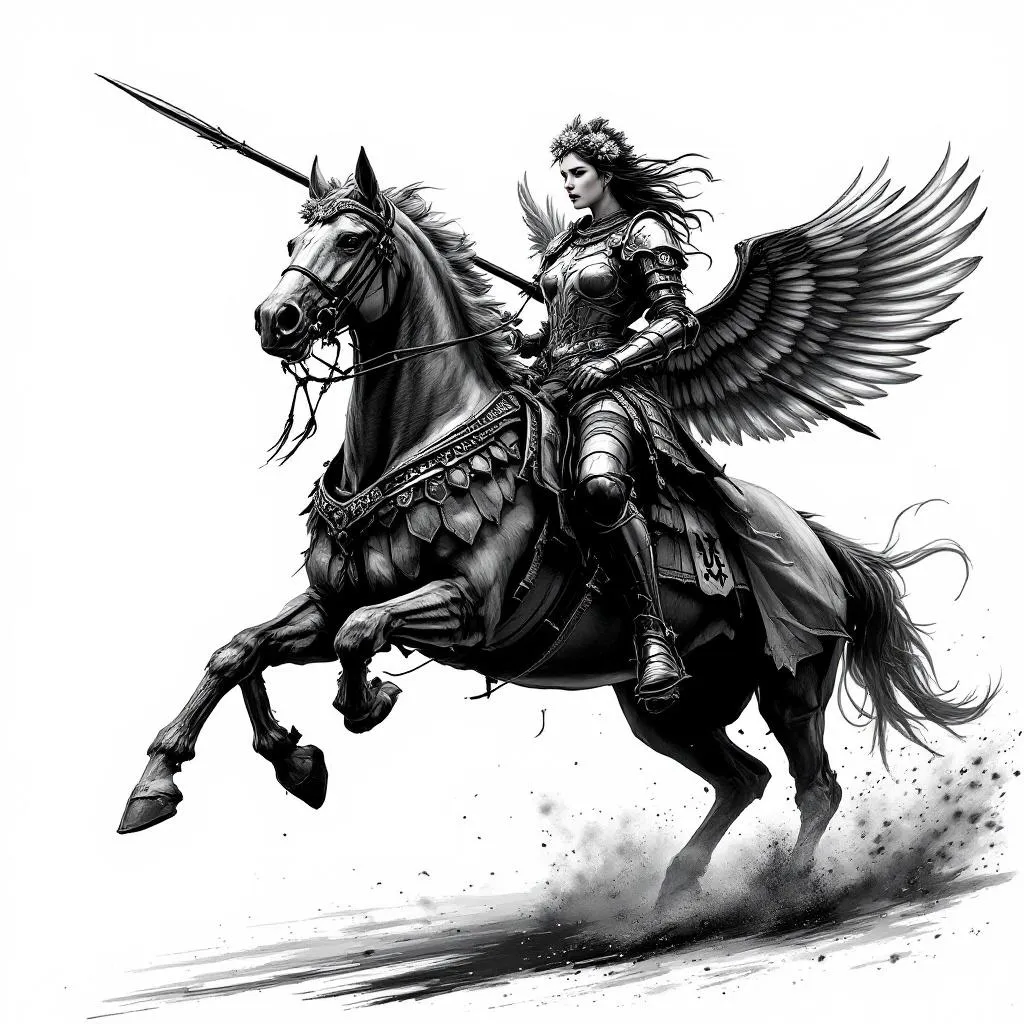
This tattoo is a concentrated narrative of defiance, feminine martial power and national identity rendered as a cinematic black-and-grey scene. The female warrior astride a charging war horse symbolizes active resistance rather than passive protection: she is cutting across the frame, not standing still. The Ukrainian Tryzub embossed on her chest plate and repeated on the horse’s barding makes national identity explicit — the design reads as a personified nation in motion, pushing forward through conflict. The plate armor and spear signal disciplined military strength; the Polish Winged Hussar wings reference a historic elite cavalry known for shock, speed and psychological impact, amplifying the tattoo’s themes of battlefield prestige and unstoppable momentum.
The flower crown softens and complicates the image: as a crown of flowers it introduces femininity, remembrance and the cyclical regeneration of life amid violence. The two severed heads suspended from the spear are stark trophies of victory and retribution; they create a moral tension in the composition, a visual statement that victory has a cost and agency can be brutal. Overall, the piece reads as both elegy and declaration — a warrior who protects identity, exacts justice, and endures.
Tattoo Style & Placement
This design is explicitly realistic black-and-grey with very high contrast and cinematic lighting. Because the composition depends on a clear diagonal and a twisted equine torso, it requires a large canvas to preserve anatomical detail and the Hussar wing structure: ideal minimum size is roughly 25–35 cm (10–14 in) along the diagonal, with larger formats preferred for full detail. Best placements to accommodate the diagonal cutting motion and the long spear are the back (from one shoulder blade down toward the opposite hip), the full side/rib cage wrapping from shoulder to upper thigh, or a thigh-to-hip piece with the horse angled across the limb.
Placement should respect body curvature so the horse’s torso twist and the rider’s parallel posture read correctly: place the horse’s diagonal so the front legs and chest sit on the higher plane (shoulder or upper ribs) and the hindquarters taper down toward the hip or thigh. The wings should be close to the rider’s back and slightly open with the wooden frames and feather rows rendered along the shoulder blade area — this placement keeps the wooden structures aligned with the body’s anatomy and avoids awkward distortion when the client moves.
Personal & Cultural Significance
This specific combination of symbols is layered and culturally resonant. The Tryzub anchors the image in Ukrainian statehood, heritage and contemporary struggles; it turns the warrior into a national emblem rather than a generic fighter. The Polish Winged Hussar wings bring a regional historical reference — they connote elite cavalry tactics, airborne spectacle and a shared Eastern European military memory. When combined, the imagery can represent historical alliances, cross-cultural respect, or a deliberate statement about regional solidarity.
Because the tattoo includes graphic elements (severed heads) and strong national iconography, it carries public and interpersonal implications: it can be read as a powerful statement of resistance and victory, but also as confrontational. It’s important for the wearer to be prepared for questions about intent and meaning. Additionally, the historically accurate rendering of Hussar wings — wooden curved frames with long structured feathers attached in rows, the wood facing forward — shows respect for historical detail and avoids a generic “fantasy wing” look that would dilute the cultural reference.
Similar Tattoo Ideas
- Female lancer with Tryzub on a rearing horse, black-and-grey realism, shoulder-to-chest placement
- Polish Winged Hussar portrait with historically accurate wooden frame wings, upper back piece
- Black-and-grey dynamic equine study showing torso twist and diagonal motion, rib-cage wrap
- Armored female warrior with flower crown and shielded heraldry, thigh panel
- Spear-bearing cavalry scene with dust and ground impact, full-back cinematic composition
- Close-up of the Hussar wing structure and feather rows as a standalone forearm or calf piece
- Ukrainian Tryzub incorporated into armor relief with floral motifs, chest or sternum tattoo
Conclusion
This design is a dramatic, highly specific portrait of force, identity and motion: a feminine warrior who embodies national resolve, riding a horse that physically cuts across the scene with a deliberate torso twist and forward momentum. Rendered in high-contrast black and grey, with historically accurate Hussar wings, a flower crown and the Tryzub on both rider and barding, the tattoo demands a large, thoughtfully placed canvas and a tattooist skilled in anatomy, motion and historical detail. Executed well, it becomes a cinematic emblem — equal parts elegy, proclamation and living armor on the wearer’s body.
您可能喜欢的相似设计
试戴
Preparing your design...
