 InkAI
InkAI 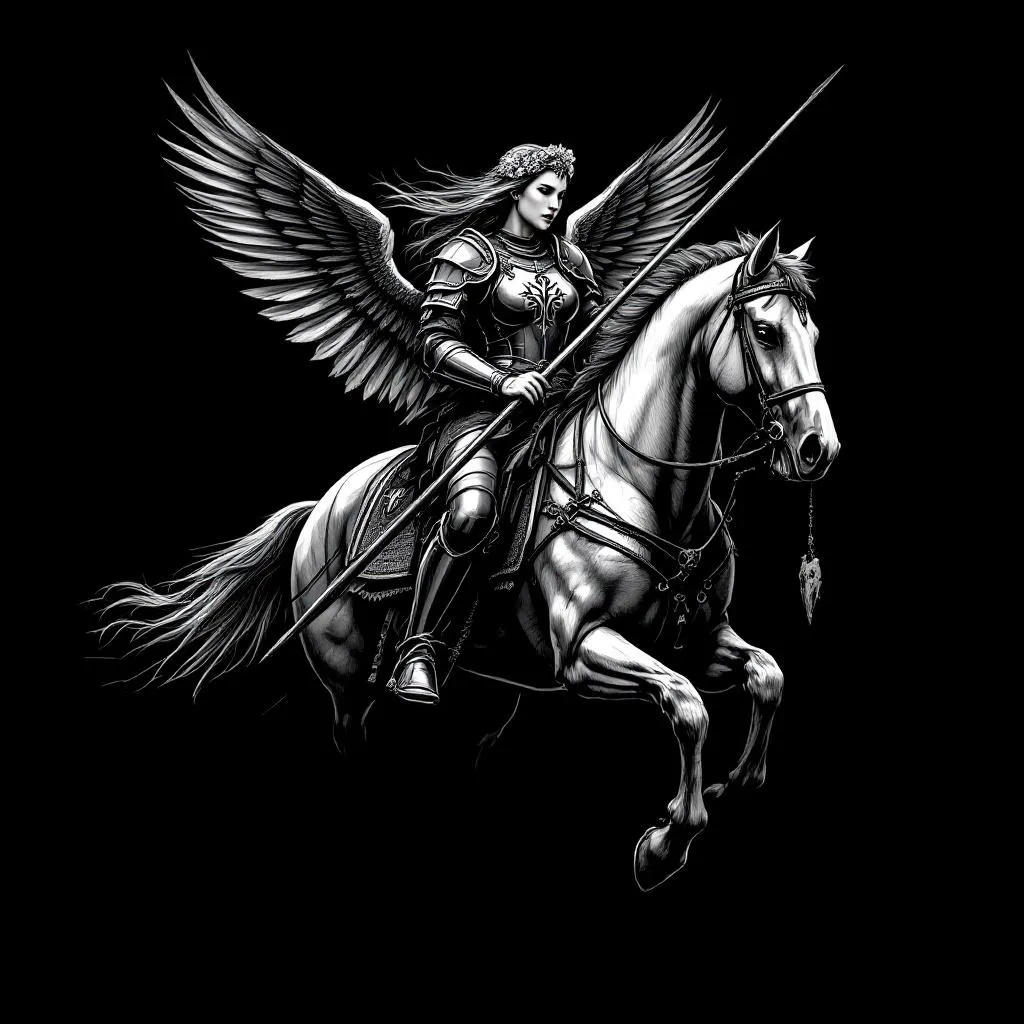
Tattoo Meaning & Symbolism
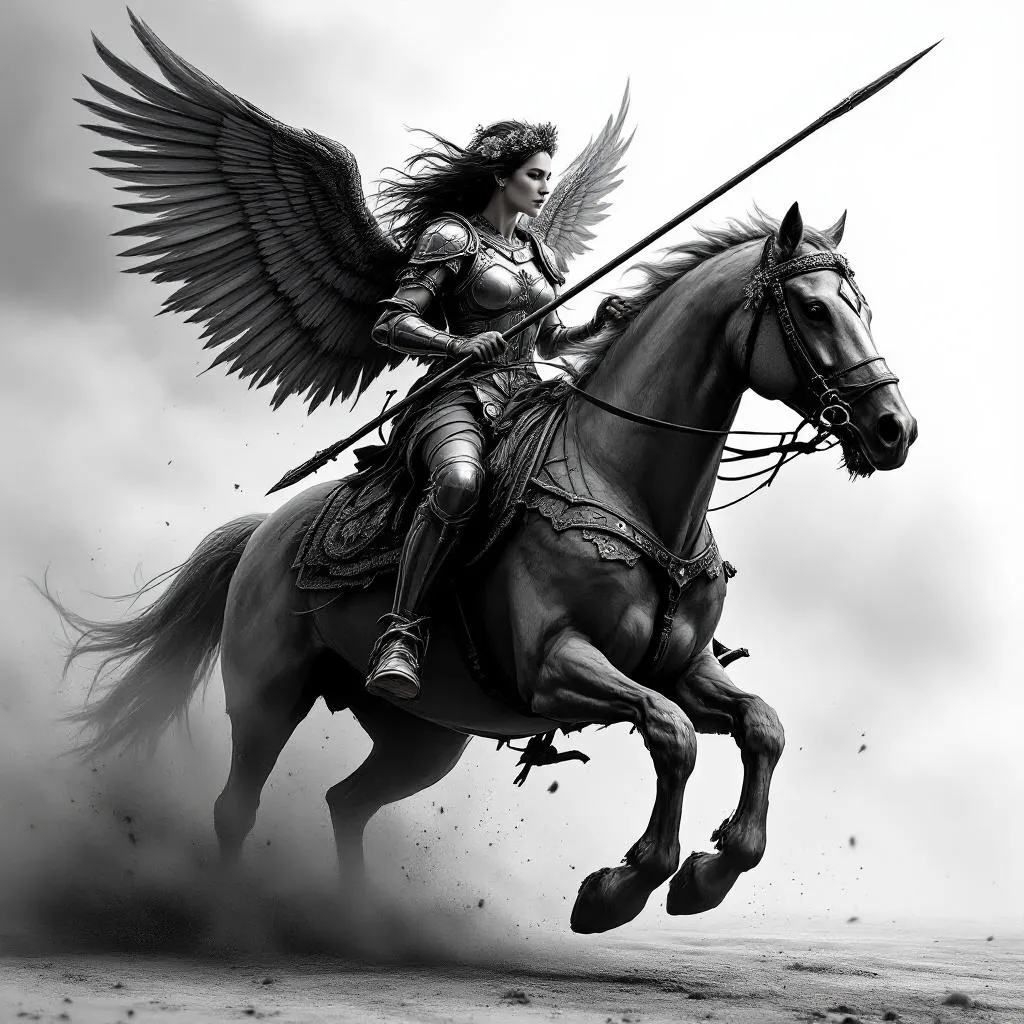
This composition reads as a deliberate union of feminine strength, national identity, and disciplined martial tradition. The female warrior in full plate armor symbolizes resilience, authority, and a cultivated warrior ethic; her upright, parallel posture on the horse conveys control rather than chaos. The Ukrainian Tryzub emblazoned on the chest armor and horse barding makes national pride explicit: here it functions as both a protective emblem and a declaration of belonging. The flower crown softens the martial image and introduces themes of remembrance, sacrifice, or the persistence of beauty within conflict. The long spear is an instrument of duty and reach; the two severed heads hanging from it are a stark, historical signifier of victory, deterrence, and the brutality of warfare—rendered as a sober element rather than sensational gore to keep the overall tone measured and ceremonial.
Tattoo Style & Placement
Executed in realistic black-and-grey with high contrast and dramatic lighting, this tattoo relies on crisp silhouettes and clean gradients. The horse is portrayed in a balanced, grounded running pose—slightly angled but upright and stable—so the image reads clearly from a distance and holds anatomical integrity up close. The rider sits straight and parallel to the horse, anatomically correct, which reinforces the composed, controlled feel. The closed Polish Winged Hussar wings sit behind the shoulders with curved wooden frames facing forward and feathers attached in tidy rows; the wings are structured and historical, not soft or fantastical. Because of the scale and level of detail (horse, mounted figure, closed wings, spear, emblematic barding and heads), ideal placements are the upper back between the shoulder blades, a full-chest piece centered across the sternum and upper ribcage, or a large thigh/side-torso canvas. These locations allow the wings to tuck naturally behind the shoulders, preserve the horse’s upright posture, and maintain the clean negative space of the minimal background.
Personal & Cultural Significance
This tattoo intertwines personal valor with regional heritage. The Tryzub links the bearer to Ukrainian history, sovereignty and cultural memory; placing it on both the warrior and the horse doubles down on protection and kinship. The Polish Winged Hussar elements reference a very specific cavalry tradition—curved wooden frames, rigid feather rows and forward-facing structure—evoking disciplined honor, elite status in battle, and historical continuity. The flower crown layered on a plated, strong feminine warrior signals reconciliation of traditionally opposing archetypes: nurturer and fighter. Because the design includes a violent motif (two severed heads), it carries an unmistakable message about the cost of conflict and the seriousness of martial resolve; many wearers choose it to commemorate an ancestor, a dramatic life struggle overcome, or as a sober reminder of the stakes that accompany defense of home and identity. Respectful, historically informed execution is important, and consulting with the client about the national symbols is recommended to ensure their meaning aligns with personal intent.
Similar Tattoo Ideas
- Mounted female Cossack with saber and Tryzub-accented saddle
- Polish Winged Hussar bust with closed wings and historical wooden frames
- Realistic black-and-grey armored woman with flower crown and heraldic shield
- Horse-and-rider composition with upright gallop and minimal background
- Spear-bearing warrior with symbolic trophies rendered in restrained, ceremonial detail
Conclusion
This tattoo is a carefully balanced, dramatic portrait of disciplined power: an anatomically precise female warrior riding a stable, upright war horse, wearing plate armor adorned with the Ukrainian Tryzub, a flower crown that humanizes the figure, and historically accurate closed Winged Hussar wings. The high-contrast black-and-grey execution, minimal background, and controlled motion emphasize resolve and dignity rather than spectacle. When placed on a large flat canvas—upper back, chest, or thigh—it will read clearly and preserve the integrity of every symbolic element. For best results, commission an artist experienced in historical armor, realistic equine anatomy, and high-contrast black-and-grey work, and discuss the cultural meanings behind the Tryzub and Hussar wings to ensure the finished piece reflects both your personal story and historical respect.
您可能喜欢的相似设计

试戴
Preparing your design...
