 InkAI
InkAI 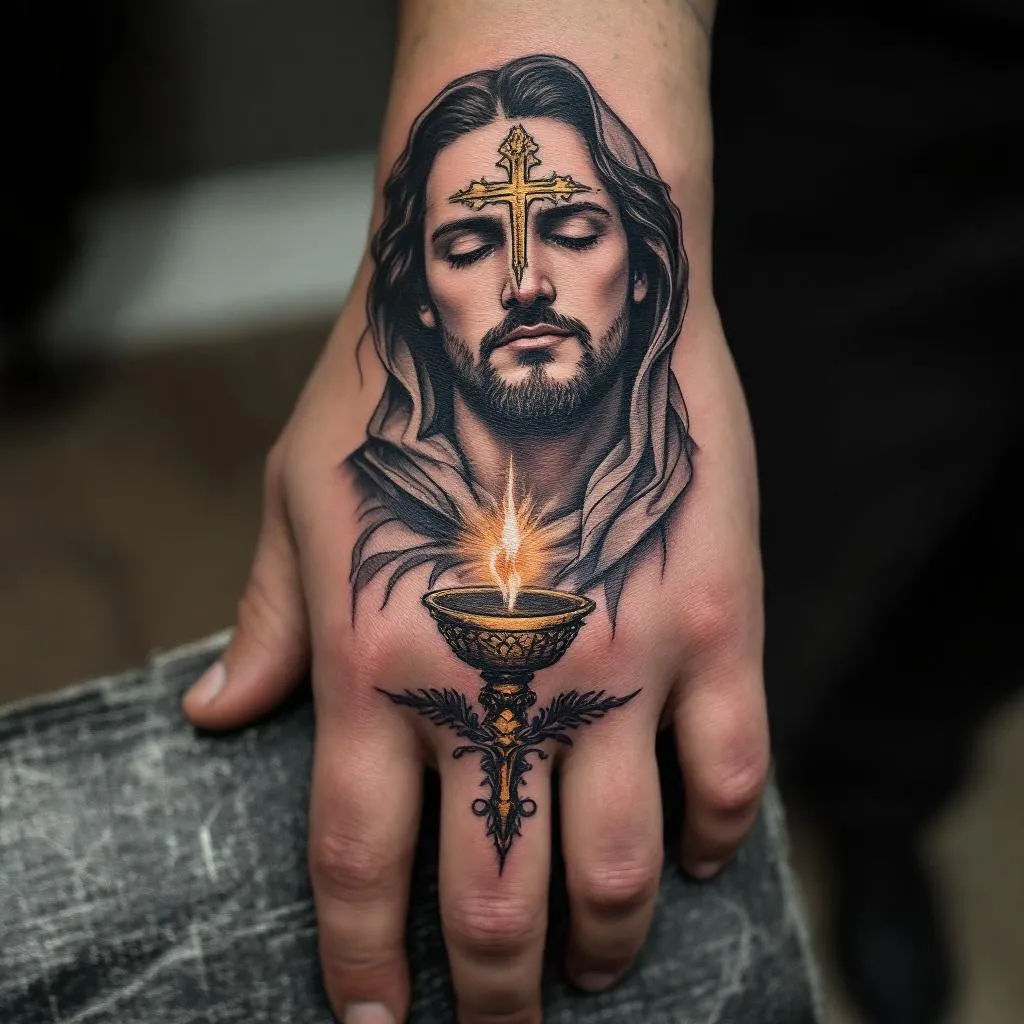
Religious, Hand, Eucharist Tattoo
Realistic style
✨ Design Your Dream TattooDesign Description
quiero esto en la mano, la eucaristía católica con sombra y que me llegue la sombra hasta los nudillos y que no salga nada más solo la eucaristía
Tattoo Meaning & Symbolism
A hand tattoo of the Catholic Eucharist — the consecrated host (often shown as a circular wafer, sometimes accompanied by a small chalice or the IHS monogram) — communicates a concentrated, visible declaration of faith. In this particular design, where you asked that only the Eucharist appear and the shadow of the image reach the knuckles, the primary symbolism becomes both the centrality of the sacrament and the way that grace or spiritual presence flows into everyday action. The host itself stands for the real presence of Christ, spiritual nourishment, sacrifice, and communion with the Church. The cast shadow traveling outward to the knuckles suggests those spiritual qualities extending into the hands — into work, protection, touch, and speech — implying that faith informs every action you take with your hands.
Because you specified “nothing else, only the Eucharist,” the minimal composition reinforces devotion and singular focus: a single sacred sign unadorned by additional motifs emphasizes humility, reverence, and an unambiguous personal testimony to the sacrament’s importance in your life.
Tattoo Style & Placement
Placing the Eucharist on the back of the hand (dorsum), centered so the host sits above the metacarpal area with the soft shadow extending over the tendons to the knuckles, will read clearly at arm’s length and fulfill your request for the shadow to reach the knuckles. For this concept, black-and-grey realism or fine-line blackwork with greywash shading works best: crisp, minimal line for the wafer’s edge and any delicate lettering (for example a small IHS or a faint cross) paired with subtle gradient shadow that tapers as it approaches each knuckle.
Important technical notes specific to hand tattoos: the skin on the dorsal hand is thin and moves constantly, so fine details must be bold enough to age well. The shadow effect you want should be done with soft greywash and controlled feathering rather than heavy solid black to avoid early blurring across the joints. Expect higher sun exposure and friction (gloves, washing) — plan on periodic touch-ups and choose a slightly larger scale than you might for forearm work so details remain legible over time.
Personal & Cultural Significance
For a practicing Catholic, a visible Eucharist on the hand is a powerful personal statement: it can mark conversion, a sacramental milestone (first Communion, confirmation), a vow of service, or daily reminder of Christ’s presence in ordinary life. Culturally, Eucharistic imagery has been central in Christian art for centuries — painted altarpieces show the host surrounded by rays, and monograms like IHS date back to medieval devotion. Putting that image on the hand ties that long visual tradition to contemporary bodily practice: the sacrament is not only remembered but carried into contact with the world.
Because this is an explicitly religious image placed in a conspicuous location, be mindful of family, workplace, or ecclesial reactions. Many view such tattoos as devout and meaningful; others may regard visible religious tattoos as unconventional. Discussing your intention with close family or your confessor can help reconcile personal devotion with community expectations if that is a concern.
Similar Tattoo Ideas
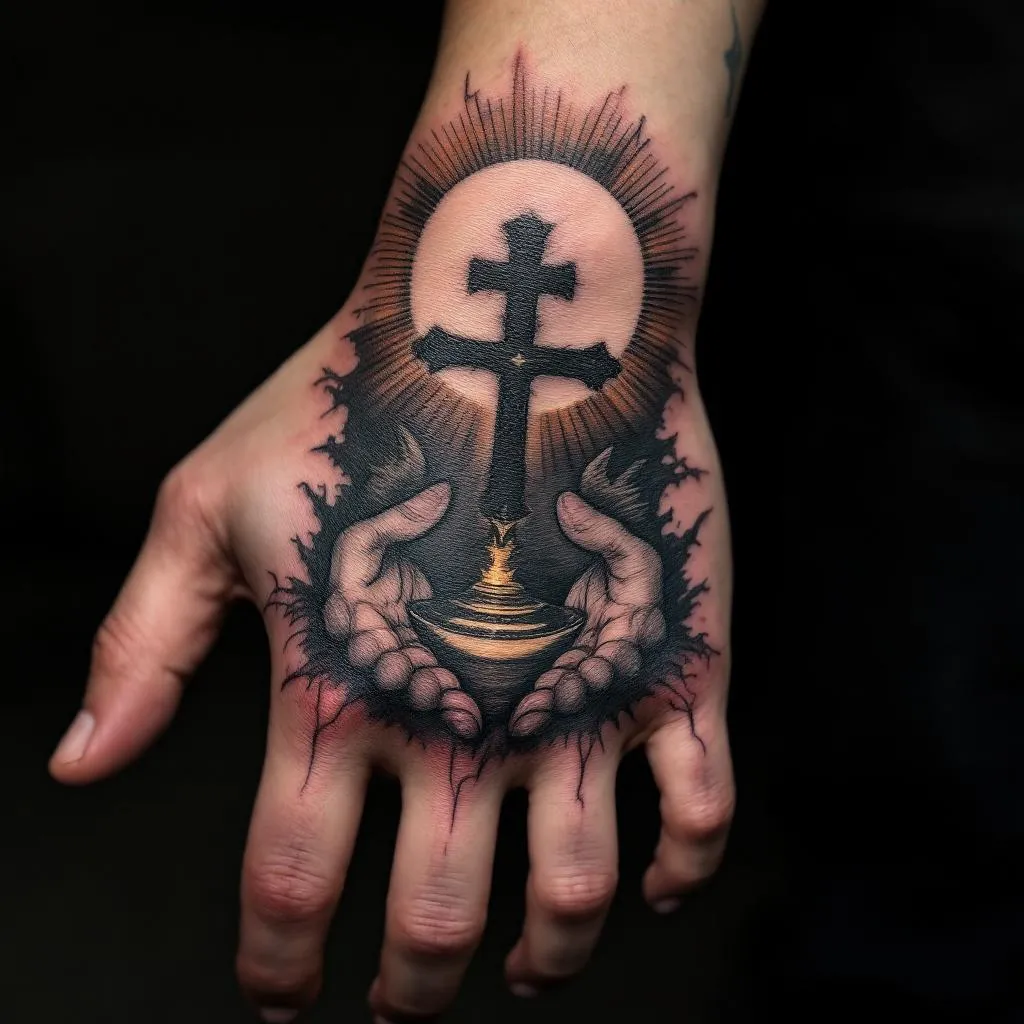
- Minimal host with faint rayed halo and soft greywash shadow
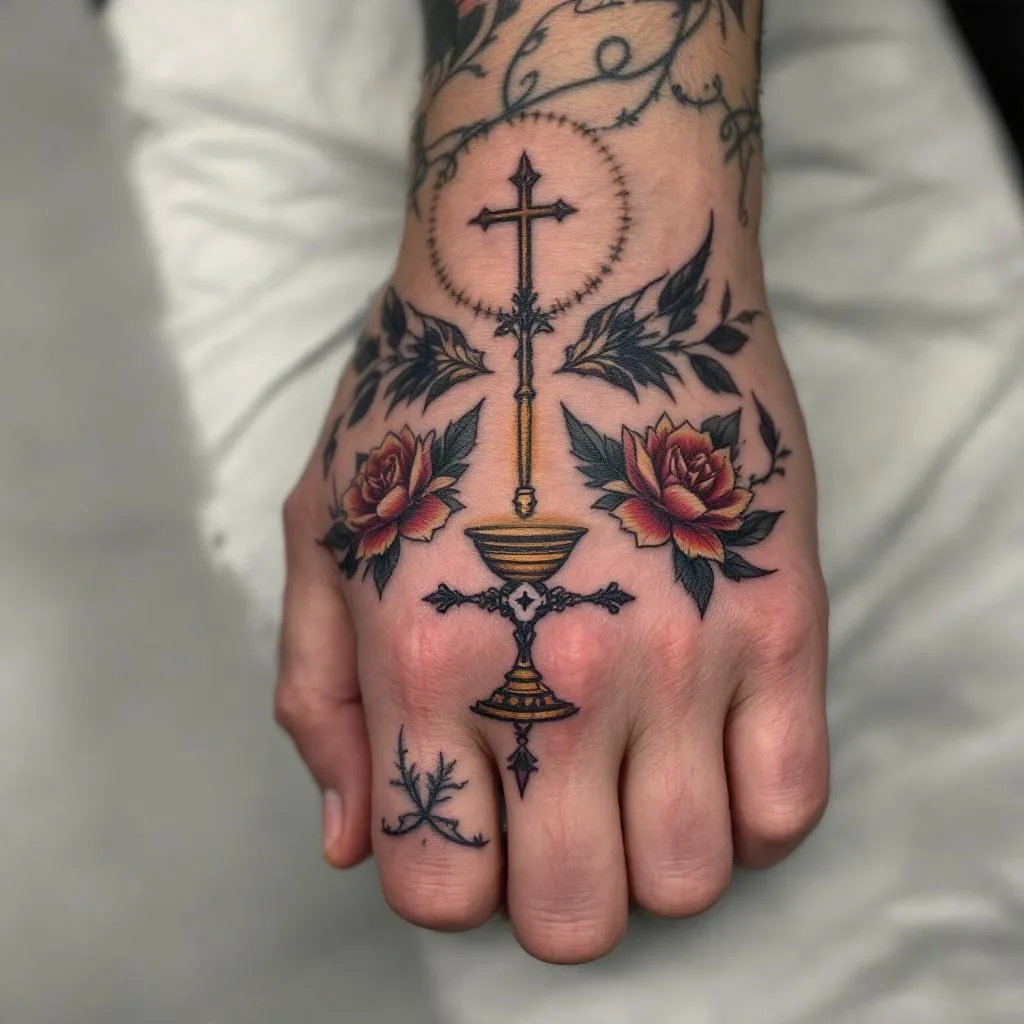
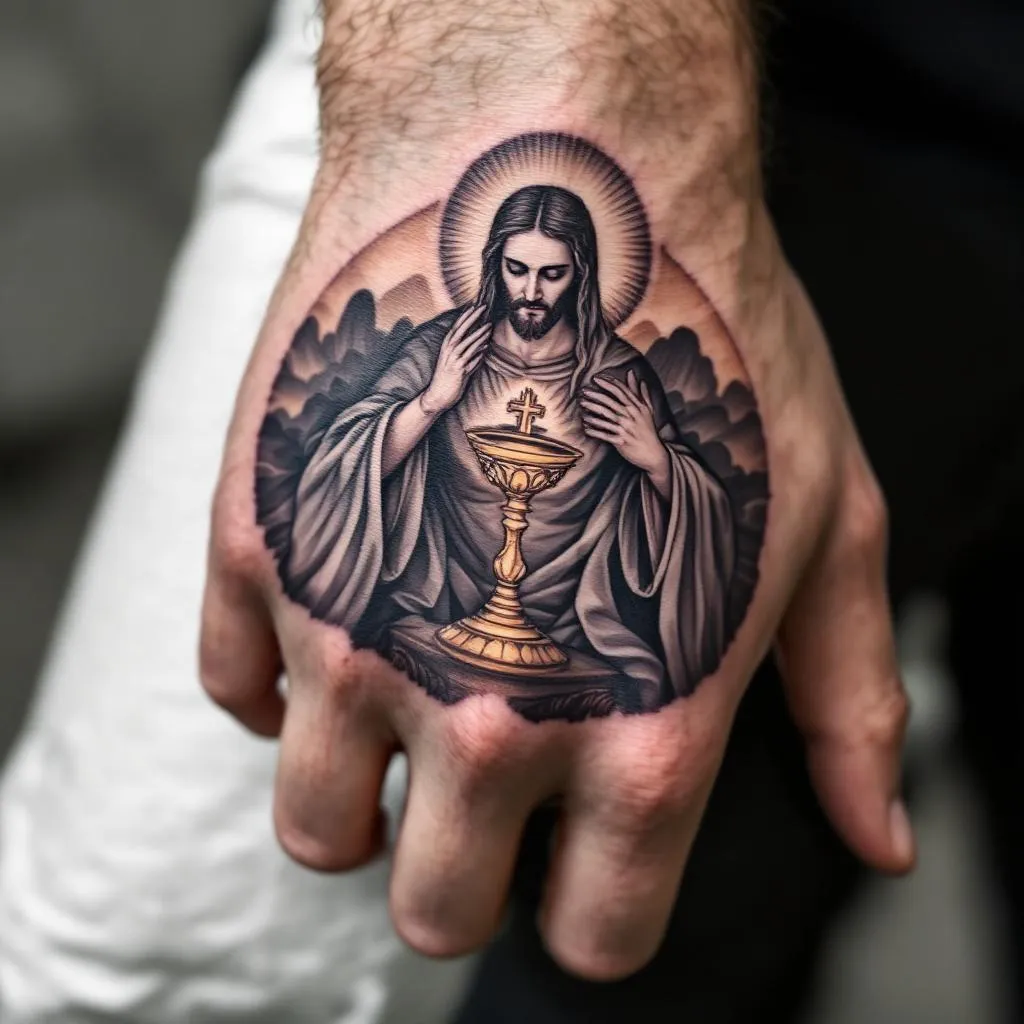
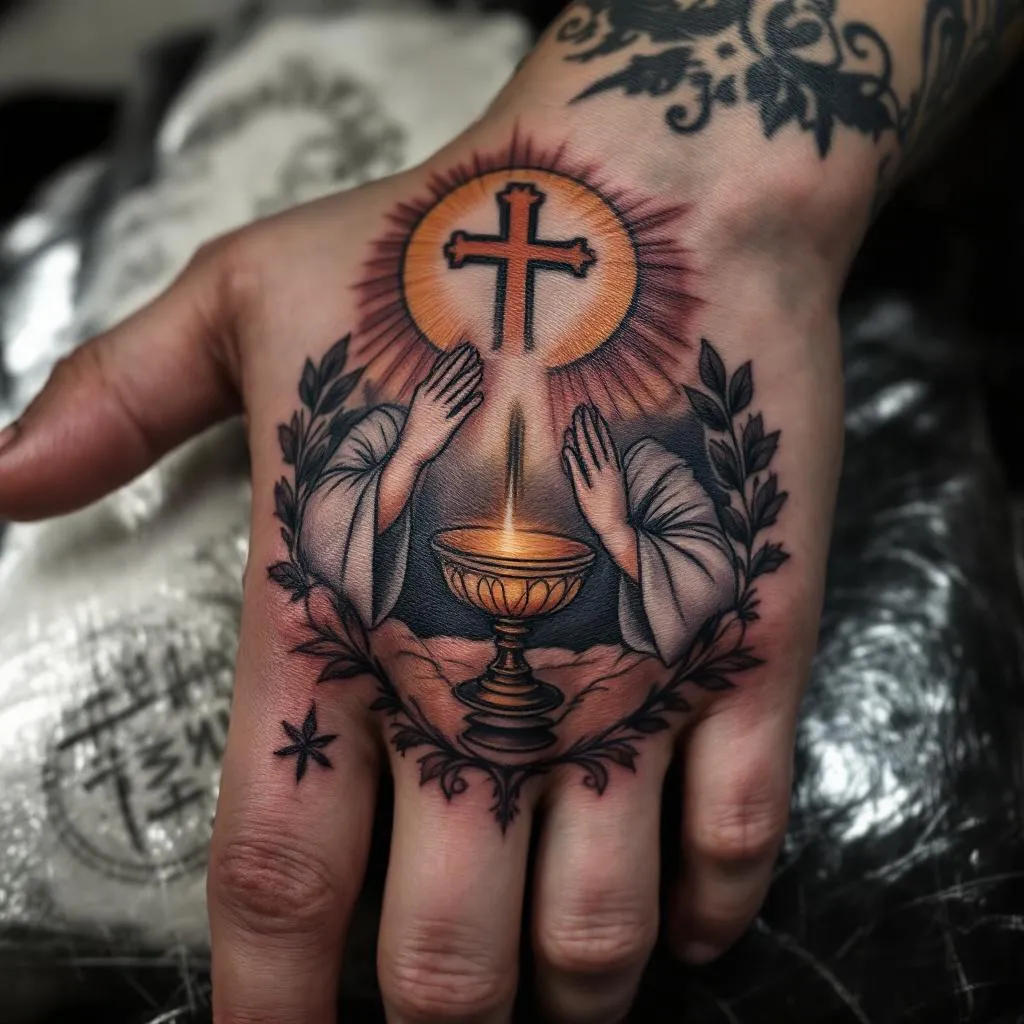
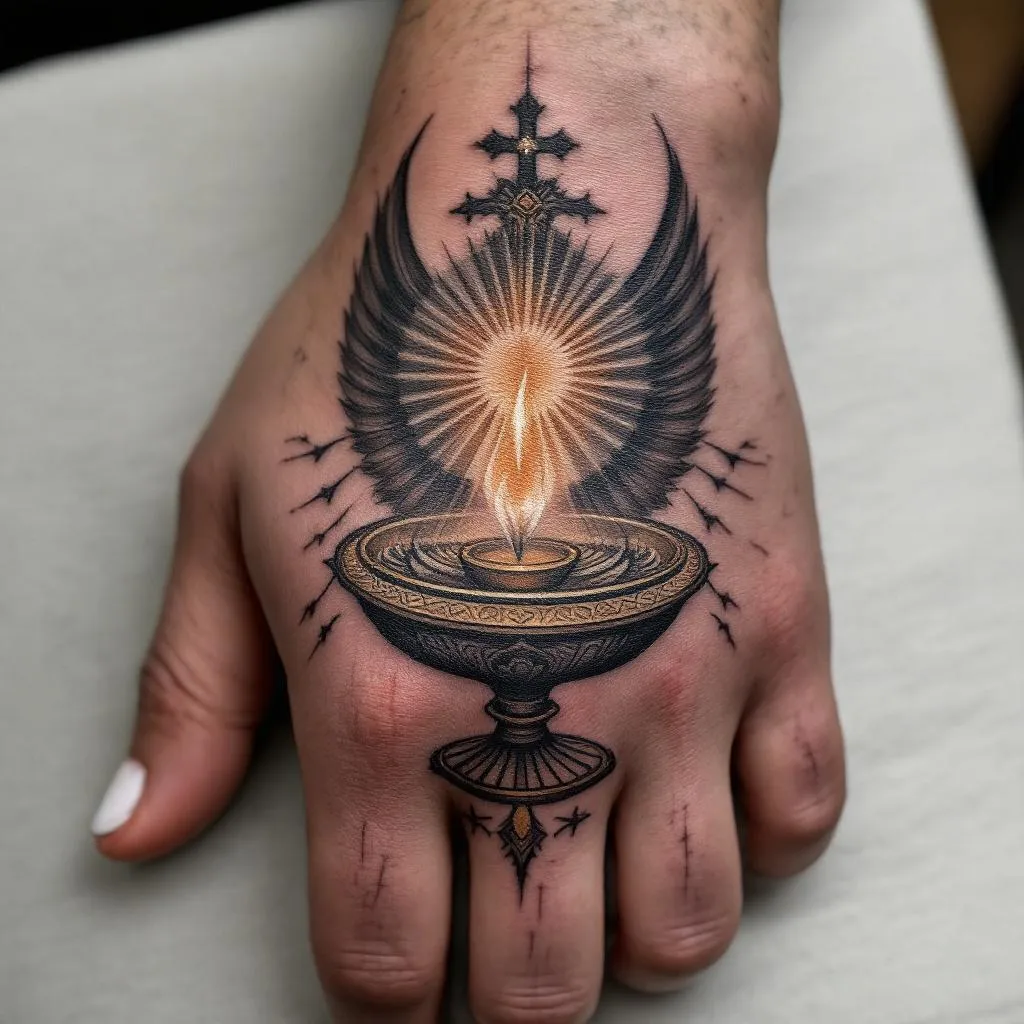
- Small chalice on the lower hand with the host centered above it
- IHS monogram wafer on the dorsum with shadow reaching knuckles
- Single line outline of a host above the knuckles with dotwork shading
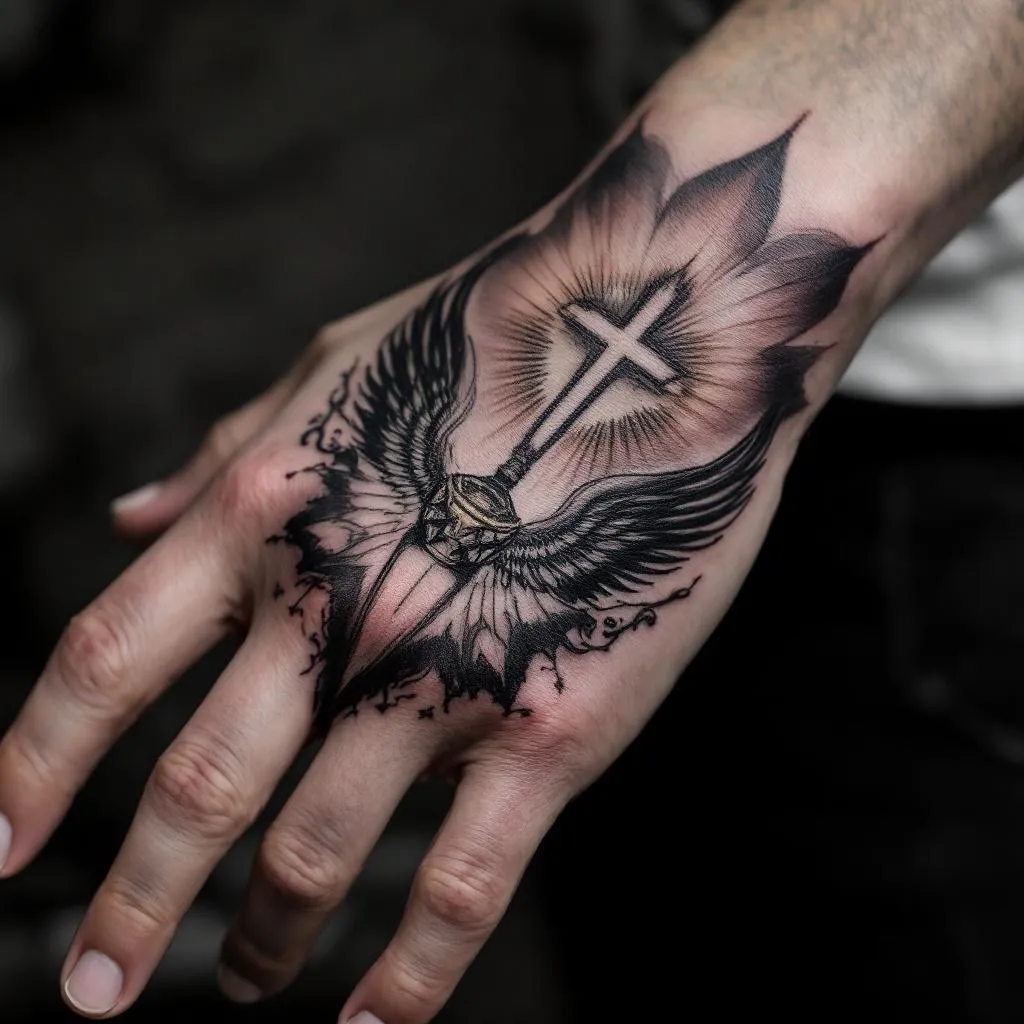
- Subtle cross inset into the wafer design, shadowed toward the fingers
- Praying hands on the forearm with a tiny Eucharist near the wrist
- Small dove of the Holy Spirit hovering behind a simplified host
Conclusion
This exact concept — a lone Eucharist on the back of the hand with a deliberate shadow stretching to the knuckles — is a focused, devotional piece that visually ties sacramental faith to daily action. Work with an experienced hand-tattoo artist who understands greywash shadowing and the limits of dorsal skin movement to preserve the clarity of the host and the softness of the shadow. Expect to schedule at least one touch-up, follow strict aftercare to prevent fading, and discuss size and placement in-person so the final piece remains both reverent and long-lasting. With careful execution, the tattoo will read as a quiet but unmistakable testament: faith that reaches into the things you do with your hands.
Similar Designs You Might Like
Try On
Preparing your design...
