 InkAI
InkAI 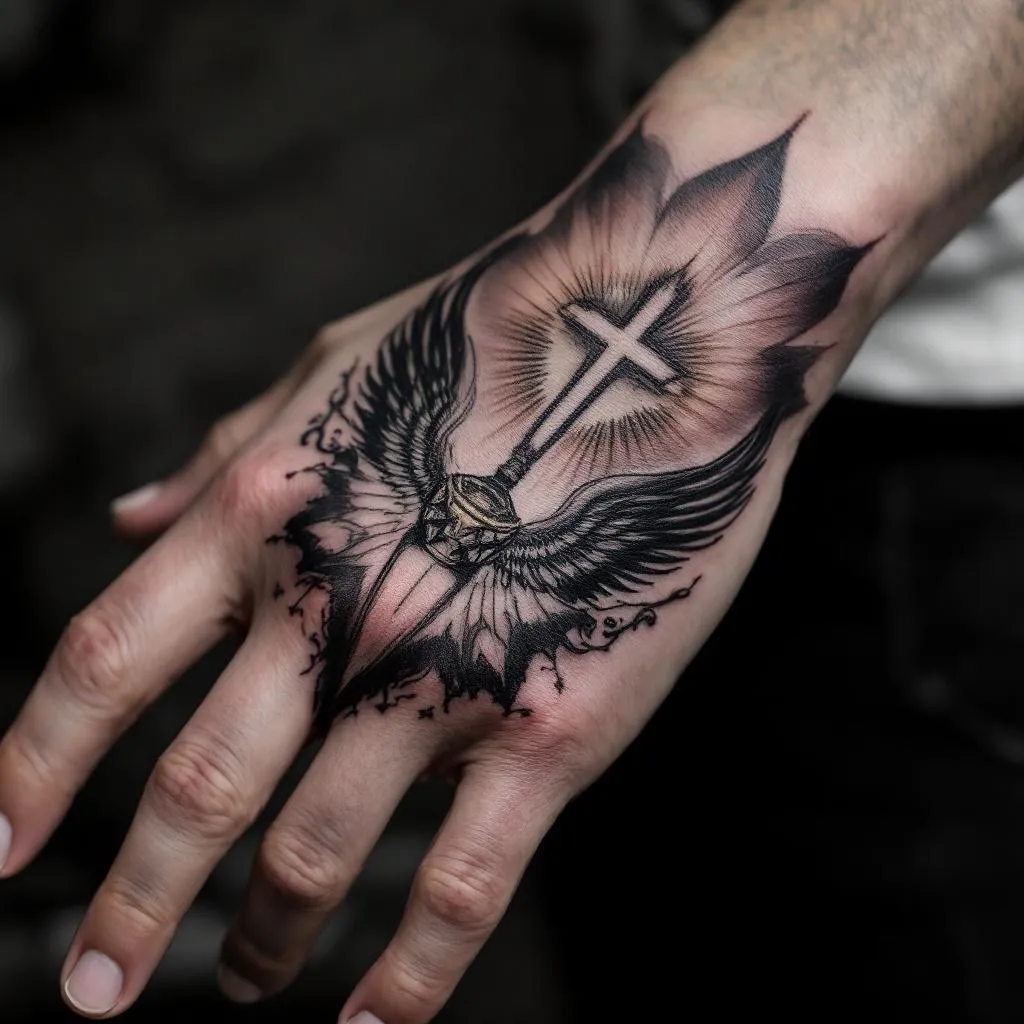
Eucharist, Hand, Religious Tattoo
Realistic style
✨ Design Your Dream TattooDesign Description
quiero esto en la mano, la eucaristía católica con sombra y que me llegue la sombra hasta los nudillos y que no salga nada más solo la eucaristía y de forma redonda
Tattoo Meaning & Symbolism
A round Eucharist tattoo on the hand is a direct, unmistakable symbol of Catholic faith and devotion. The circular host represents the Body of Christ, the center of the Mass and the sacrament of Communion. Because you specified "solo la eucaristía" and a strictly round form, the design emphasizes purity, unity, and the wholeness of the sacramental presence without additional iconography to distract from that core meaning.
The shadow that extends from the bottom of the round host up to the knuckles adds an extra layer of symbolism: it can read as the movement of grace outward from the sacrament into everyday life, or as the weight and responsibility of faith carried visibly on the hands. A shadow that stops at the knuckles also creates a barrier between the sacred circle and the rest of the hand, underlining the host as the sole focal point.
Tattoo Style & Placement
Because you want only the round Eucharist and a shadow reaching to the knuckles, the ideal style is high-contrast black and grey realism with careful soft shading. The host itself should be a clean circle sized to the back of the hand—large enough to be unmistakable but proportionate to your metacarpal width (commonly around 2.5–3.5 cm for most adult hands). Avoid ornate details like rays or a monstrance rim if you want nothing else present; instead, a subtle beveled edge or very light texturing of the wafer surface can give realism without adding new motifs.
The shadow should be designed as a soft gradient that extends from the lower edge of the circle down toward and over the proximal phalanges, ending at the knuckles. To keep the design crisp over time, the shading should be slightly stronger near the host and taper before reaching the knuckles, using stippling or tightly controlled smooth shading so it won't blur into the skin folds as the tattoo ages. Placement on the dorsum of the hand centered over the metacarpal area will align the shadow naturally with the knuckles when your hand is relaxed.
Personal & Cultural Significance
A visible Eucharist tattoo on the hand is a bold personal declaration of faith. For many Catholics it signals daily remembrance of Communion, a commitment to live according to sacramental grace, or a memorial to a profound religious experience. Because the hand is one of the most public places to wear a tattoo, this design can function as a witness—simple, readable, and deliberately unobscured.
Be mindful that hand tattoos are highly visible and can carry social and professional implications. In some religious communities the visible display of sacral imagery is deeply respected; in others, clergy or parishioners may prefer sacred symbols to remain within liturgical contexts. It’s worth discussing your intention with a spiritual advisor if you want the tattoo to align with parish expectations. Also note that hand tattoos fade faster and often need touch-ups, which can influence how the symbol ages and continues to represent your faith over time.
Similar Tattoo Ideas
- Round host with small engraved "IHS" at the center, minimal texturing
- Plain circular wafer rendered in soft white highlights and thin grey rim
- Host with a faint crescent-shaped shadow only along the lower edge
- Small round host placed on the webbing between thumb and index finger
- Minimalist host with negative-space shadow that leaves knuckles uninked
Conclusion
This hand piece—an unadorned, round Eucharist with a shadow that reaches to the knuckles—will be a powerful, focused emblem of faith when executed with clean lines and careful shading. Take clear reference photos, discuss exact diameter and shadow taper with a tattooer experienced in hand work and fine black-and-grey gradients, and plan for at least one touch-up session to keep the host crisp. When done thoughtfully, the design will read clearly, age more gracefully, and remain a solemn personal witness every time your hand is seen.
Similar Designs You Might Like
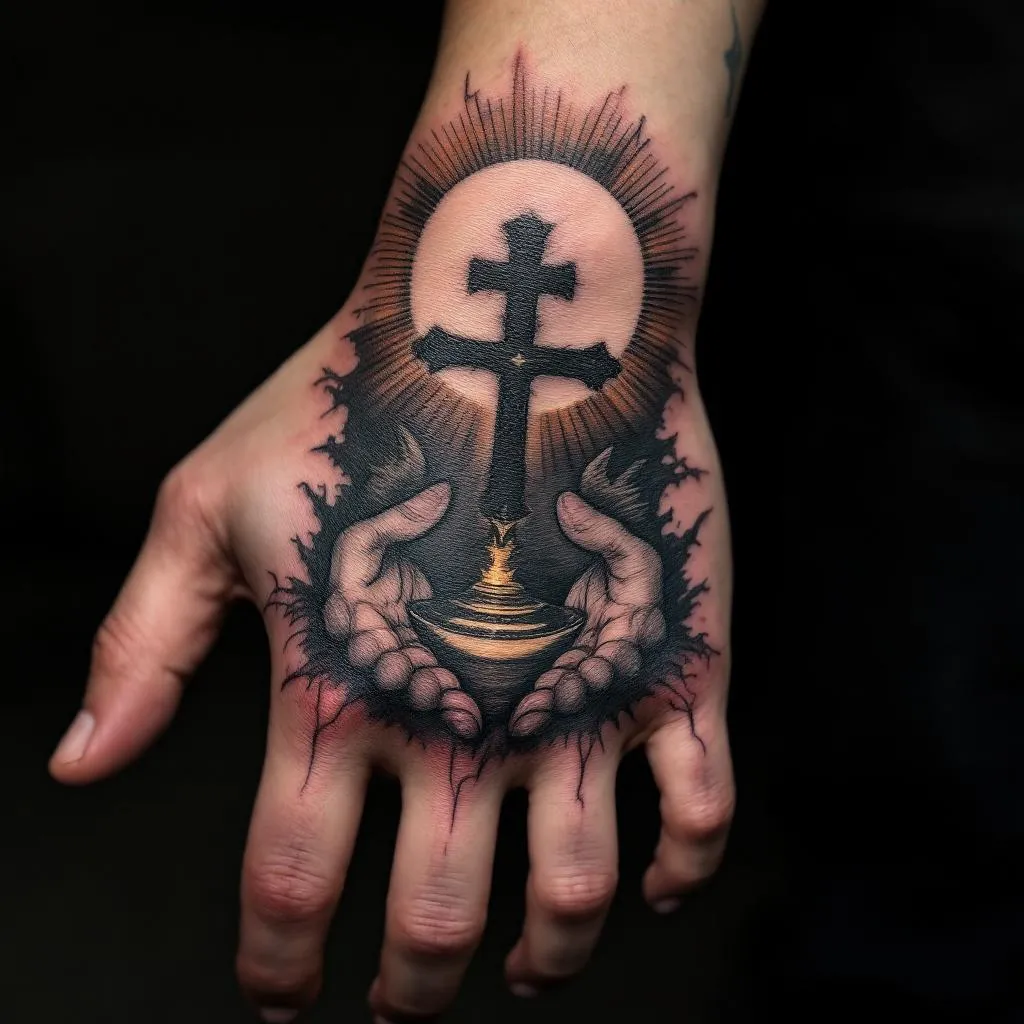
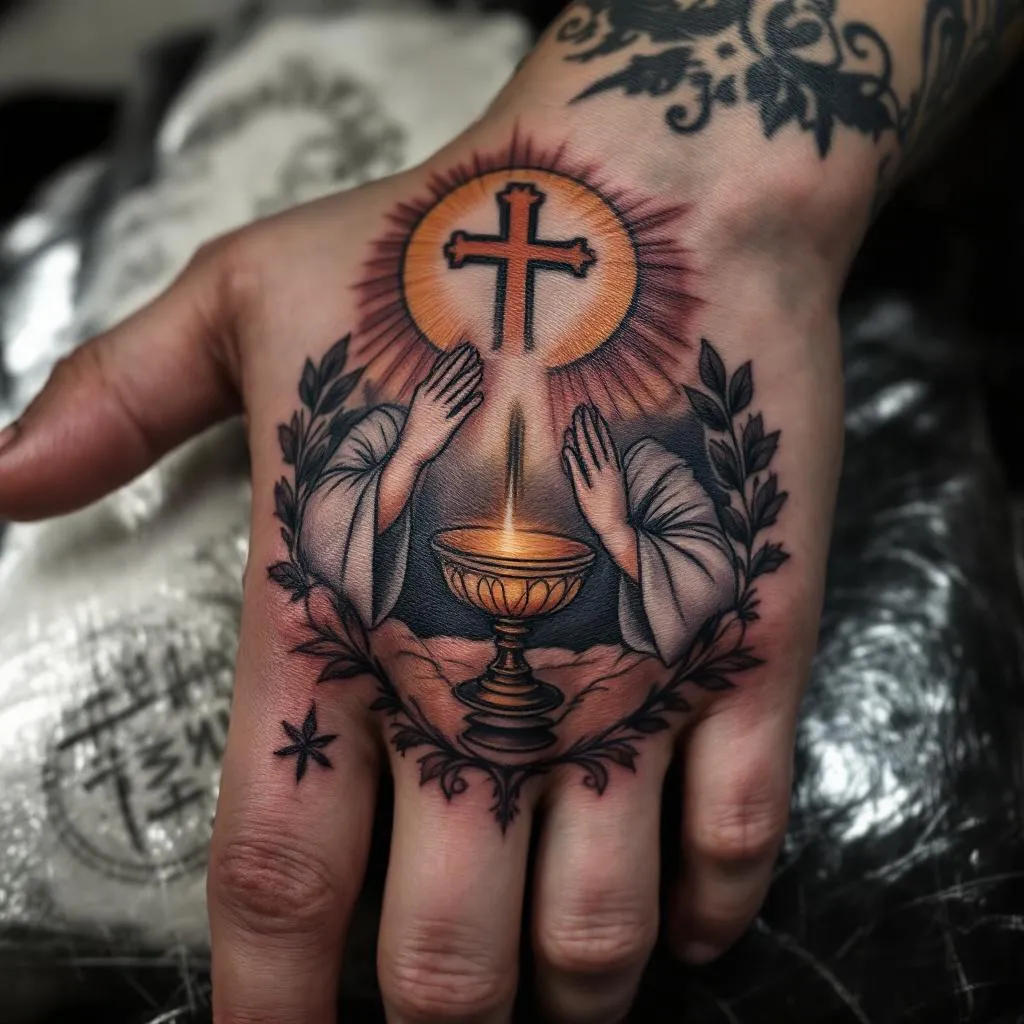
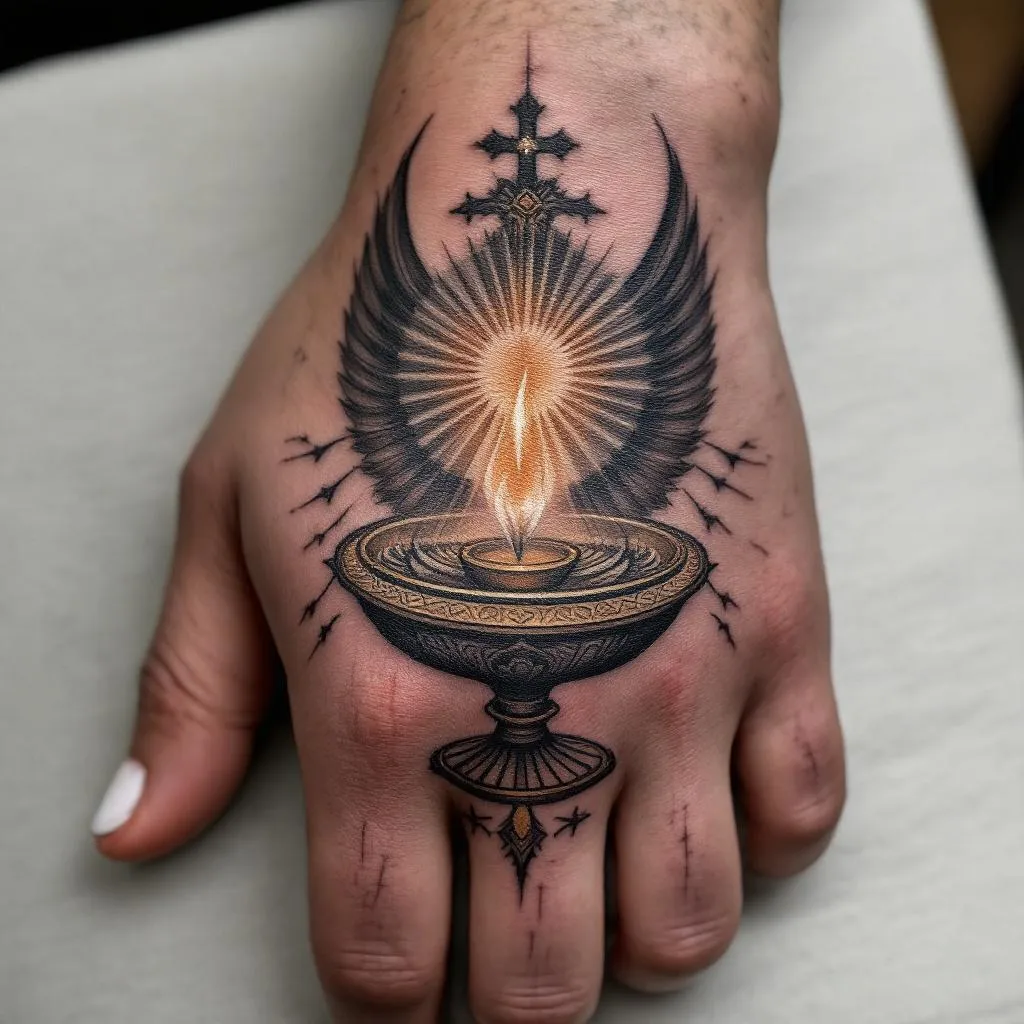
Try On
Preparing your design...
