 InkAI
InkAI 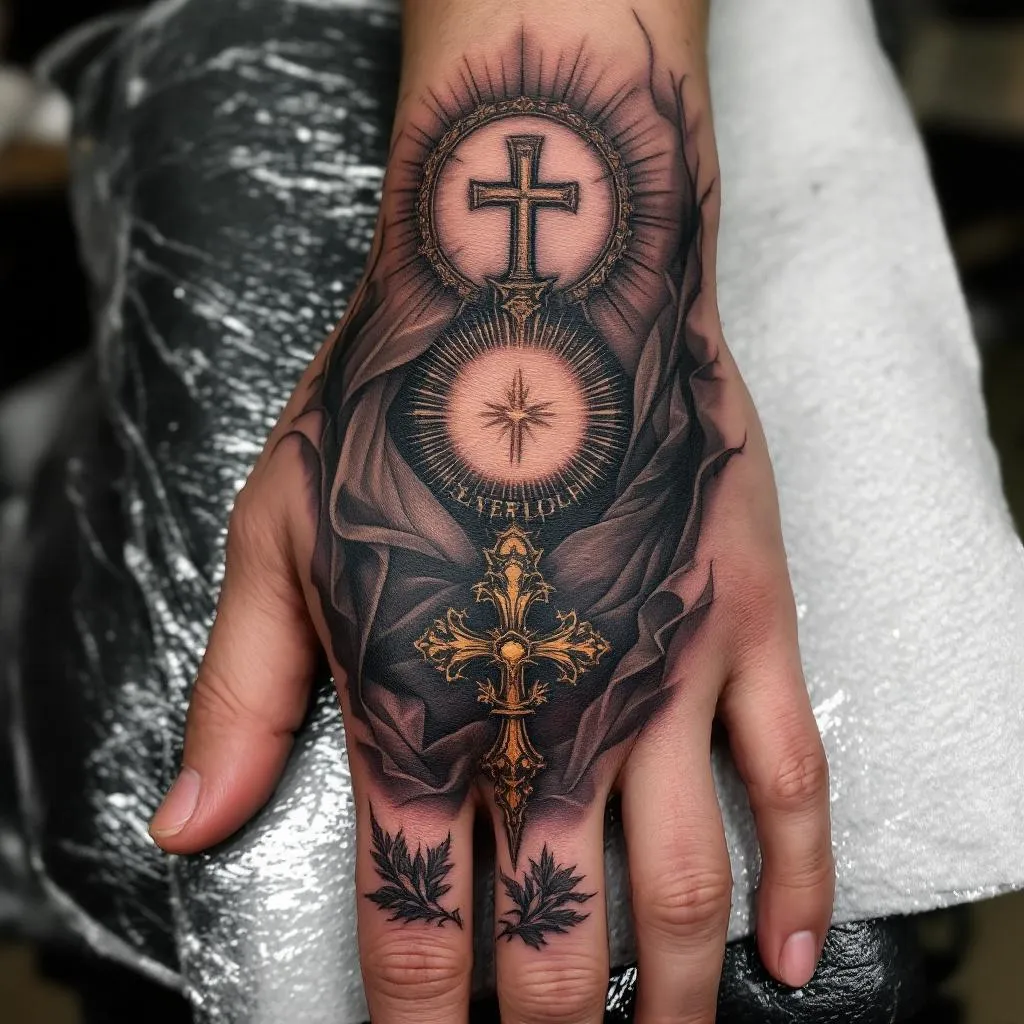
Religious, Hand, Eucharist Tattoo
Realistic style
✨ Design Your Dream TattooDesign Description
quiero esto en la mano que la cubra completa, la eucaristía católica con sombra y que me llegue la sombra hasta los nudillos y que no salga nada más solo la eucaristía y de forma redonda como la foto que envié QUE NO SALGA JESÚS NI OTRO RELIGIOSO SOLO LA EUCARISTÍA
Tattoo Meaning & Symbolism
This design centers on a single, circular Catholic Eucharist wafer placed prominently on the hand, with a soft, dark shadow radiating outward and reaching the knuckles. The Eucharist as an isolated image without any depiction of Jesus or other religious figures emphasizes the sacramental symbol itself: communion, spiritual nourishment, and a personal commitment to the ritual presence of the host. The round shape echoes the wafer’s form and the idea of wholeness and continuity. The shadow that extends to the knuckles visually anchors the symbol to the body, suggesting that the sacrament’s influence reaches into everyday action and touch—faith integrated into what you do with your hands.
Tattoo Style & Placement
For a hand-covering piece like this, the design works best placed on the dorsum of the hand (back of the hand) so the round host sits centered over the metacarpal area and the shadow fans down to the knuckles. To keep the request literal—only the Eucharist in a round form with shadow up to the knuckles—black-and-grey realism with strong contrast is ideal: leave the wafer as lighter negative space or very light grey with subtle textural lines to suggest the wafer’s thinness and any embossing, and use smooth gradient shading for the shadow to reach and wrap subtly around the knuckles. Avoid additional elements or figures; a crisp circular boundary for the wafer with a soft vignette-style shadow will keep the composition clean and legible on the small, mobile canvas of the hand. Expect the shadow to be darker near the host and feather out toward the knuckles, and anticipate routine touch-ups since hand tattoos fade faster due to friction and frequent washing.
Personal & Cultural Significance
On a personal level, this tattoo communicates a direct, focused devotion to the Eucharist as a sacrament rather than to iconography of saints or Christ’s image. In many Spanish-speaking and broadly Catholic communities, the Eucharist carries deep communal and familial meaning—receiving and sharing the host is tied to identity, memory, and ritual practice. Choosing to place it on the hand makes that symbolism public and tactile: a visible reminder of faith in daily actions. Be aware there can be varied responses: some parish communities may appreciate the devotional intent, while others view sacred objects on highly visible areas as private or solemn; it’s worth considering how it will be perceived in workplaces, liturgical settings, and family contexts.
Similar Tattoo Ideas
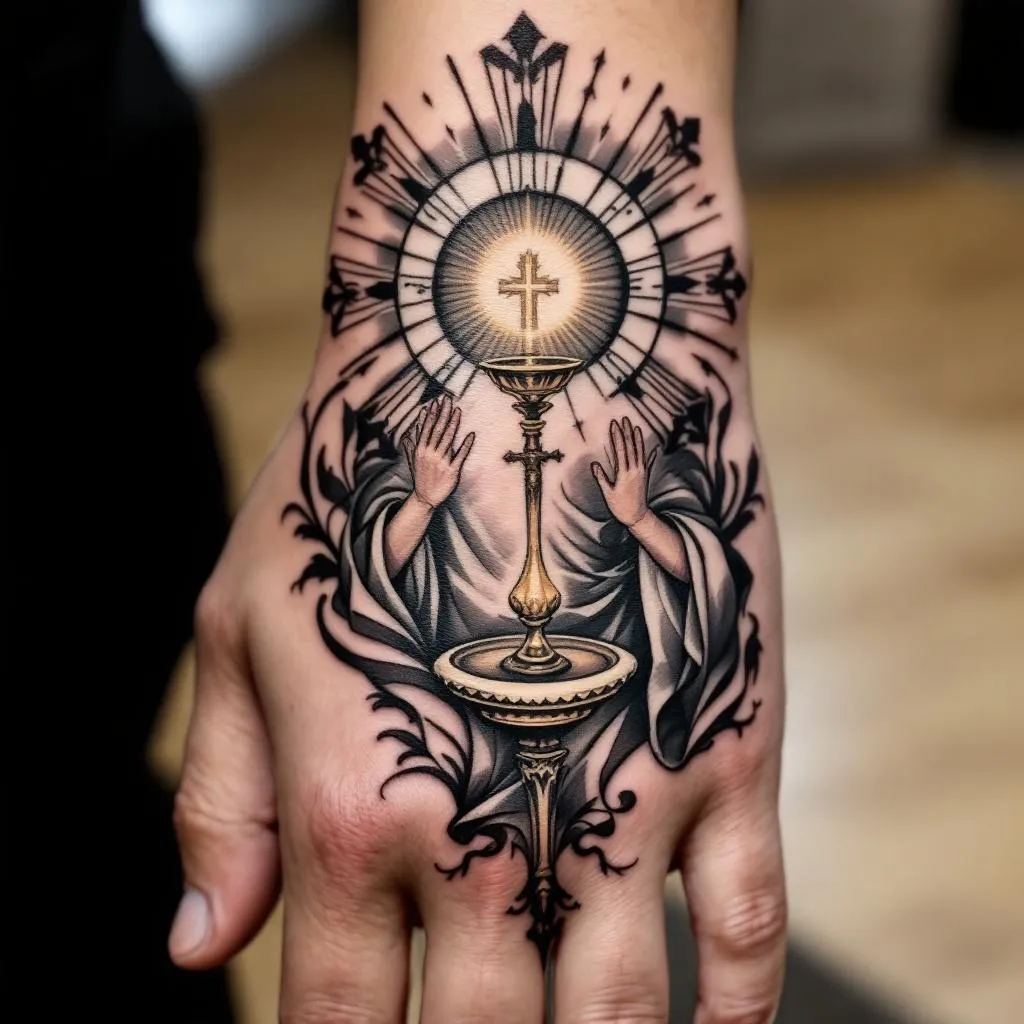
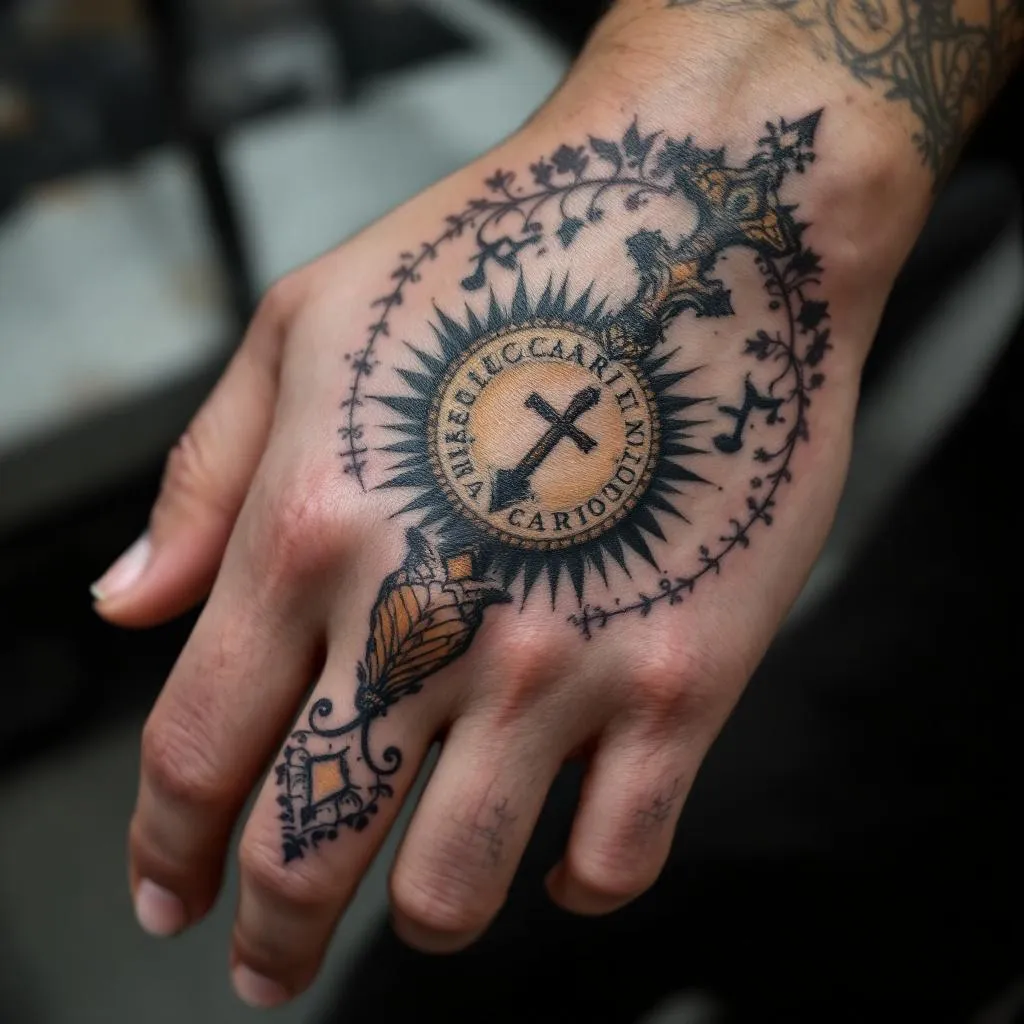
- Round host with a subtle embossed cross and faint radial rays, shadowed to the knuckles
- Minimalist wafer as negative space circle with stippled shadow across the back of the hand
- Host centered inside a thin circular frame (no additional figures), shadow extending to finger bases
- Monochrome host with delicate micro-line texture and a graduated charcoal shadow that fades at the knuckles
- Simple host with faint latin “IHS” engraved look on the wafer (keeps focus on the sacrament, no figures)
Conclusion
This hand tattoo—an isolated round Eucharist with shadow reaching to the knuckles—is a bold, intimate statement of sacramental devotion that reads clearly from close range and in everyday movement. To make it successful, work with an artist experienced in hand placements and fine black-and-grey shading, plan a stencil centered over the metacarpals, and expect proactive aftercare and periodic touch-ups. Communicate your firm requirement that nothing else be added—no figures, no extra ornamentation—so the wafer alone remains the sole, powerful element on your hand.
Similar Designs You Might Like
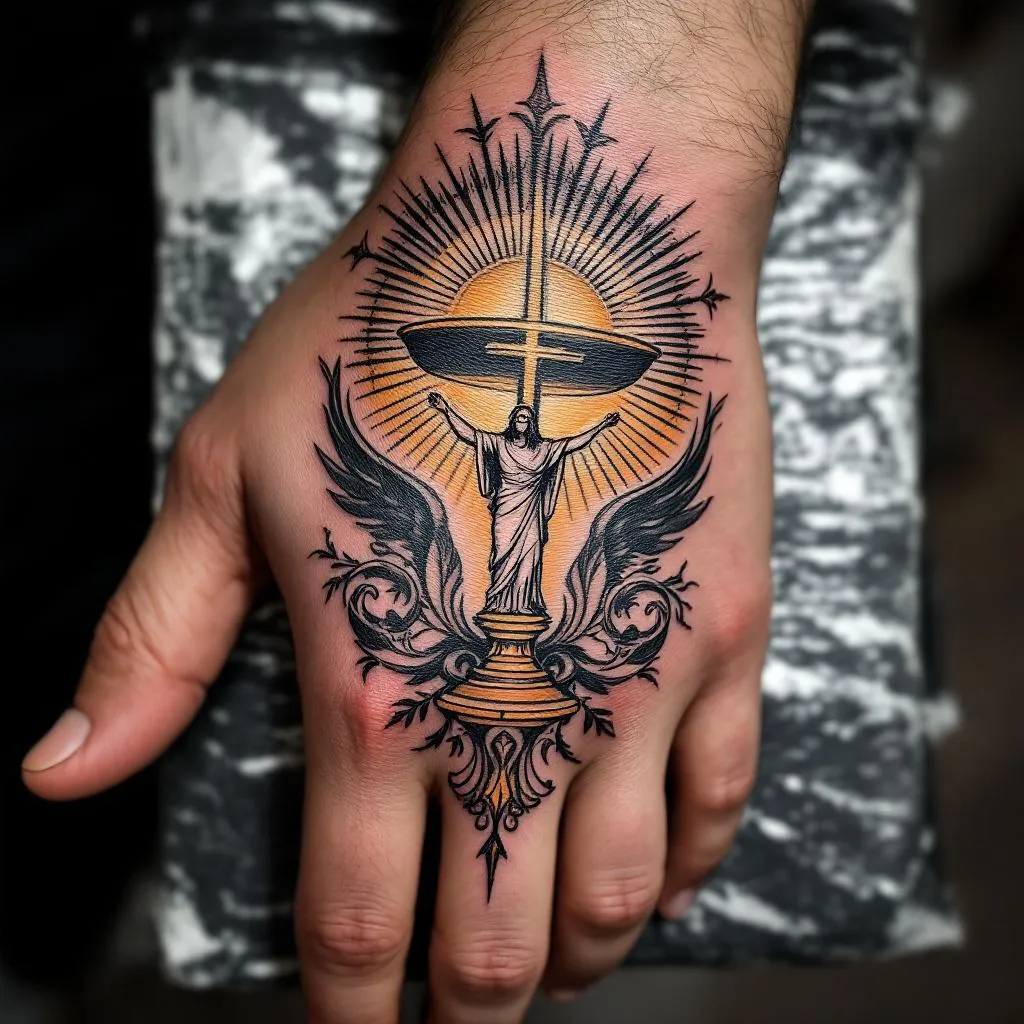
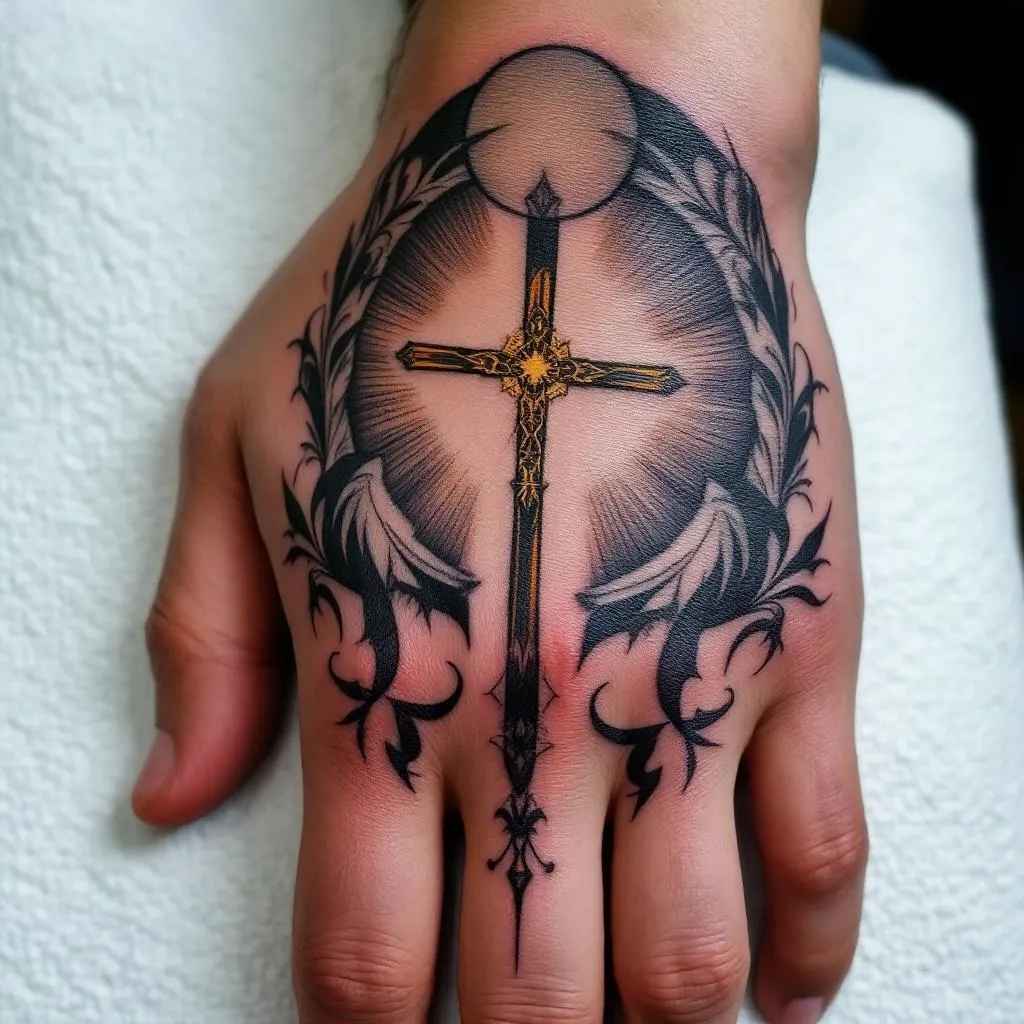
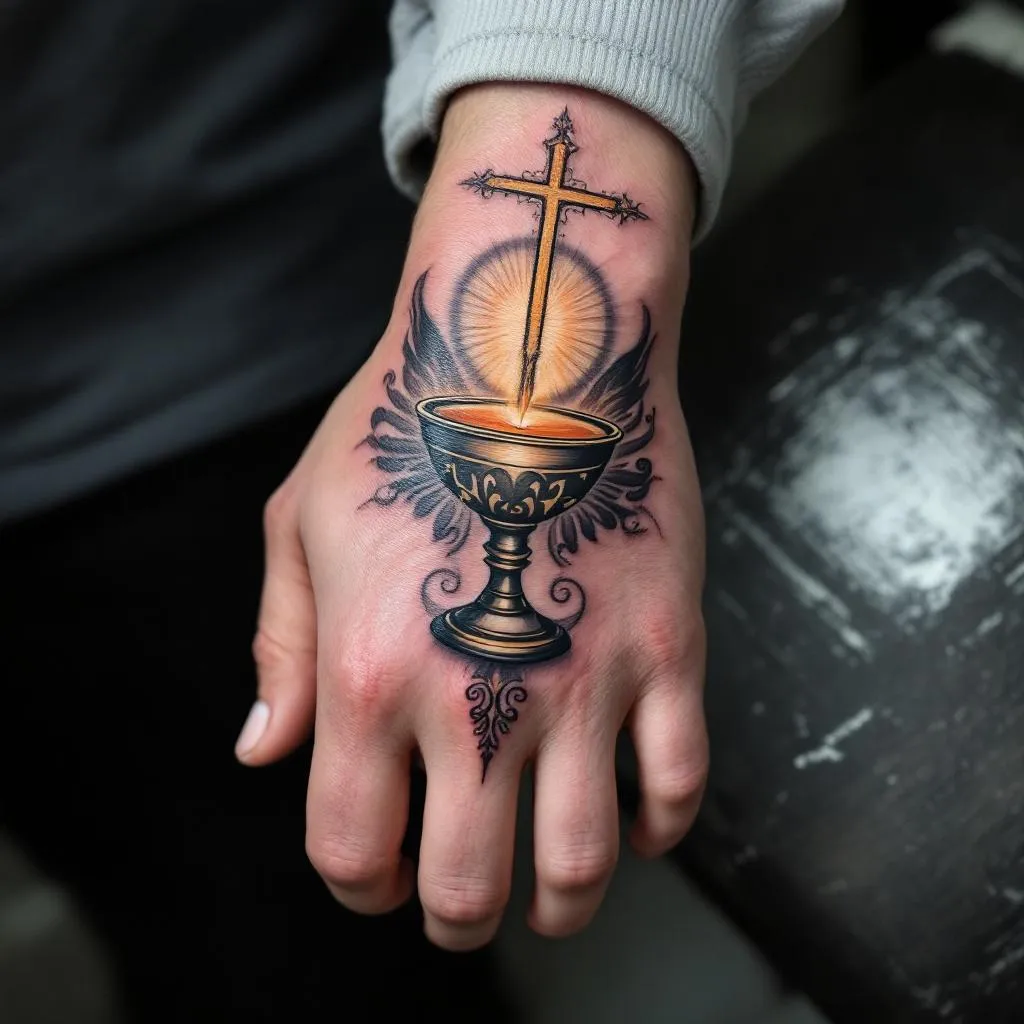
Try On
Preparing your design...
