 InkAI
InkAI 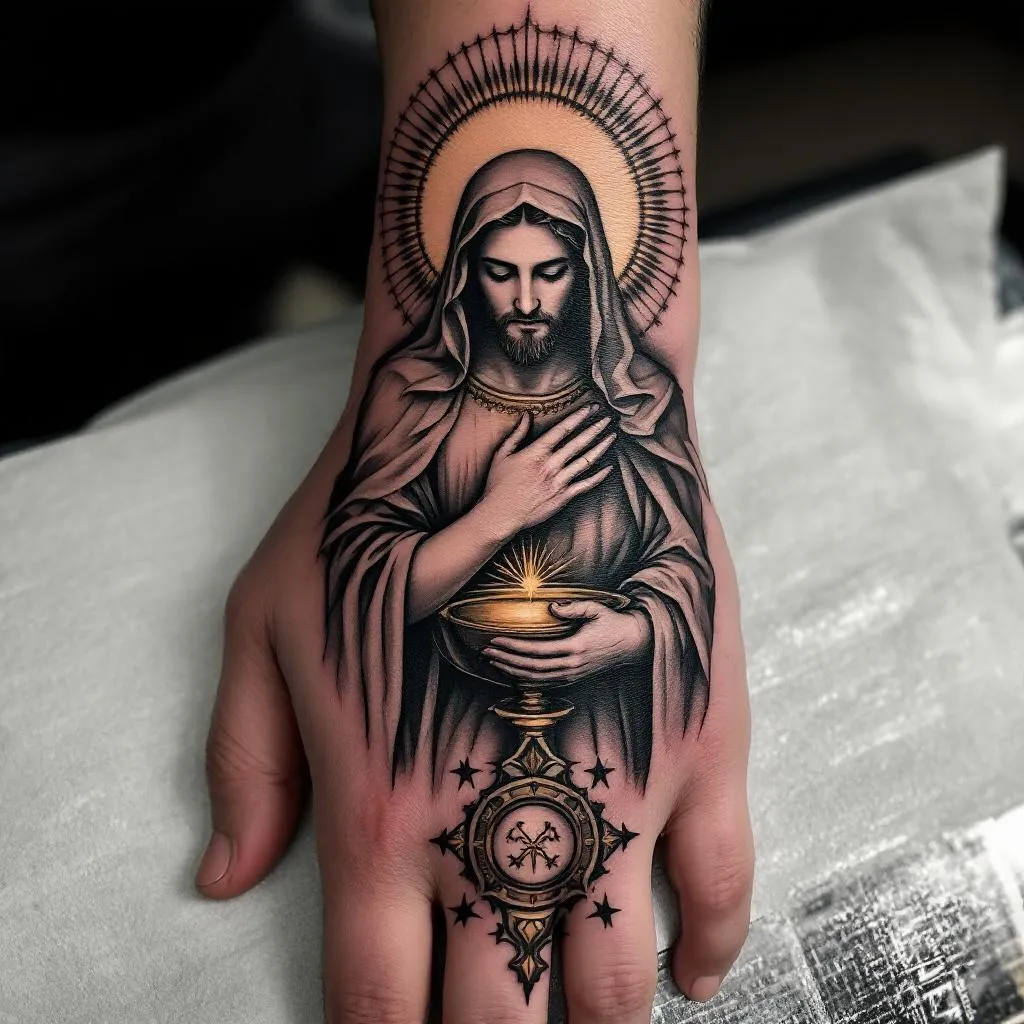
Masculino, Eucaristía, Realista Tattoo
Realistic style
✨ Design Your Dream TattooDesign Description
quiero esto en la mano que la cubra completa, la eucaristía católica con sombra y que me llegue la sombra hasta los nudillos y que no salga nada más solo la eucaristía y de forma redonda como la foto que envié
Tattoo Meaning & Symbolism
This design—the round Catholic Eucharist (a host) inked to cover the entire hand with a shadow that reaches the knuckles and no other imagery—speaks directly to the sacramental heart of Catholic devotion. The host itself symbolizes the Body of Christ, sacrificial love, and the real presence experienced in Communion. Placed so it dominates the hand, the image becomes a constant, tactile reminder that faith is not just believed but enacted through one's hands: prayer, service, and daily actions.
The cast shadow running down to the knuckles adds layered symbolism. Rather than decorative rays or extra motifs, the shadow functions as a visual extension of the sacrament into the practical world. It can read as grace falling onto the parts of the body used to serve others, or as the weight and responsibility of living out Eucharistic values in everyday deeds. The deliberate absence of other elements emphasizes purity, singular devotion, and an uncluttered commitment to the sacrament itself.
Tattoo Style & Placement
For a full-hand piece that remains strictly the round host with a shadow to the knuckles, black-and-grey realism or soft tonal realism is the most effective style. The host should be rendered with subtle texture and rim contrast so its roundness reads clearly from a distance, while the shadow should be a soft, diffused gradation that tapers naturally toward and across the knuckles. Avoid hard ornamental lines, extra lettering, or surrounding symbols to respect the request for a single, circular image.
Placement specifics: center the circular host on the dorsal surface of the hand so the lower edge aligns above the knuckles; the shadow projects downward across and between knuckles to create the intended reach. Because the hand is a high-motion, high-friction area, expect faster fading—fine texture on the wafer should be balanced with slightly bolder edges to preserve the form over time. Anticipate touch-ups and plan needle depth and shading accordingly with an experienced artist.
Personal & Cultural Significance
This tattoo is explicitly declarative: it announces a personal, Eucharistic-centered faith that the wearer wants visible and integral to daily life. For many Catholics, the host is the closest symbol of Christ’s abiding presence; placing it on the hand is a way to consecrate one’s actions. The shadow to the knuckles can signify that grace informs how the wearer uses their hands—working, helping, blessing—or it can represent the solemn burden of responsibility that faith places on the believer.
Because the Eucharist is a profoundly sacred object in Catholicism, placing its image on a visible and tactile part of the body may evoke strong responses—deep respect from some and concern about propriety from others. It can be a powerful public statement of devotion, but you may want to consider pastoral conversations if you anticipate participating in liturgical settings where visible depictions of the host could raise questions. Ultimately, this design is both a private profession of faith and a public identity marker.
Similar Tattoo Ideas
- Full-hand round host with a very faint embossed cross at center and subtle knuckle shadow
- Minimalist circular host on the back of the hand with soft cast shadow toward the fingers
- Plain round wafer on the hand paired with a thin shadow that stops at the knuckles (for a more restrained reach)
- Host rendered with gentle leathery texture and high-contrast rim to maintain readability on the hand
- Small round host centered on the palm with shadowing that follows the natural creases
Conclusion
A single, round Eucharist covering the hand with shadow to the knuckles is a bold, intimate statement: it turns the hand into a living devotional surface where belief meets action. The restrained approach—no extra symbols, no text—keeps the message clear and powerful. If you choose this design, collaborate closely with a tattooist experienced in hand work and tonal realism, and consider the cultural and liturgical implications so the tattoo reflects both your faith and your intention with respect and clarity.
Similar Designs You Might Like
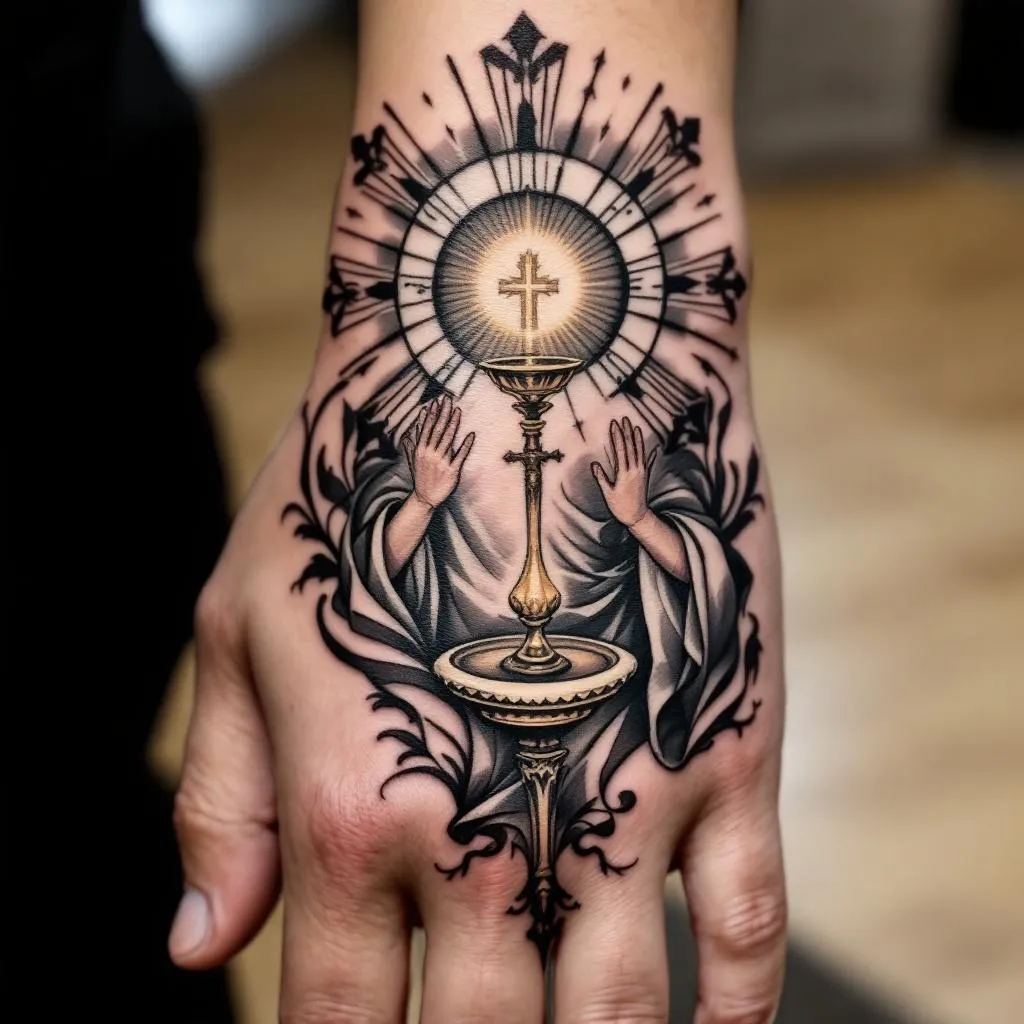
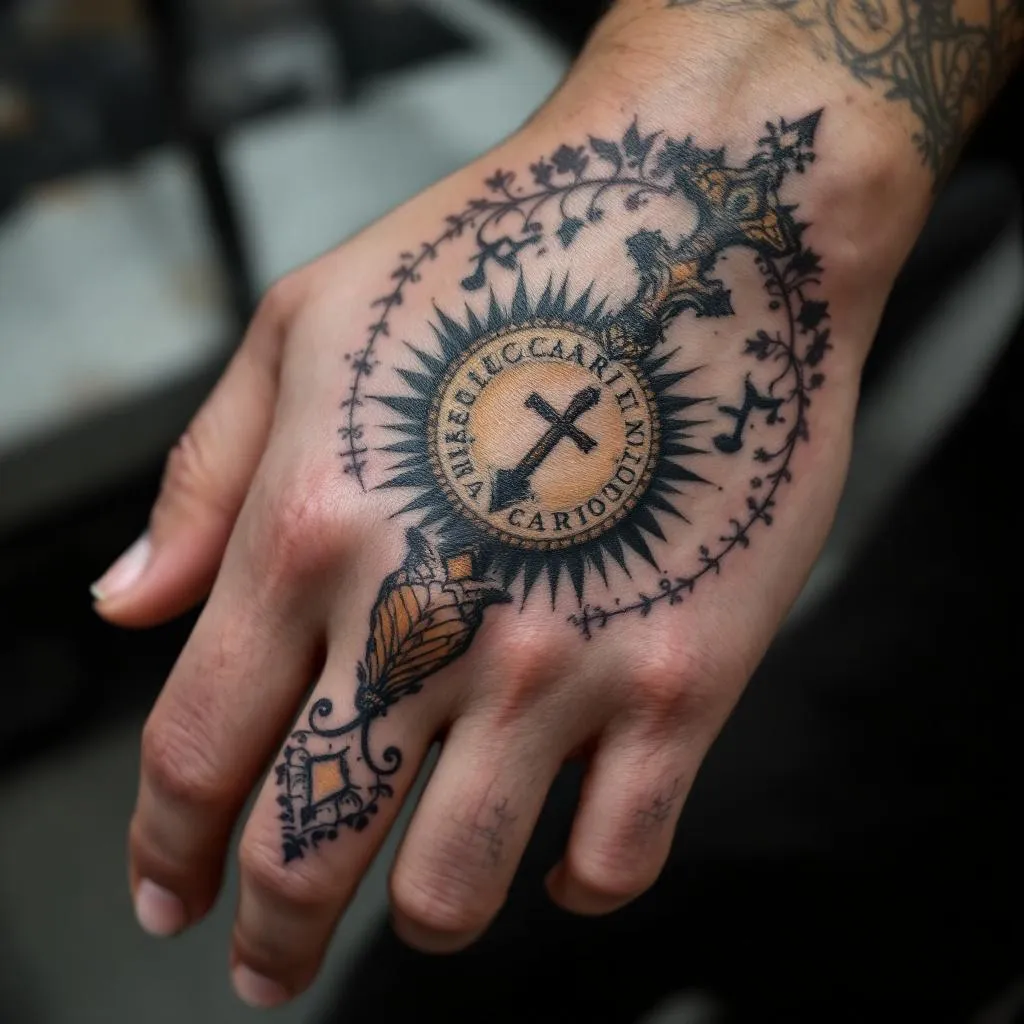
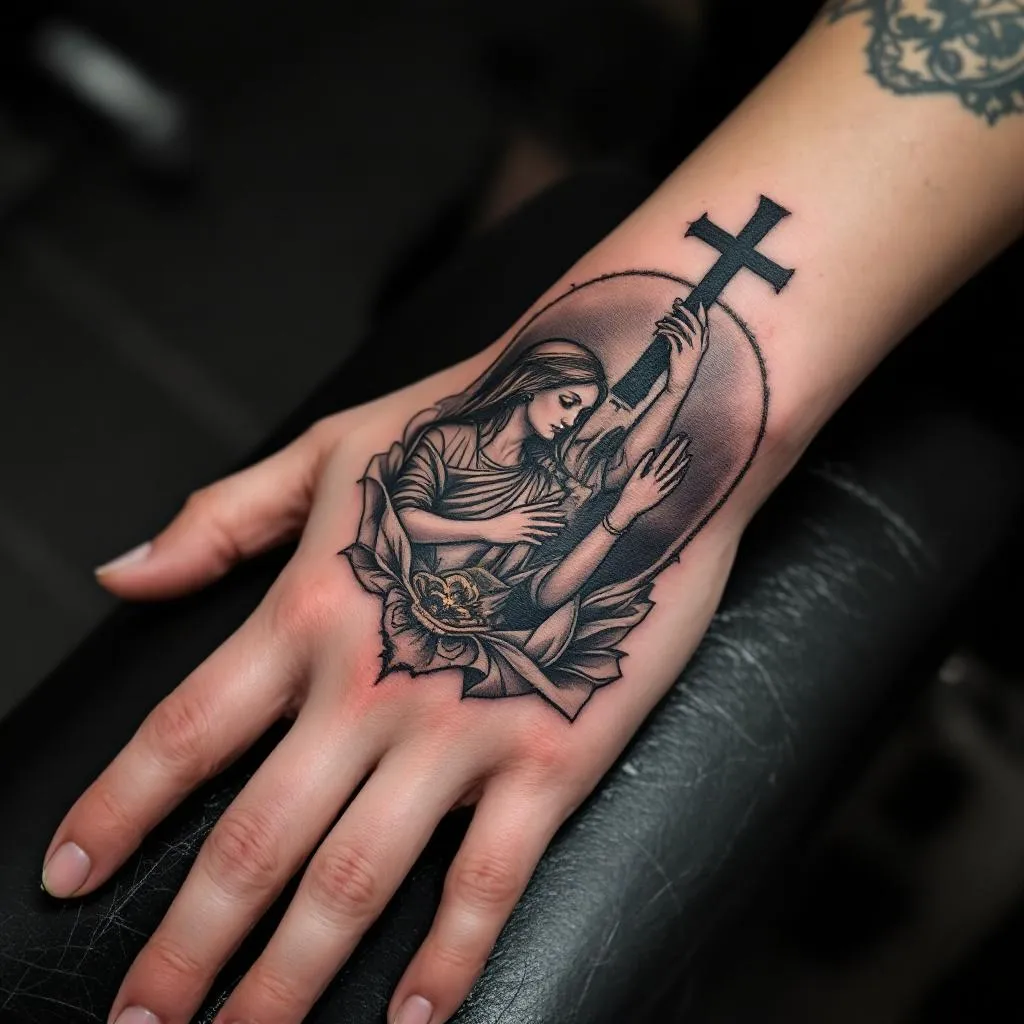
Try On
Preparing your design...
