 InkAI
InkAI 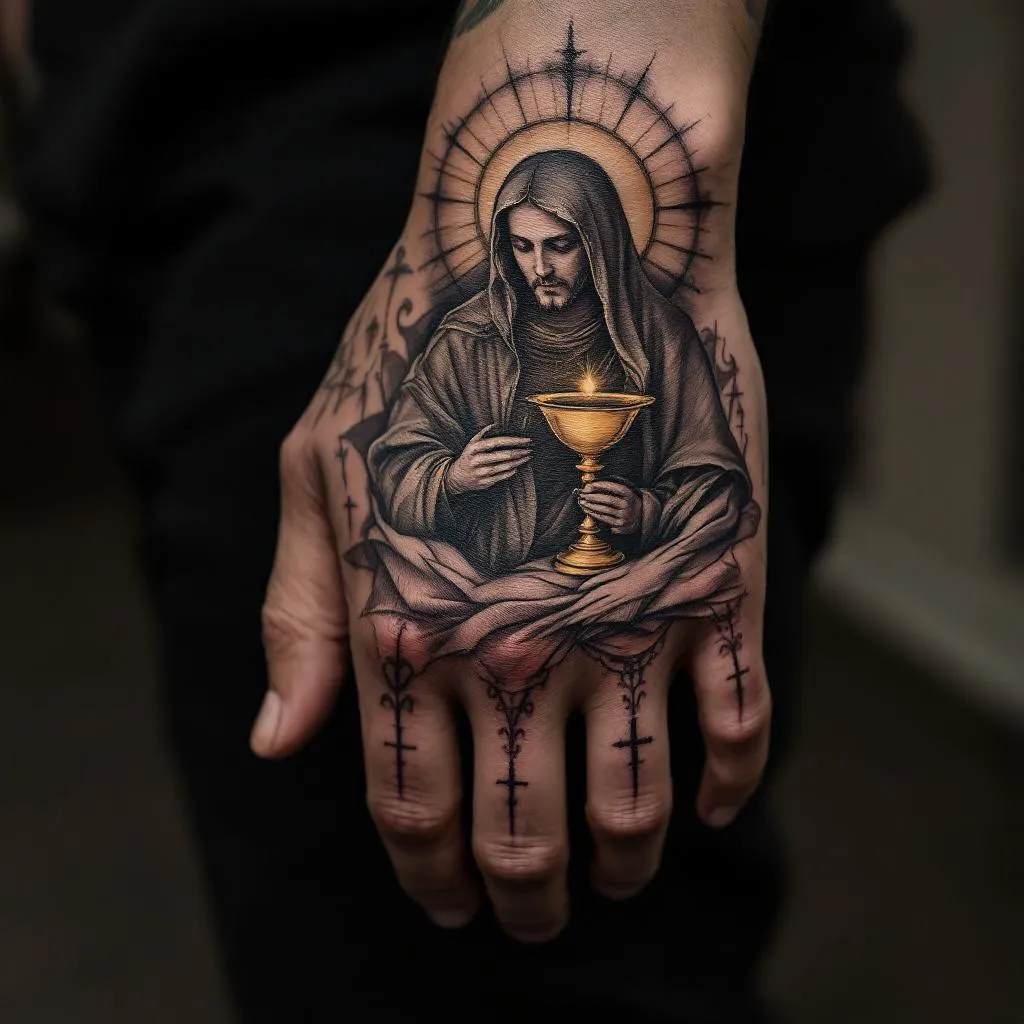
Tatuaje, Eucaristía, Mano Tattoo
Realistic style
✨ Design Your Dream TattooDesign Description
quiero esto en la mano, la eucaristía católica con sombra y que me llegue la sombra hasta los nudillos
Tattoo Meaning & Symbolism
This design — a Catholic Eucharist motif (the consecrated host, often shown above or inside a chalice or monstrance) placed on the back of the hand with a dramatic cast shadow extending all the way to the knuckles — reads as a very literal and visible declaration of faith. The host is the central symbol of Christ’s real presence in Catholic theology: communion, spiritual nourishment, sacrifice, and redemption. The chalice or monstrance framing the host emphasizes sacramental reverence, while the elongated shadow that reaches your knuckles adds layers of meaning: the shadow can represent the extension of grace into daily life, the weight or responsibility of faith carried by your hands, or the contrast between light (divine presence) and human darkness.
Tattoo Style & Placement
Specifically for the top of the hand, this tattoo benefits from high-contrast black-and-grey realism or chiaroscuro-style shading so the host reads clearly against skin and the shadow falls naturally across bone and tendons toward each knuckle. The host should sit just below the base of the fingers or centered between the second and third metacarpals so the cast shadow lines travel down and terminate at the knuckles as you requested. Use crisp white highlights or very light grey for the host’s wafer edge, soft gradients for the chalice or monstrance, and layered soft shading for the shadow that wraps slightly around knuckles — factoring in skin movement so the shadow visually “connects” when your hand is relaxed or slightly closed. Expect faster fading over knuckles; plan for thicker lines in the host's outline and touch-ups every 1–3 years to preserve the dark shadow band.
Personal & Cultural Significance
Placing the Eucharist on the hand is an intensely personal and public act: culturally within Catholic communities it signals devotion to the sacrament and can function as a continual reminder of daily communion, ministry, or personal conversion. On a social level the hand is a visible, working part of the body — so the tattoo states that faith is not only believed but practiced through action. Be mindful that sacred imagery on highly visible skin can provoke strong reactions: many will view it as a profound witness, while others (including some religious authorities) may have concerns about placing a consecrated symbol on a hand used for everyday tasks. If the intent is reverent, consider small sacramental details — a subtle monogram, a date of conversion, or a tiny rosary knot integrated into the shadow — to make the meaning unmistakably devotional rather than purely decorative.
Similar Tattoo Ideas
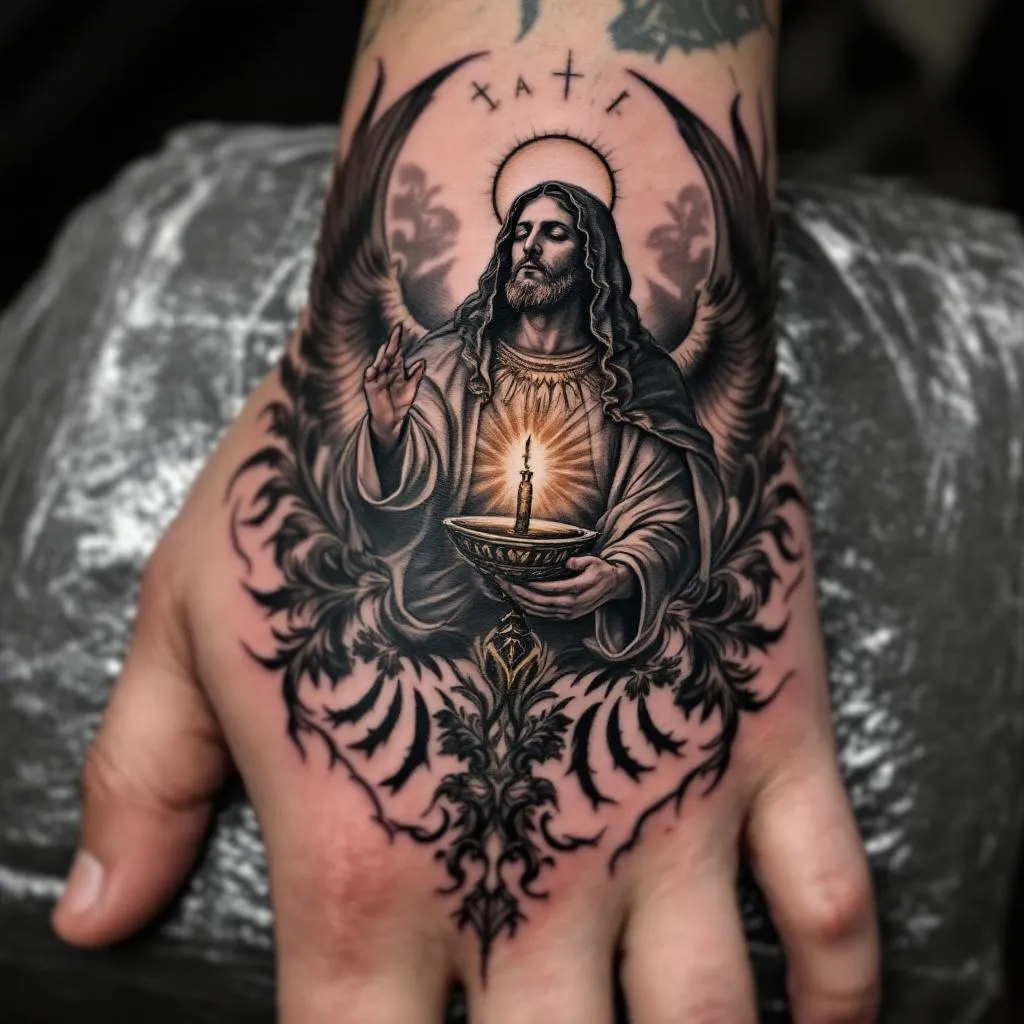
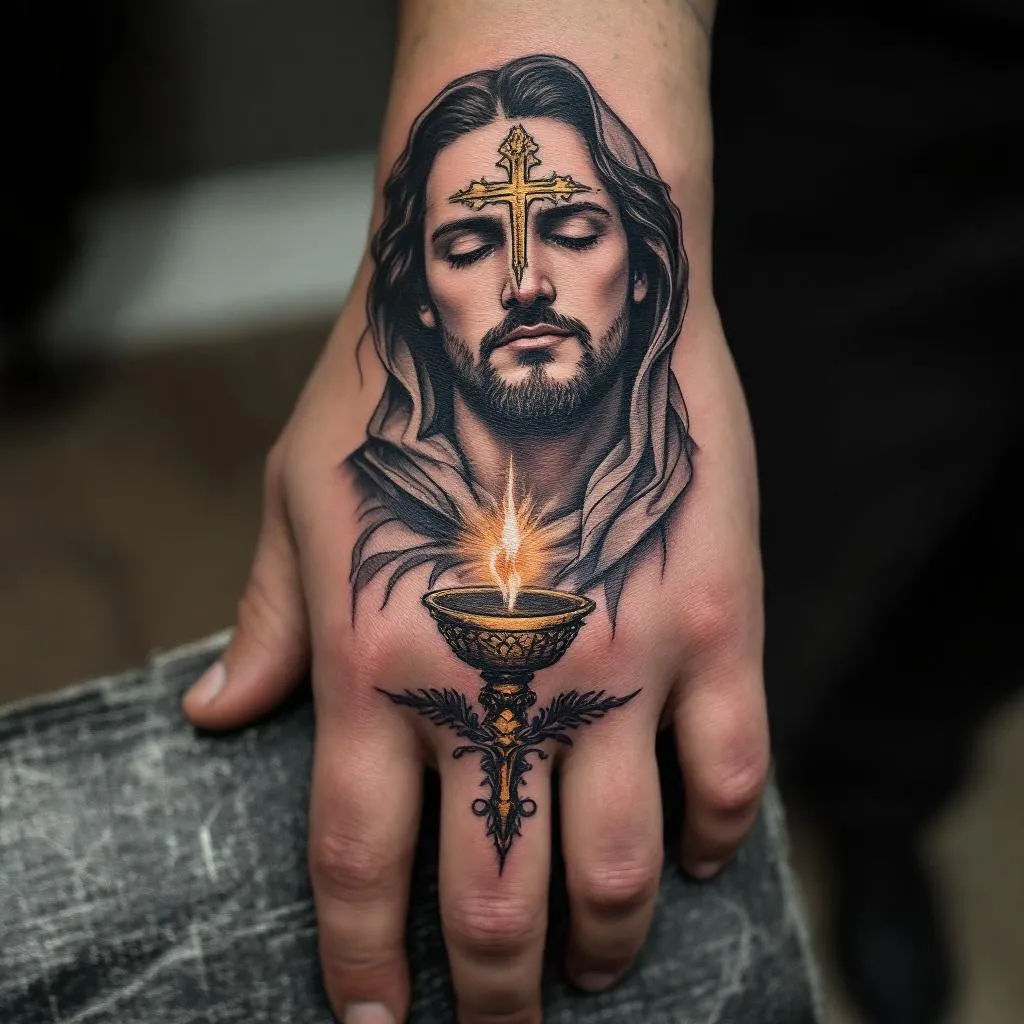
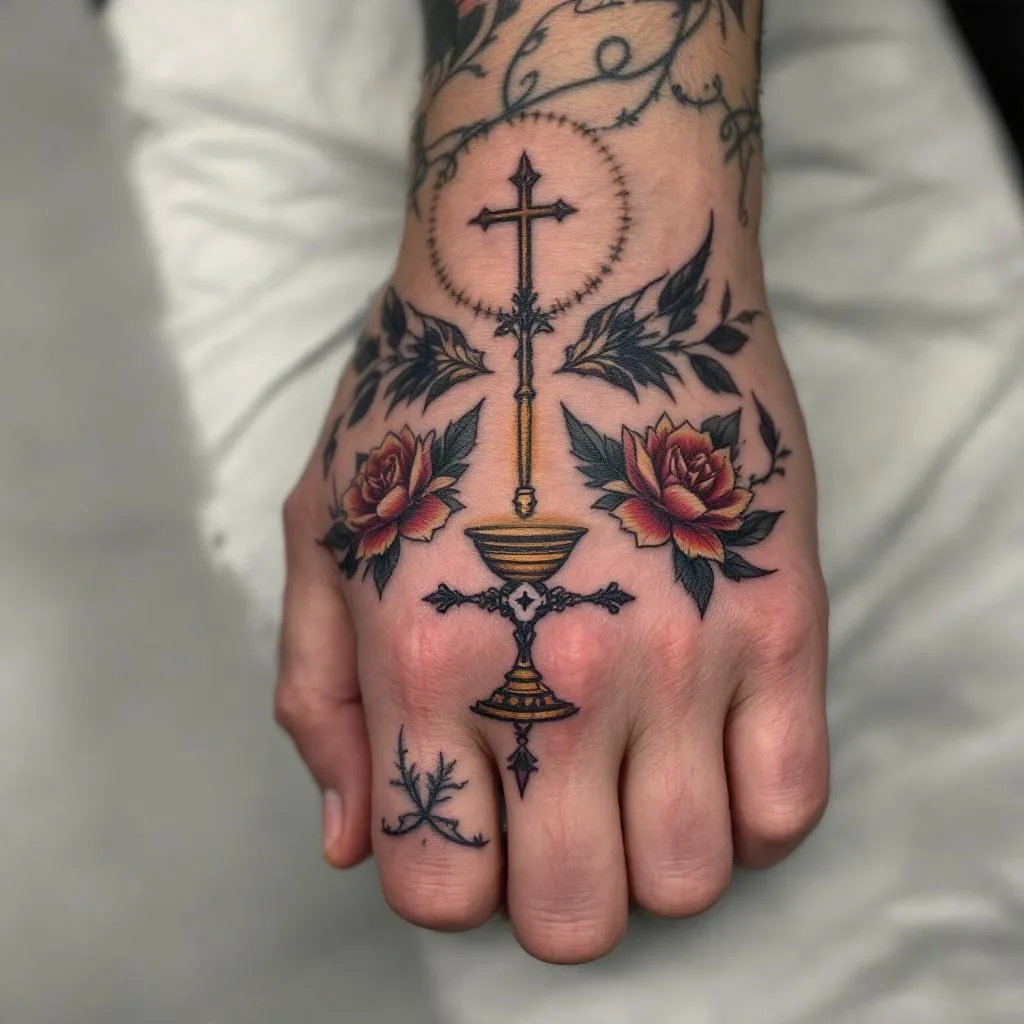
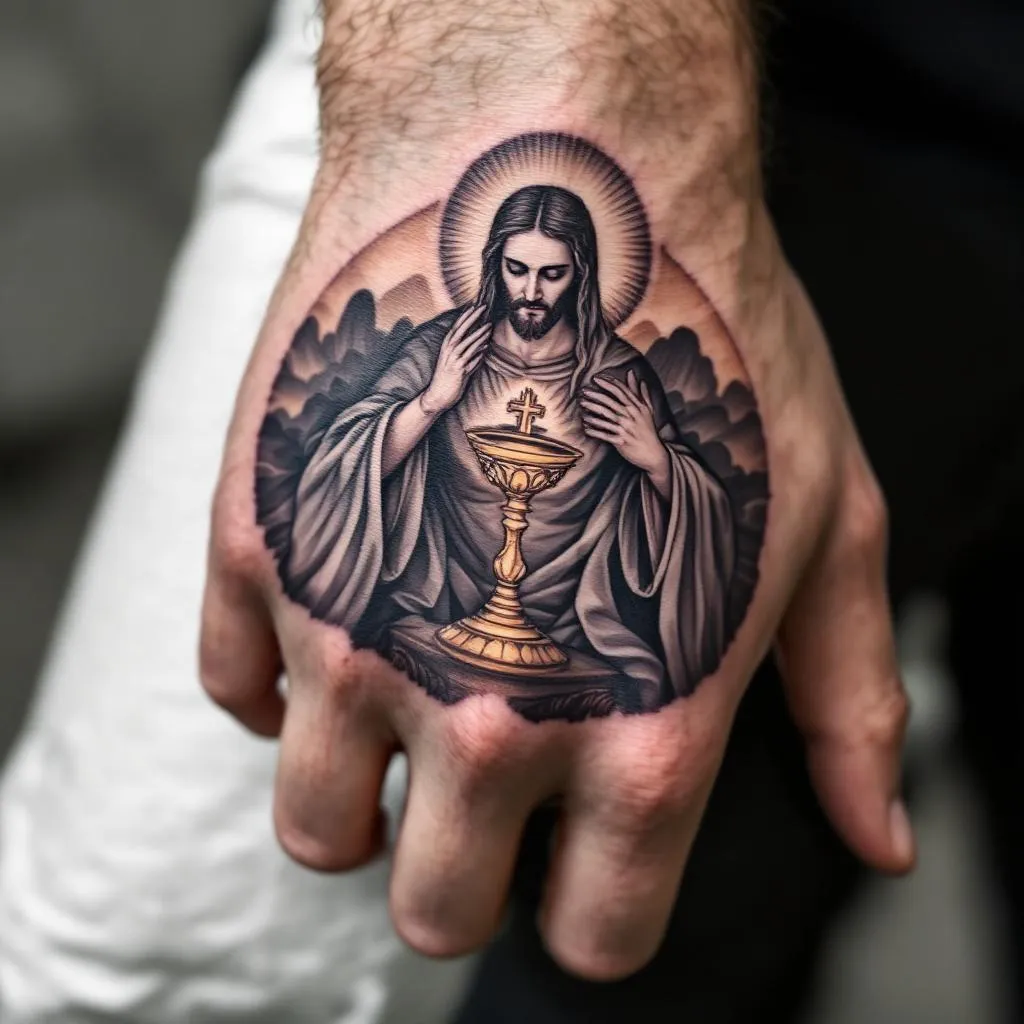
- Monstrance with radiant Eucharistic host and subtle finger-shadow
- Chalice overflowing with stylized rays that follow knuckle contours
- Simple host centered on the dorsal hand with soft halo extending to knuckles
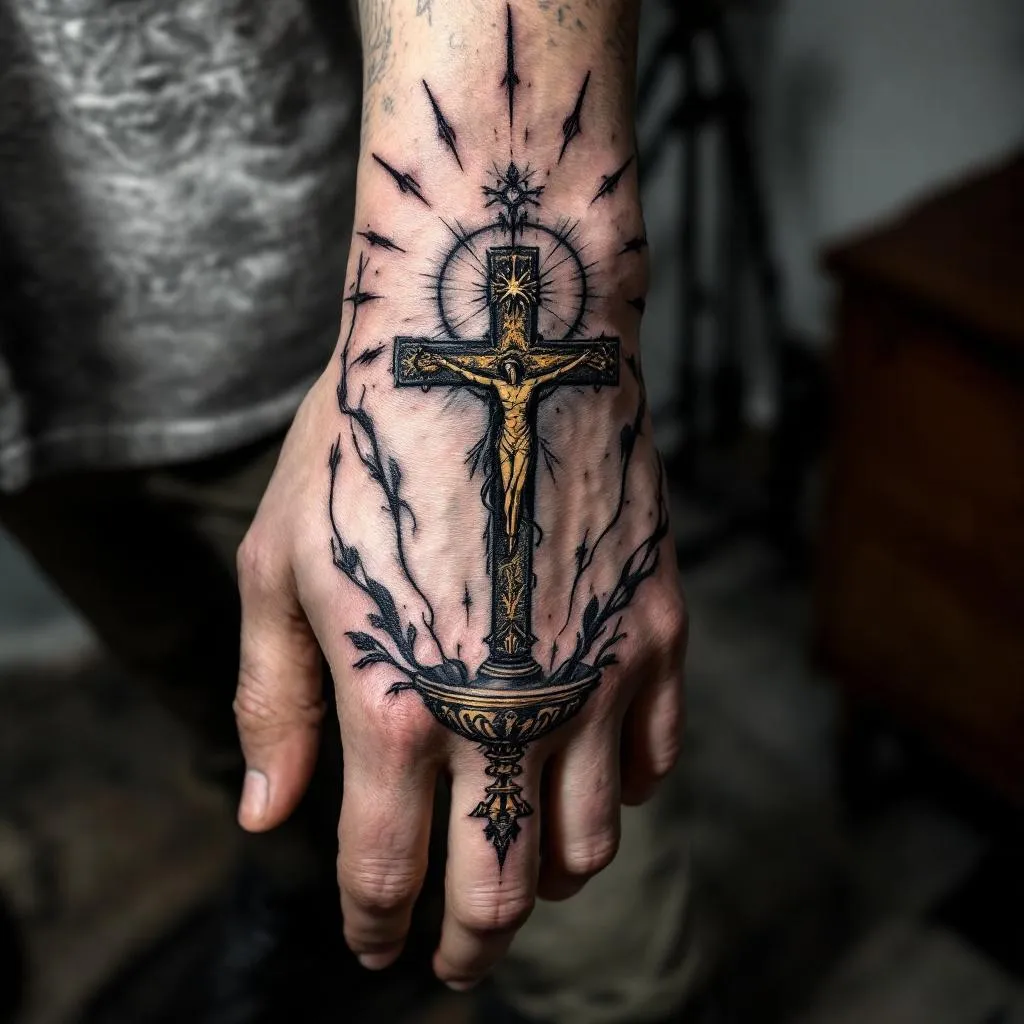
- Small crucifix near the thumb with shadow band connecting to knuckles
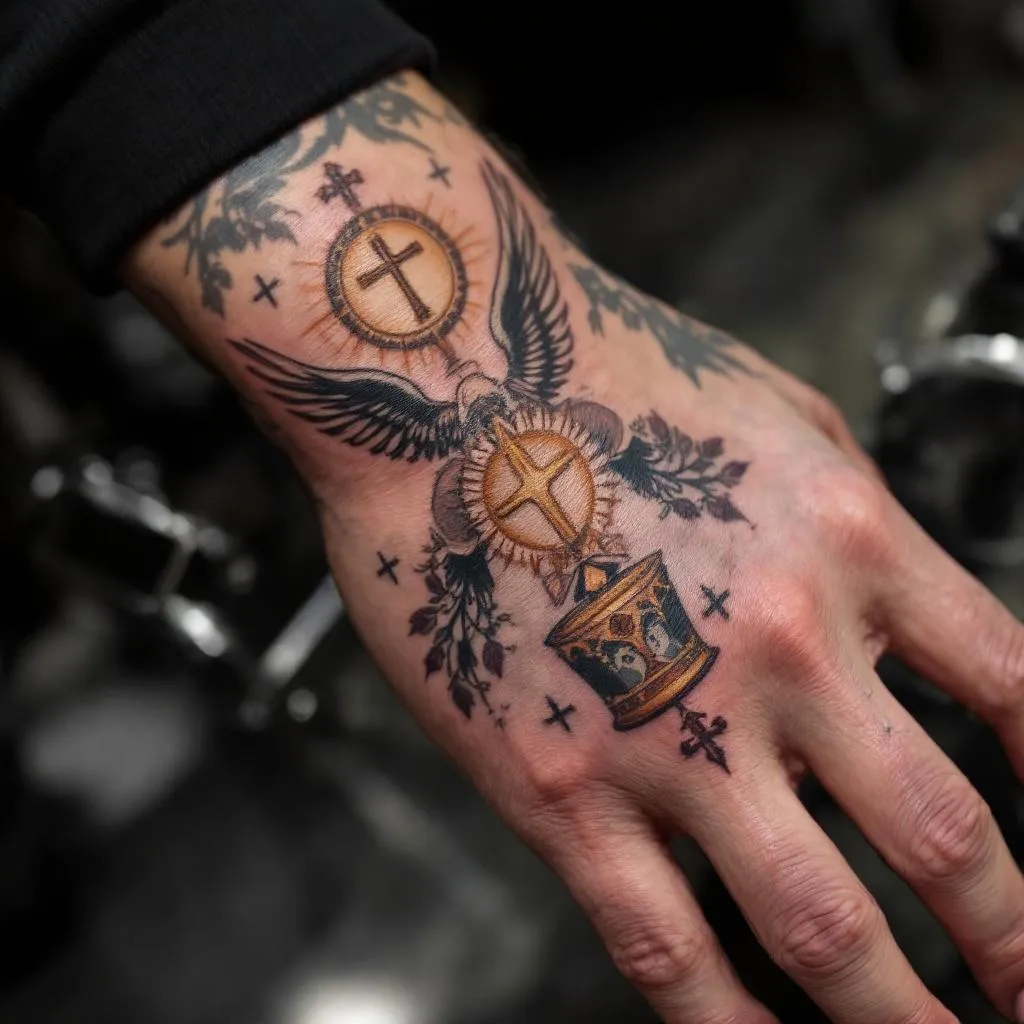
- Dove descending from wrist toward a host above the knuckles
- Rosary beads draped across the hand, shadowed toward the fingers
- Latin script "Corpus Christi" along the metacarpal with accompanying shadow
Conclusion
This Eucharist tattoo on the hand with a shadow reaching the knuckles is a bold, devotional statement that weaves theological symbolism into everyday visibility. Executed in high-contrast black-and-grey with attention to anatomy and longevity, it will communicate a life shaped by sacrament and service while inviting thoughtful placement decisions and planned maintenance. If you want, next steps include discussing exact scale, whether to include a chalice or monstrance, how much negative space you prefer around the host, and arranging a stencil test to confirm how the shadow aligns with your knuckles in different hand positions.
Similar Designs You Might Like
Try On
Preparing your design...
