 InkAI
InkAI 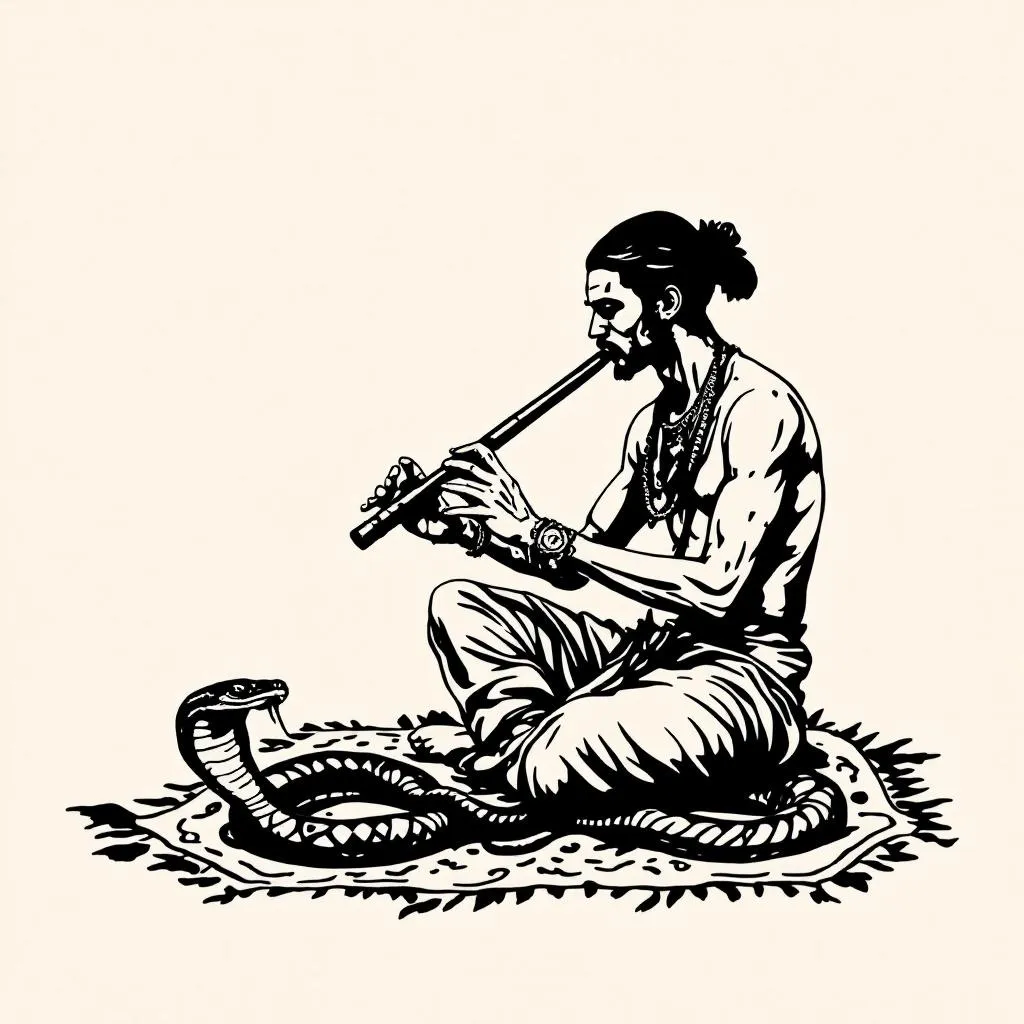
Minimalist, Black Line, Snake Charmer Tattoo
✨ Design Your Dream TattooDesign Description
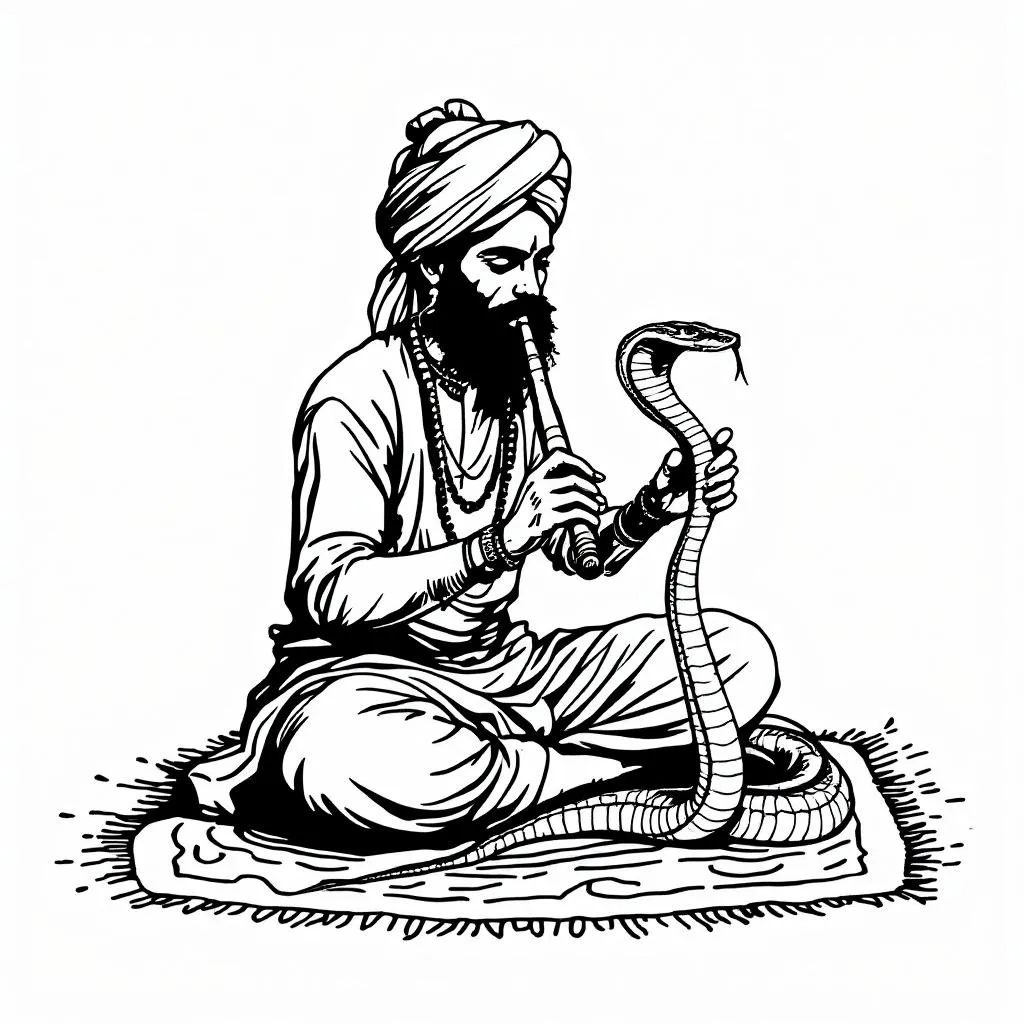
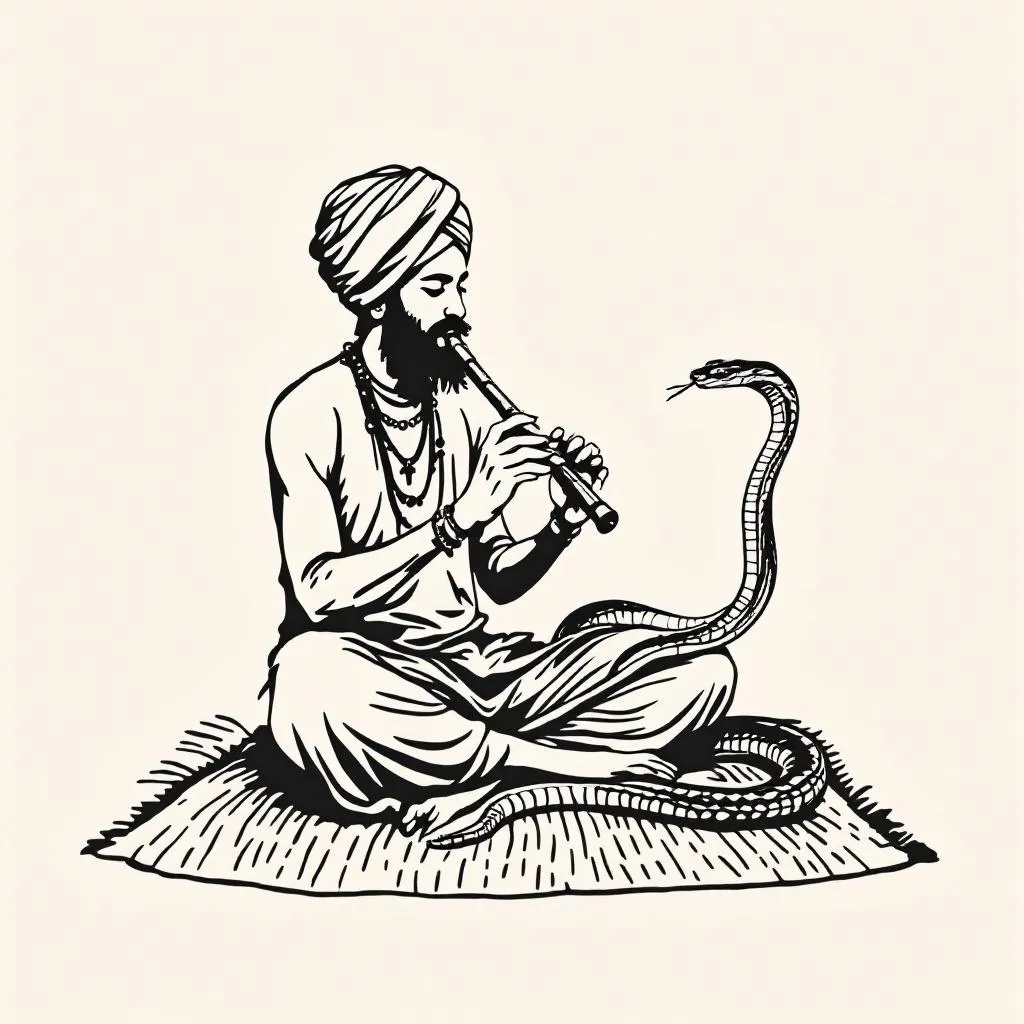
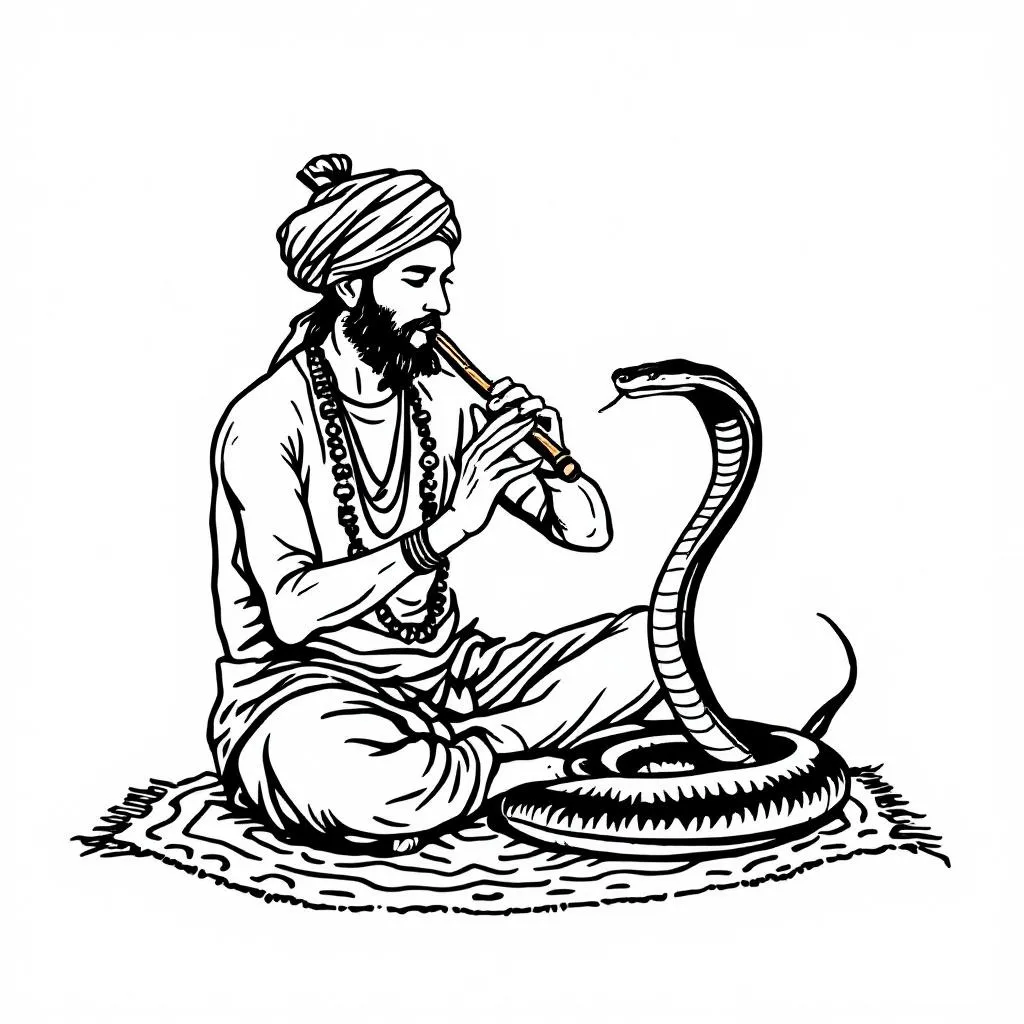
minimalist tattoo illustration of a snake charmer sitting on a rug, turban on head, small beard, playing a flute to a cobra, half a meter distance between charmer and snake, simple bold black lines, hand-drawn look, flat shading, no background, clean outlines, high contrast, vintage linocut style, suitable for tattoo stencil, symmetrical composition, monochrome, vector look
Tattoo Meaning & Symbolism
This tattoo shows a turbaned snake charmer seated on a small rug, playing a flute to a cobra set half a meter away. The image condenses several layered meanings: the flute represents communication and the power of sound to influence emotion and behavior; the cobra is a classic emblem of transformation, guarded wisdom, and latent danger; the rug creates a consecrated space, a stage where negotiation between human and animal occurs. The precise, measured gap between charmer and snake reads as deliberate respect and tension rather than domination — a visual statement about boundaries, consent, and the precarious balance between control and coexistence.
Tattoo Style & Placement
The design’s simple bold black lines, flat shading, high-contrast vintage linocut aesthetic and hand-drawn vector look make it ideal for a stencil-friendly tattoo that will age well. The symmetrical composition with a central axis (charmer centered on the rug, cobra aligned opposite) translates cleanly to body placements that emphasize balance: sternum/chest, center of the back, spine, or over the ribcage. On a forearm or calf the piece can be scaled vertically with the rug anchoring the bottom and the cobra creating a visual counterweight across negative space; for a chest piece the half‑meter conceptual distance becomes visual negative space that reads as calm and intentional. Keep line thickness consistent and prioritize bold outlines around the flute, turban, cobra hood, and rug pattern so the stencil remains crisp over time.
Personal & Cultural Significance
Historically, snake charming is associated with parts of South Asia, North Africa, and the Middle East and has long been a subject of fascination in Western travel prints — the linocut style of this design intentionally evokes that antique, storyteller quality. A tattoo like this can signify a love of folklore, a fascination with sonic power and persuasion, or a personal journey through transformation and risk. At the same time, because the charmer motif carries colonial-era exoticism and real cultural histories, the wearer should consider context: is the tattoo honoring a lineage or aesthetic, or borrowing imagery without connection? Small adjustments — such as tailoring turban styles, rug motifs, or facial features to reflect a specific cultural reference or personal heritage — can make the symbol more respectful and meaningful.
Similar Tattoo Ideas
- Single-line silhouette of a seated charmer and cobra, emphasizing negative space
- Cobra hood close-up in vintage linocut style with bold hatching
- Minimalist turbaned musician holding a flute, isolated figure suitable for wrist or behind-ear
- Symmetrical rug-and-serpent emblem designed as a chest medallion
- Kundalini-inspired snake rising along the spine in monochrome linocut strokes
- Matching forearm tattoos: charmer on one arm, cobra on the other to create interaction when arms are brought together
- Small braid or rug-pattern detail incorporating initials or a meaningful date
Conclusion
This tattoo combines visual restraint with rich symbolic layers: sound versus silence, human intention versus animal instinct, and the elegance of vintage printmaking rendered in modern tattoo form. Its stencil-friendly linocut treatment ensures longevity and readability, while the half-meter gap between figures offers a subtle narrative about boundaries and respect. To make it truly yours, discuss cultural references, scale, and placement with your artist so the piece reads clearly on your body and carries the specific meaning you intend.
Similar Designs You Might Like
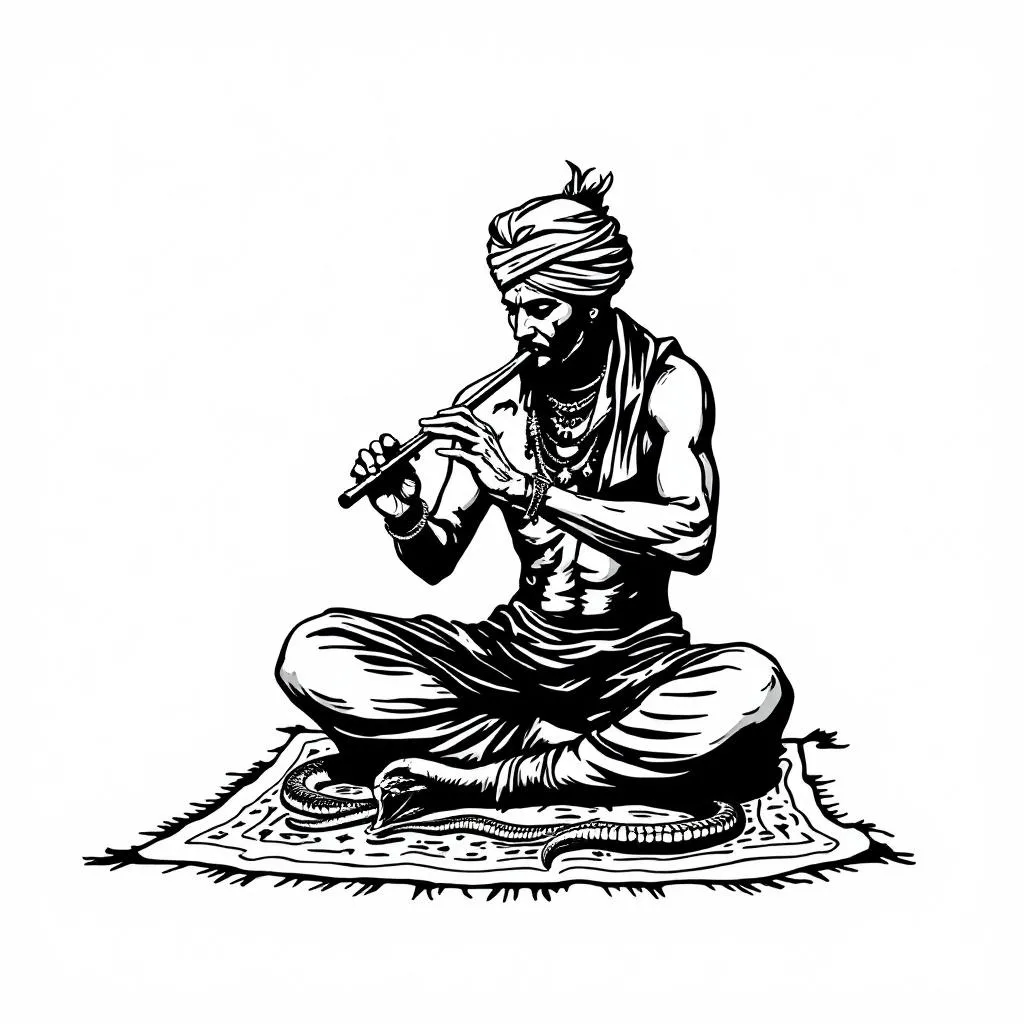
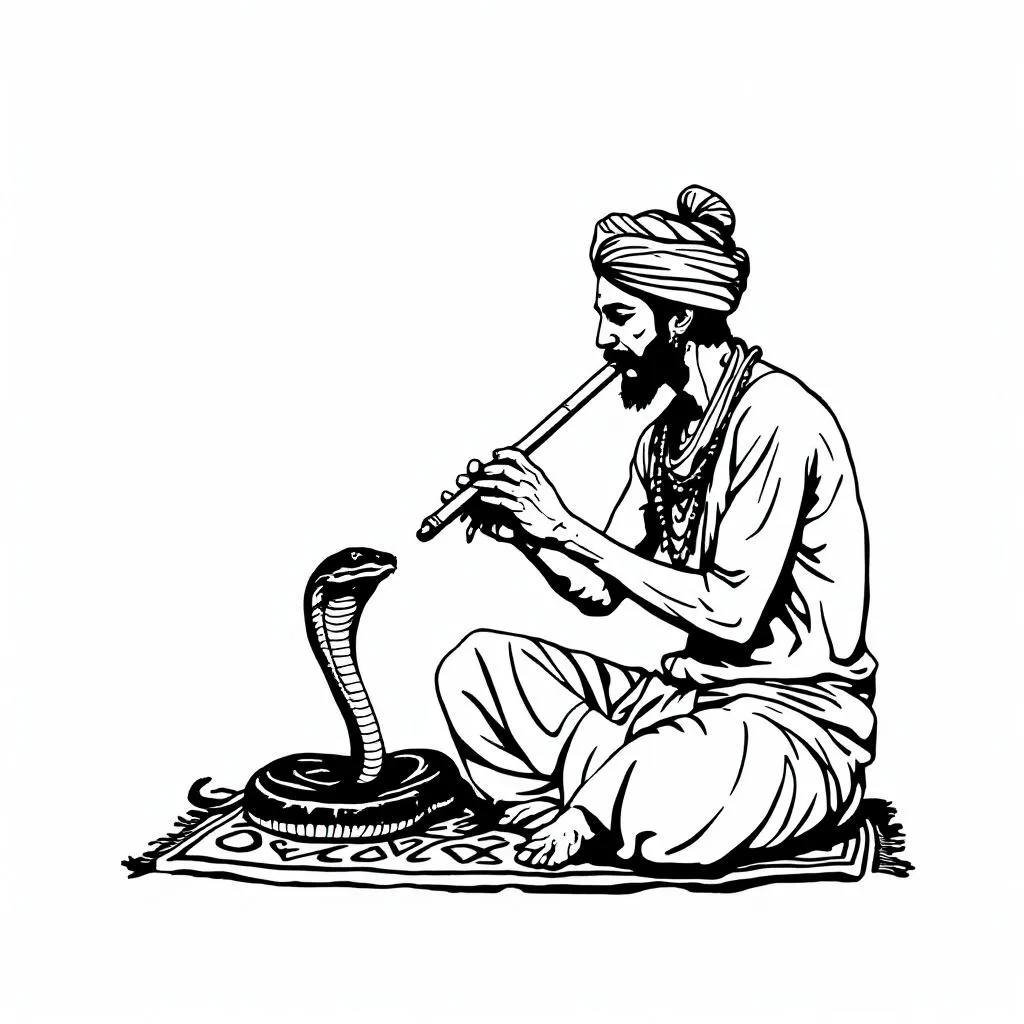
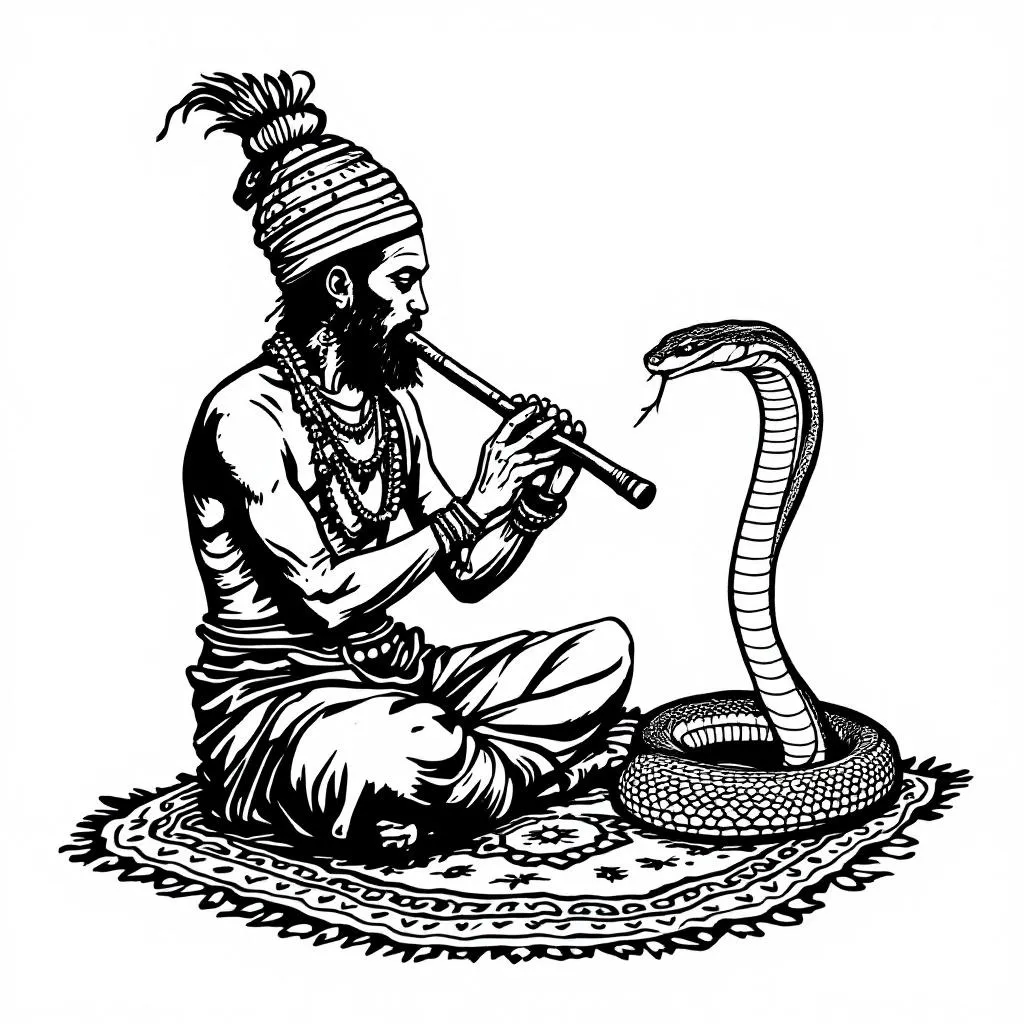
Try On
Preparing your design...
