 InkAI
InkAI 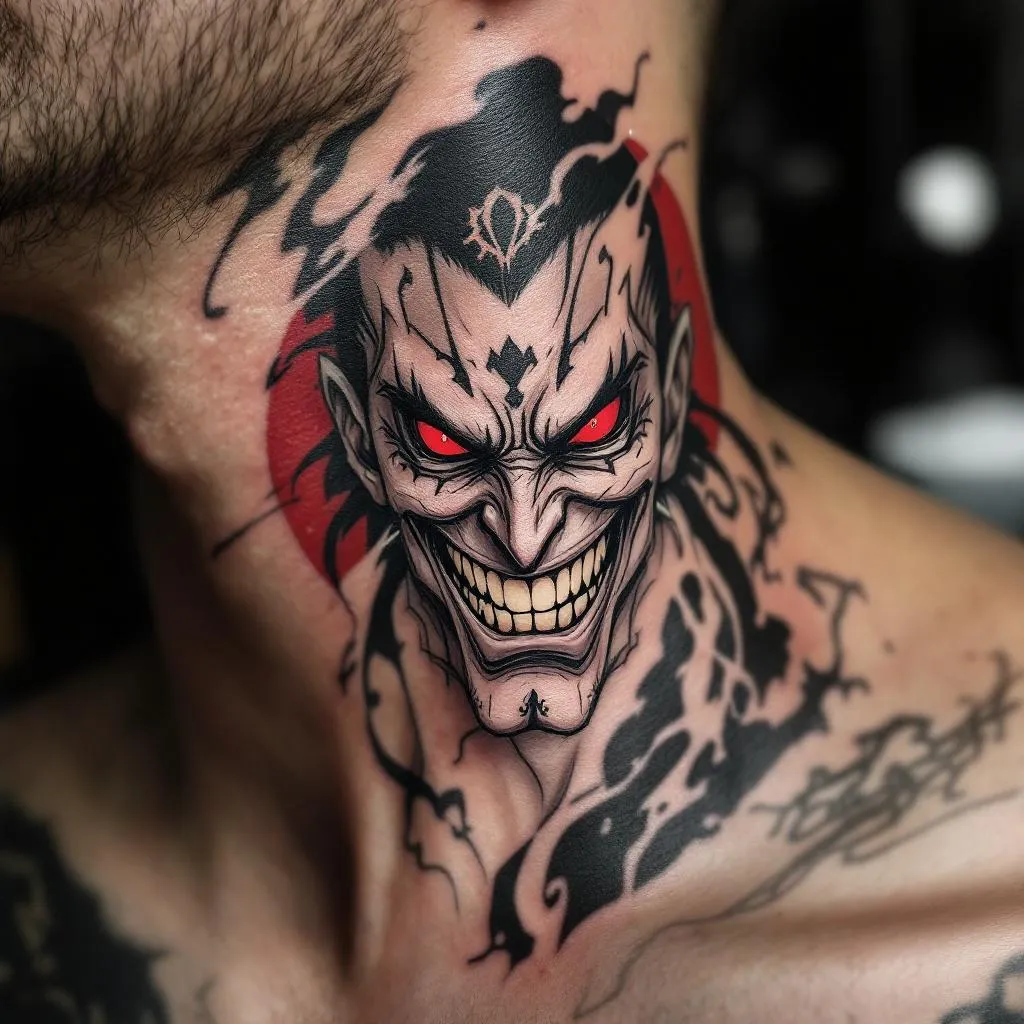
Anime, Neck, Sukuna Tattoo
Tribal style
✨ Design Your Dream TattooDesign Description
Sukuna from jujutsu kisen anime mouth smiling tatoo on neck
Tattoo Meaning & Symbolism
A smiling Sukuna mouth tattoo on the neck channels concentrated themes of menace, hidden power, and deliberate provocation. Sukuna’s grin in Jujutsu Kaisen reads as both triumphant and predatory; rendered alone on the throat, it reads like a status marker — an emblem of someone who owns their darker impulses or who aligns with the raw, anarchic strength Sukuna represents. On a symbolic level the grin also plays with ideas of voice and silence: placed over the throat it suggests that the wearer’s words, breath, or presence carry a dangerous charisma, a “cursed” charm that can flip from playful to violent. The design’s sharp teeth, exaggerated curvature, and any accompanying inked cracks or cursed markings emphasize control, intimidation, and a willingness to be recognized as an outsider or antihero.
Tattoo Style & Placement
This specific design is most striking as a high-contrast blackwork or anime-realism piece across the anterior or side of the neck. Centered on the throat, the smiling mouth sits where the larynx moves, creating a subtle animation when swallowing; off-centered on the side of the neck it gains a confrontational, slashed look that reads when you turn your head. Key stylistic choices for this subject include bold outlines for teeth, heavy black negative-space between incisors, and thin, precise linework for any accompanying Sukuna facial marks or small cursed sigils. Small red highlights can be added to echo blood or cursed energy, but keeping the primary palette monochrome preserves the menacing, tattoo-traditional impact. Because neck skin stretches and heals differently, a slightly simplified, high-contrast approach will age better than extremely fine cross-hatching.
Personal & Cultural Significance
Choosing Sukuna for a neck piece ties personal narrative to contemporary anime mythmaking and to older Japanese folklore — Sukuna in the manga is named after a fearsome yokai-like figure, so the tattoo bridges modern fandom and traditional monstrous imagery. For the wearer, it can signify identification with the antihero’s autonomy, a reclamation of inner rage, or a visual manifesto against social expectations. Culturally, it’s important to recognize that the character draws on Japanese cultural motifs; placing those motifs visibly on the neck is a bold statement and can act as both homage and personal re-interpretation. Many who select this design do so to celebrate their connection to Jujutsu Kaisen’s themes of duality (the human host vs. the curse), the cost of power, and the seductive nature of domination.
Similar Tattoo Ideas
- Sukuna full-face chest piece with the four facial markings
- Sukuna’s cursed seal crawling up from the clavicle
- Minimalist Sukuna mouth behind the ear for a subtler placement
- Yuji vs Sukuna half-face split throat tattoo to show duality
- Sukuna mouth with red cursed-energy accents along the sternum
- Blackwork snarling demon mouth inspired by Ryomen Sukuna folklore
Conclusion
A smiling Sukuna mouth on the neck is a confrontational, narrative-rich choice that reads as both fandom devotion and personal symbolism. It leverages the neck’s visibility to communicate power, danger, and identity in an immediate way. If you’re planning this piece, consult an artist experienced with neck anatomy and anime-realism, discuss scale and contrast so the grin remains legible over time, and be prepared for higher pain and social visibility during healing. Done well, this tattoo becomes a signature statement — a grin that announces you don’t hide the parts of yourself others fear.
Similar Designs You Might Like


Try On
Preparing your design...
