 InkAI
InkAI 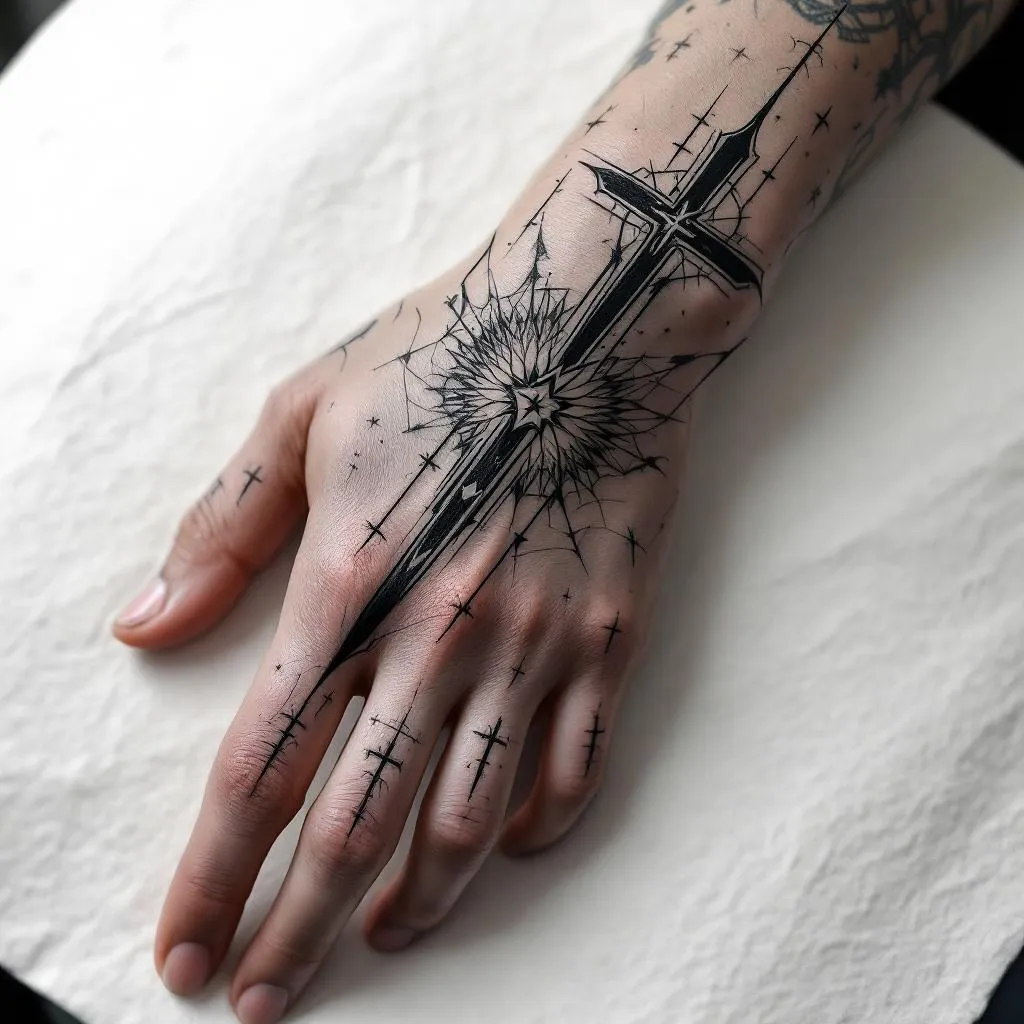
White Ink, Roman Catholic, Cyber Sigism Tattoo
Geometric style · Forearm placement
✨ Design Your Dream TattooDesign Description
A tattoo for the hand of a white male. larger hand but slim and not overly thick fingers etc. The motive should be roman catholic, made with white ink. It should look almost like scars. The goal is it to be a private tattoo, so a pale tattoo. It should convey pride for christ. It should run down at least one finger and up the forearm, and be multiple elements, not one thick motive. the style should be cyber sigism. white ink, pale tattoo, elegant style. mostly line work, no colour packing.
Tattoo Meaning & Symbolism
This white-ink, scar-like tattoo reads as a private declaration of Christian identity, modeled on the language of stigmata and sacramental marks. The thin, interrupted lines that run from the forearm, across the hand and down one finger suggest healed wounds rather than ornamental ink—an overt symbol of pride in Christ framed as quiet endurance. Individual elements—micro‑nail impressions, three parallel scar lines across the knuckles, a tiny Chi‑Rho or IHS sigil nested into a negative‑space node—function like a visual prayer: reminders of the Passion (nails, crown of thorns), the wounds and resurrection (scar lines), and the personal covenant (micro‑sigils placed by the wrist or along the finger). The overall effect is a sequence of devotional markers rather than a single emblem, conveying ongoing fidelity and the idea that faith is carried through the body as lived testimony.
Tattoo Style & Placement
The design uses “cyber sigism” aesthetics—delicate, geometric sigils and micro‑circuit linework combined with interrupted strokes to mimic scar tissue. On a larger, slim white male hand the composition should be scaled to emphasize vertical flow: begin with a compact sigil at the distal forearm (about 1–2 cm), continue with a thin, dashed line over the dorsal wrist, scatter tiny node‑marks across the back of the hand, and finish with a single, faint scar‑line running down the chosen finger to just before the fingertip. White ink on pale skin will sit low‑contrast, reading as pale scars in ambient light; line weights should be extremely fine (single‑needle or similar microline technique) and use negative space as part of the motif so the tattoo remains private and elegant rather than bold. Placement on the dorsal hand and a finger maintains discretion—visible up close but subtle at a distance.
Personal & Cultural Significance
Historically, Christian devotion has included both overt symbols and hidden marks: from medieval pilgrim badges to modern tattoos worn as personal sacramentals. This design translates that tradition into a contemporary, intimate form. For a white male with larger but slim hands, the scar aesthetic aligns with the narrative of bearing and witnessing—showing pride for Christ not through loud imagery but through marks that look earned and lived‑in. Culturally it references Catholic themes of suffering and redemption (stigmata, nails, crown of thorns) while using modern sigil language to make the devotion personal and semi‑private. Because white ink behaves like faint scar tissue over time, this tattoo also participates in debates about visibility and humility in faith practices: it is an affirmation meant for the wearer and those who look closely.
Similar Tattoo Ideas
- White‑ink micro stigmata: three faint parallel scars across the knuckles
- Microline rosary strand wrapping subtly from wrist to finger
- Minimal Chi‑Rho sigil at the inside wrist, connected by dashed linework
- Scar‑style single nail impression running down the side of a finger
- Tiny INRI microscript hidden in the crook of the wrist
- Crown of thorns rendered as an interrupted circular line on the dorsal hand
- Barcode/cryptic cruciform: thin vertical line with shorter horizontal breaks in cyber sigism style
- Sacred Heart outline as a faint white scarlet‑like mark near the forearm crease
Conclusion
Executed with single‑needle precision and careful placement, this white‑ink, cyber‑sigism Catholic piece becomes a private, elegant testament: a sequence of pale scars that declare pride in Christ without spectacle. On a larger, slim hand it will read as intimate and intentional—visible up close, subtle from a distance. Before committing, consult an artist experienced in white ink and hand tattoos, review healed photos on pale skin, and plan touch‑ups; done well, the design will age like a quiet relic you carry with you every day.
Similar Designs You Might Like



Try On
Preparing your design...
