 InkAI
InkAI 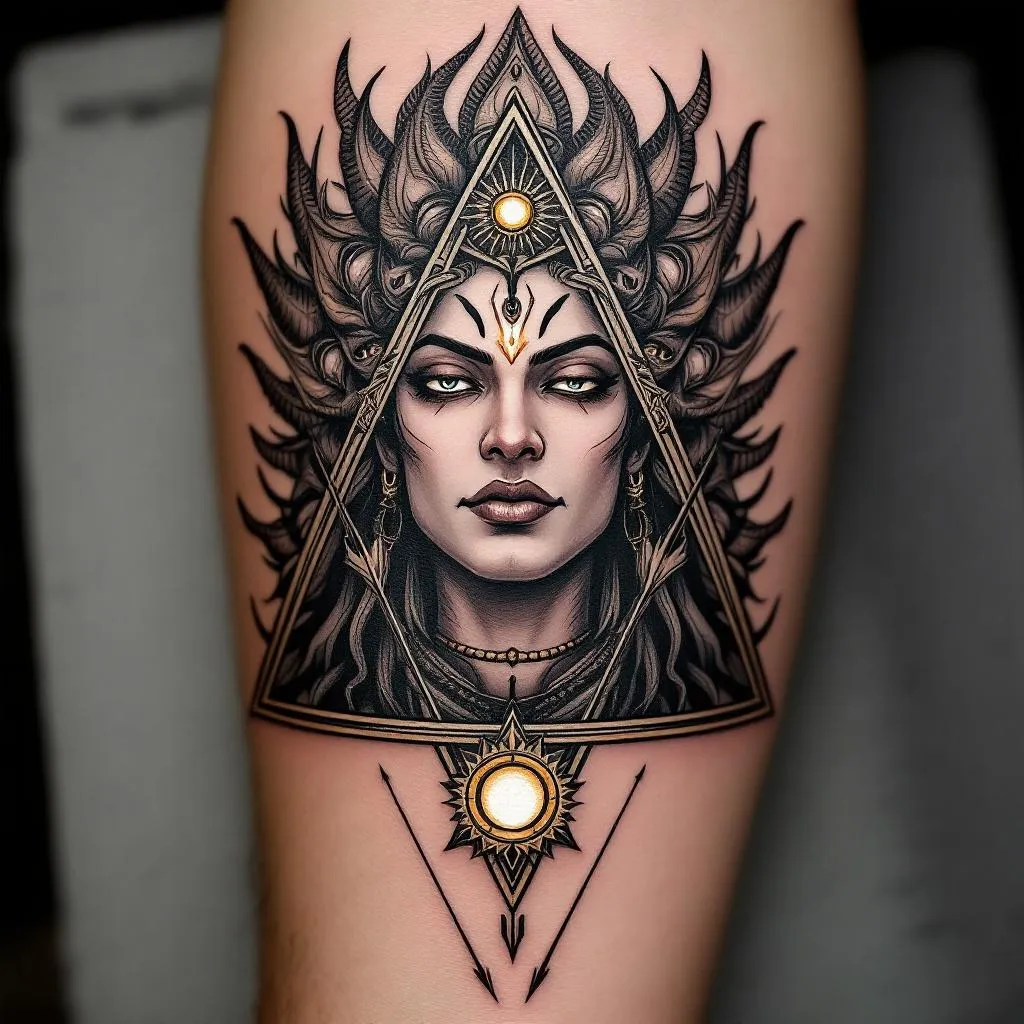
部落、神话、几何纹身
Forearm placement
✨ 设计你的梦想纹身设计描述
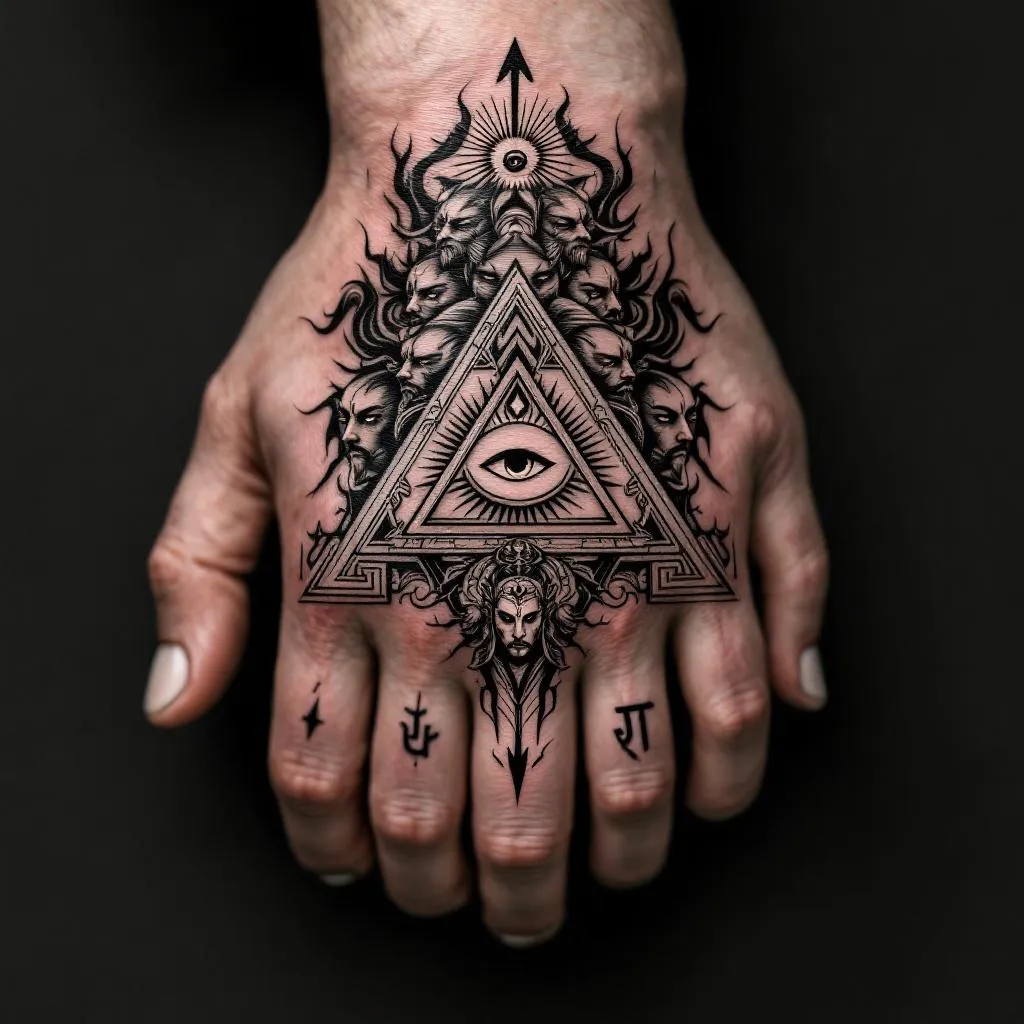
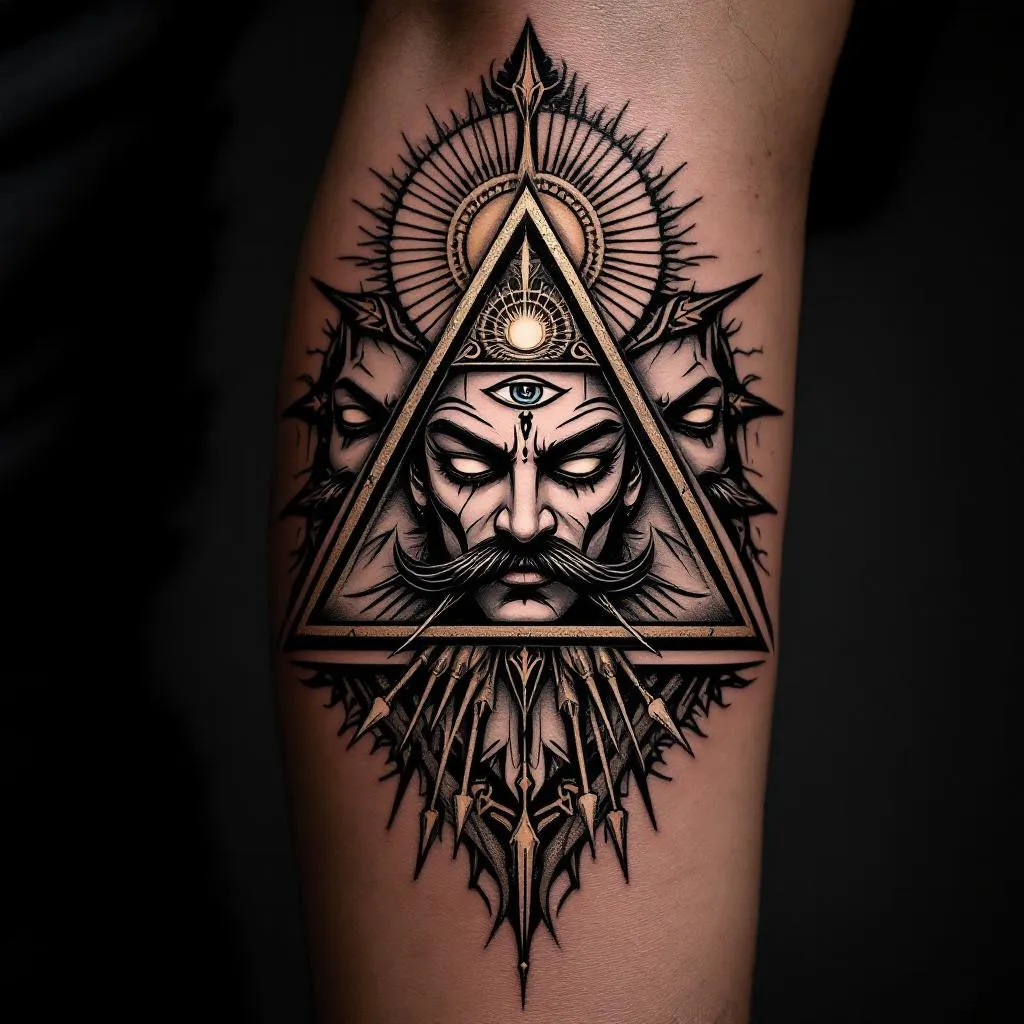
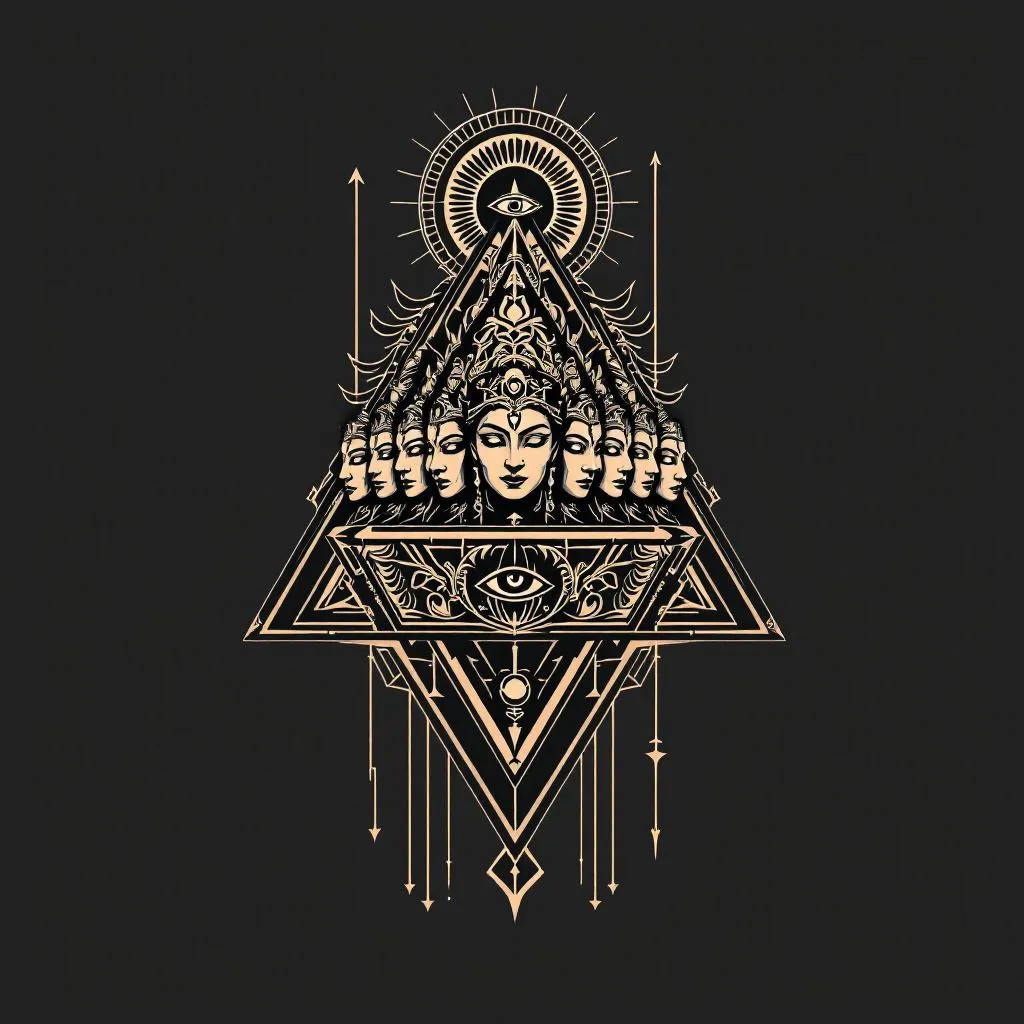
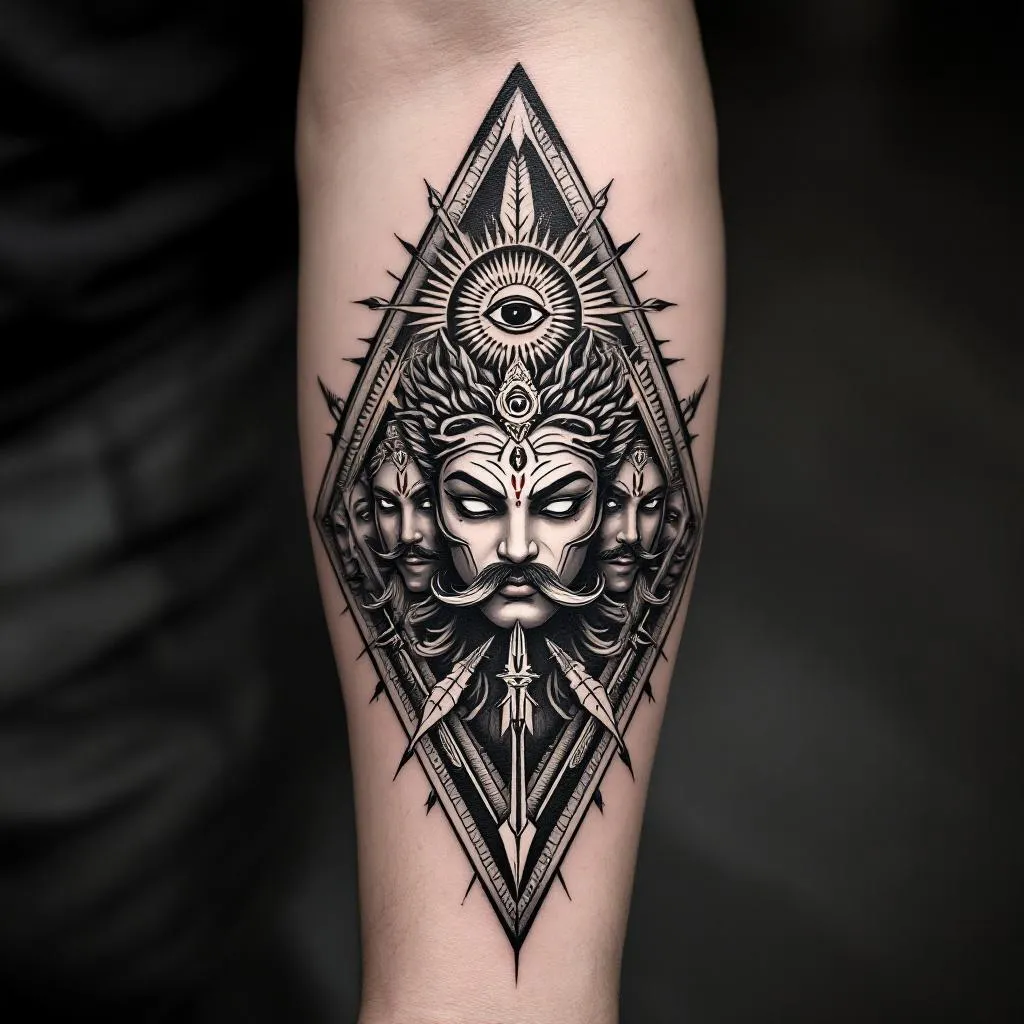
Discover a bold tattoo design featuring the ten-headed Ravana, intricately illustrated with sharp lines and pitch-black ink. This captivating piece stretches from the back of the hand to the upper elbow of a medium-skinned male, adorned with a geometric triangle and a semi-closed 'third eye' motif surrounded by sun symbolism. With its unique downward arrow details and elegant Sanskrit inscription, this tattoo blends mythological elements into a stunning visual experience.
Tattoo Meaning & Symbolism
This composition stages the ten-headed Ravana as a layered horizontal procession of distinct faces, each head representing a facet of knowledge, desire, willpower and ego. The horizontal stacking emphasizes simultaneity — the many voices of the self aligned side by side rather than stacked hierarchically — suggesting the wearer’s acceptance of complex, coexisting identities. The downward arrow motif, subtly woven through the heads, functions as a grounding force: it transforms Ravana’s expansive intellect into directed energy, a deliberate descent from abstract thought into embodied action and responsibility.
The geometric triangle that frames the entire scene supplies structure and containment: its edges act as a protective boundary while its pointed axis mirrors the downward arrow, reinforcing intention, manifestation and directed intent. At the crux of that triangle sits a semi-closed third eye embedded in a glowing sun emblem — a latent, watchful source of insight. The semi-closed, half-open eyes throughout the ten heads extend that liminal theme: a vigilant, meditative awareness that is neither asleep nor fully revealed, implying restraint, secrecy, and inner knowing.
The inscription 'तत्त्वमसि' placed above the main design explicitly anchors the visual narrative in Advaitic philosophy: "You are that" reframes Ravana’s manifold attributes as reflections of the wearer’s essential self, turning a mythic antagonist into an allegory for self-recognition and unity. The depiction of Ravana as a man with a distinctive mustache adds cultural specificity and masculine poise; the mustache functions both as a period-accurate iconographic cue and as a symbolic marker of honor, authority and rooted identity.
Tattoo Style & Placement
Executed in bold, sharp lines and dramatic pitch-black ink, this piece reads as blackwork with precision graphic linework and selective negative-space highlights. The horizontal layering of ten faces is optimized for the canvas described: beginning at the back of the hand, flowing across the wrist and forearm, and culminating at the front of the upper elbow. This path uses the arm’s natural twist to let each head occupy its own horizontal plane while preserving a single visual narrative when the arm is extended.
Line weight should be varied: heavy outlines for the triangle and main head silhouettes, mid-weight hatching for facial planes and mustache detail, and fine crisp strokes for the half-open eyelids and the subtle downward arrow motif threading through. The semi-closed third eye and glowing sun at the triangle’s center benefit from concentric negative-space rings or dense stippling to create radiance without color. On medium-toned skin the saturated black will provide strong contrast; plan slightly broader strokes and clearer negative-space gaps so the bold geometry and half-open eyes remain legible over time.
Personal & Cultural Significance
Ravana in the Ramayana is a richly ambivalent figure: a scholar and devotee as much as a conqueror. This tattoo leverages that ambivalence to speak about human complexity — intelligence paired with hubris, devotion paired with desire. For the wearer, it can signify a journey of acknowledging and integrating shadow aspects rather than rejecting them. The Sanskrit 'तत्त्वमसि' converts the image into a contemplative practice: each time the eye travels upward to the inscription, it reasserts unity beyond the mythic roles and urges inward reflection.
Because the imagery draws from South Asian epic and scriptural symbols, the design carries cultural weight. Wearing Ravana as a personal totem invites respect for the story’s origins; consider contextual knowledge, intention, and, where appropriate, conversations with clients or elders from those traditions. The mustache detail roots the figure in masculine heraldry and can also function as a familial or ancestral marker if the wearer intends that link.
Similar Tattoo Ideas
- Single-faced Ravana with a stylized mustache inside an inverted triangle
- Vertical column of ten Ravana heads with ascending arrow motifs
- Blackwork third-eye mandala with sun halo centered on the forearm
- Geometric triangle sleeve with layered mythological figures and Sanskrit band
- Minimalist downward arrow pattern repeating across the hand and wrist
- Half-open eye motif repeated as a cuff around the upper arm
- Sun-emblazoned third eye above a single intense Ravana portrait
Conclusion
This bold blackwork composition fuses myth, geometry and contemplative script into a single, wearable narrative: ten distinct selves contained, focused and witnessed by the semi-closed third eye and the truth of 'तत्त्वमसि'. Placed from the back of the hand to the front of the upper elbow it reads as a journey from outward action to inward realization. Before inking, collaborate closely with your artist to refine scale, line weight and the Sanskrit lettering placement so the mustached Ravana, the threaded arrows and the glowing central sun remain clear and powerful on medium skin for years to come.
您可能喜欢的相似设计
试戴
Preparing your design...
