 InkAI
InkAI 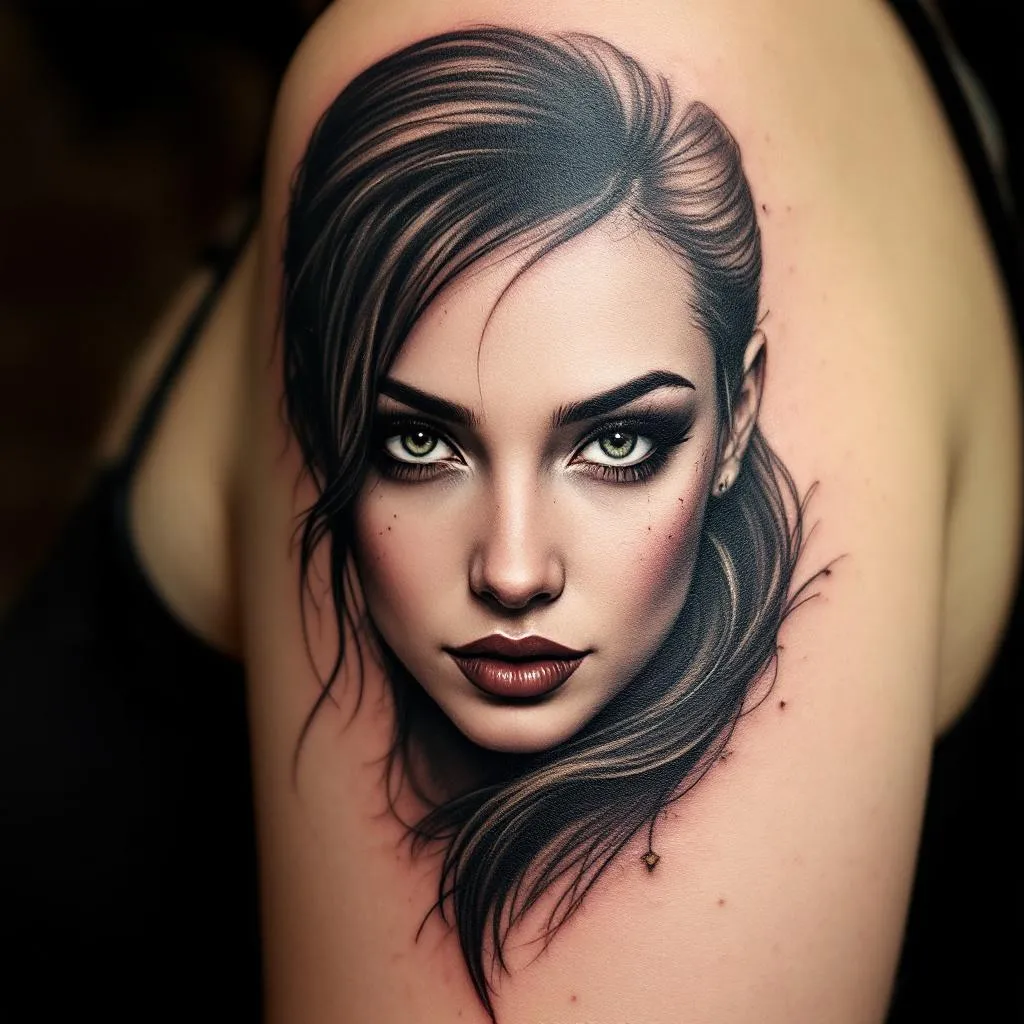
Femenino, Retrato, Realista Tattoo
✨ Design Your Dream TattooDesign Description
Quiero que todos esos tatuajes se unan en el brazo, el que son 2 caras que este en la parte de dentro del brazo debajo del codo y encima de la muñeca. El resto como están en las fotos
Tattoo Meaning & Symbolism
Placing two faces together on the inner forearm, specifically in the vertical space between the elbow crease and the wrist, creates an intimate, deliberate statement about duality and relationship. In this particular layout the paired portraits read like a private conversation held on your arm: one face can represent the self you show to the world and the other the self you keep inside, or they can symbolize two people — siblings, lovers, or ancestors — whose lives are connected. Because the inner forearm sits close to the pulse and is often visible only in certain gestures, these two faces function as a personal reminder of identity, memory, or an ongoing internal dialogue. Unifying the other tattoos on the arm into a cohesive composition turns discrete moments and motifs into a single narrative arm-sleeve, suggesting continuity, healing, and the idea that disparate experiences are chapters of one life.
Tattoo Style & Placement
For this specific design the inner-forearm portrait block should be vertically oriented so the two faces align naturally along the arm’s length, the upper face sitting just below the elbow flexion and the lower face ending before the wrist bones. This placement uses the long, flat canvas of the inner forearm to preserve facial detail and keeps the piece intimate (not always on display) yet readable when you want to show it. To integrate the rest of the tattoos “as they are in the photos,” the portrait block will be bridged to adjacent pieces with transitional background work — soft black-and-grey shading, ornamental filigree or delicate dotwork — chosen to match the inkweight, contrast and line quality of your existing pieces so the sleeve reads as one continuous composition rather than a collage.
Personal & Cultural Significance
On a personal level, merging existing tattoos across the arm into a connected composition says you want coherence: your body becomes a single mapped story rather than separate marks. The two faces emphasize relationship and reflection — they can honor two important people, represent two sides of your personality, or mark a turning point where past and future meet. Culturally this motif can echo classical archetypes such as Janus (two-faced transition and thresholds), theatrical masks (identity and performance), or mirror symbolism common in many traditions where two images imply balance and contrast. Because the inner forearm is a vulnerable spot, the location also underlines trust and introspection: these are images meant for you first, others second.
Similar Tattoo Ideas
- Janus-inspired dual portrait on inner forearm with subtle laurel or architectural elements
- Split-face composition: one side realistic, the other stylized or ornamental, running vertically between elbow and wrist
- Two ancestral portraits framed by connecting script and background shading to form a narrative band
- Mask and mirror pair: a realistic face paired with a decorative mask to symbolize public/private selves
- Portraits bridged by botanical filigree or smoke to integrate existing arm tattoos into a seamless sleeve
- Clock or compass behind the paired faces to emphasize time, memory, or life direction across the arm
Conclusion
This specific plan — two faces placed on the inner forearm between the elbow and wrist, with the rest of the pieces kept “as in the photos” and connected by matching backgrounds — creates a powerful, intimate chapter within a larger arm-sleeve. It communicates duality, continuity and personal narrative while preserving the visual language of your existing tattoos. For the cleanest result, bring the photos to a consultation so the artist can match line weight, shading and scale, decide whether the faces should face each other or look outward, and plan the transitional fills that will turn your separate pieces into a unified sleeve.
Similar Designs You Might Like
Try On
Preparing your design...
