 InkAI
InkAI 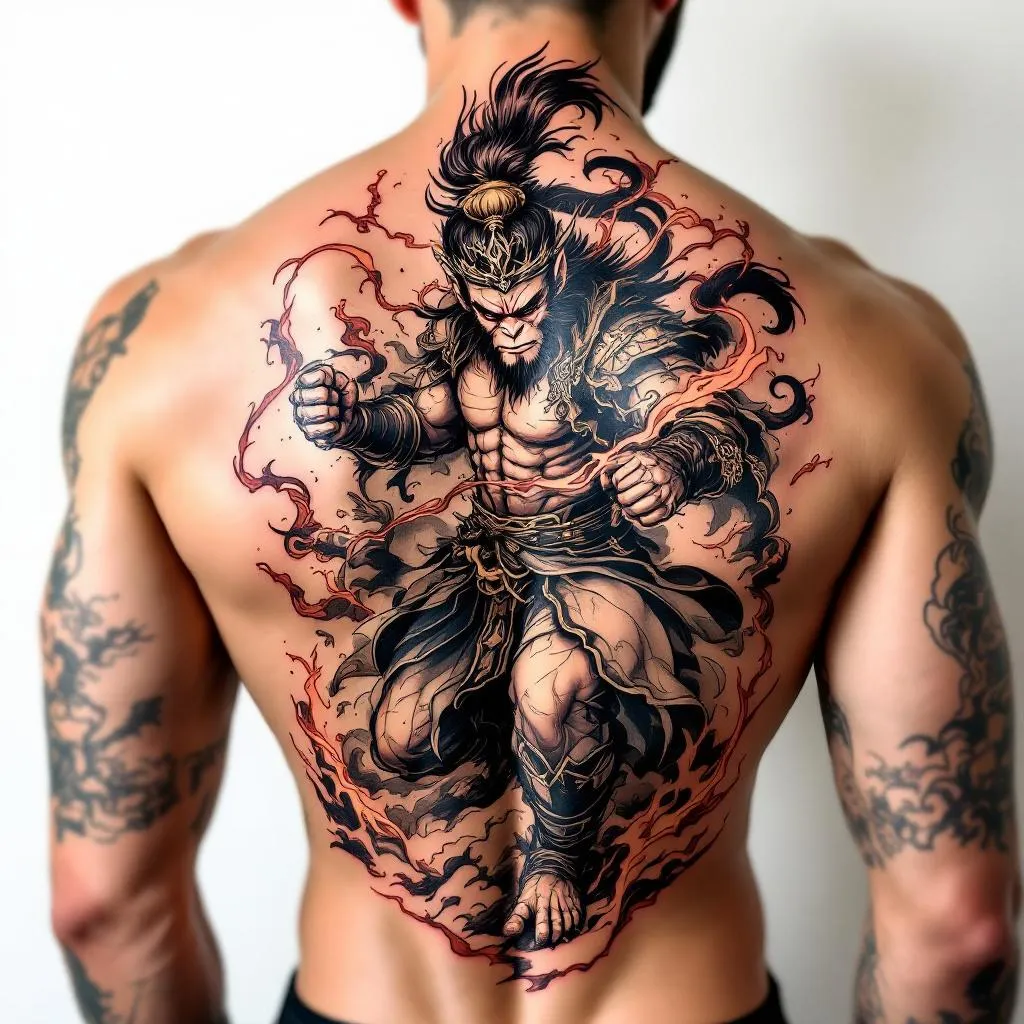
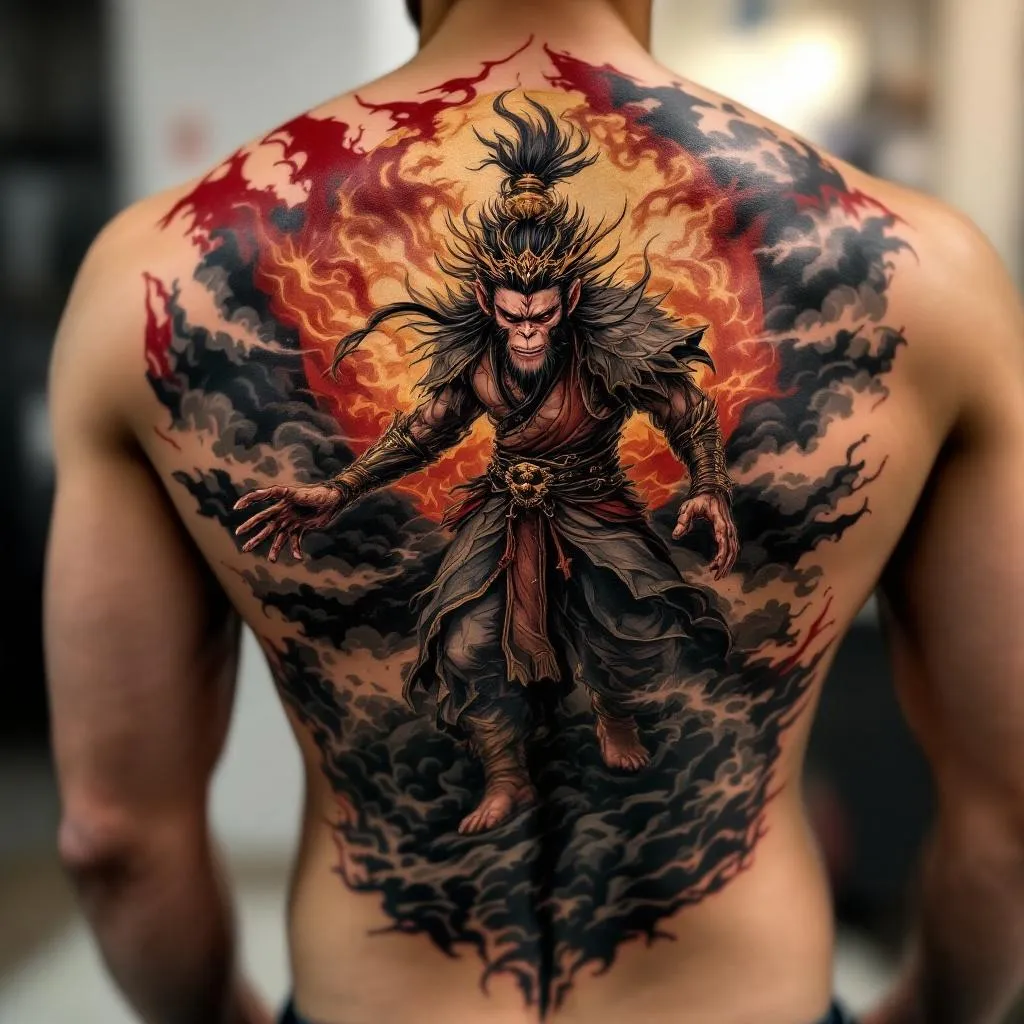
Monkey King, Illustrative, Strength Tattoo
Back placement
✨ Design Your Dream TattooDesign Description
Create a dynamic tattoo design for a male with a medium skin tone. The concept involves the Monkey King, depicted victorious and standing powerfully after a fierce battle, located on the back. The style should embody strength and triumph, capturing the essence of the Monkey King's resilience.
Tattoo Meaning & Symbolism
This back tattoo of the Monkey King (Sun Wukong) standing victorious after a fierce battle captures a layered narrative of resilience, triumph, and reclaimed power. The image of him upright — staff planted, chest forward, cloak torn but proud — symbolizes survival after conflict and the hard-won sovereignty that follows struggle. Details such as singed fur, slashed armor, a battered Ruyi Jingu Bang, and a defeated foe or broken banner underfoot turn abstract victory into a tangible, earned conquest. For a male wearer, this design reads as an oath to endure, a public record of having faced overwhelming odds and emerged sovereign rather than subdued.
Tattoo Style & Placement
Rendered on the back, this composition benefits from a full or upper-back canvas: Sun Wukong centered along the spine with his stance bridging the shoulder blades creates an imposing vertical axis, while sweeping clouds and kicked-up dust radiate horizontally to fill the breadth of the back. Stylistically, a hybrid approach works best — bold, neo-traditional linework to retain clarity at a distance, layered with painterly color washes and textured shading to show torn cloth, singed fur, and battle grime. For a male with medium skin tone, choose saturated pigments — deep crimson, burnished gold, warm umber, and charcoal blacks — and rely on strong dark outlines and mid-tone fills so details stay readable as the skin ages. Keep white highlights minimal and strategic (eyes, glints on the staff, a flash on metal) because white reads differently on medium-toned skin. Scale-wise, a three-quarter to full-back piece will allow the dynamic pose and aftermath elements (fallen enemy, charred ground, billowing clouds) to breathe without crowding.
Personal & Cultural Significance
Sun Wukong is a complex cultural figure: trickster, warrior, protector, and a symbol of rebellion against unjust authority. In the context of this victorious-after-battle depiction, the Monkey King represents personal revolution — overcoming inner demons, systemic obstacles, or a specific major hardship. For a wearer who identifies as male, the image can connect with notions of accountability and protectorhood while still honoring cleverness and adaptability rather than brute force alone. Culturally, the tattoo pays homage to East Asian mythic heritage and the Journey to the West narrative; stylized iconography like the golden circlet, staff, and cloud motifs anchor the piece in that tradition. Placing it on the back signals both protection (a guardian watching over your life) and a testament carried with you: a story displayed rather than hidden.
Similar Tattoo Ideas
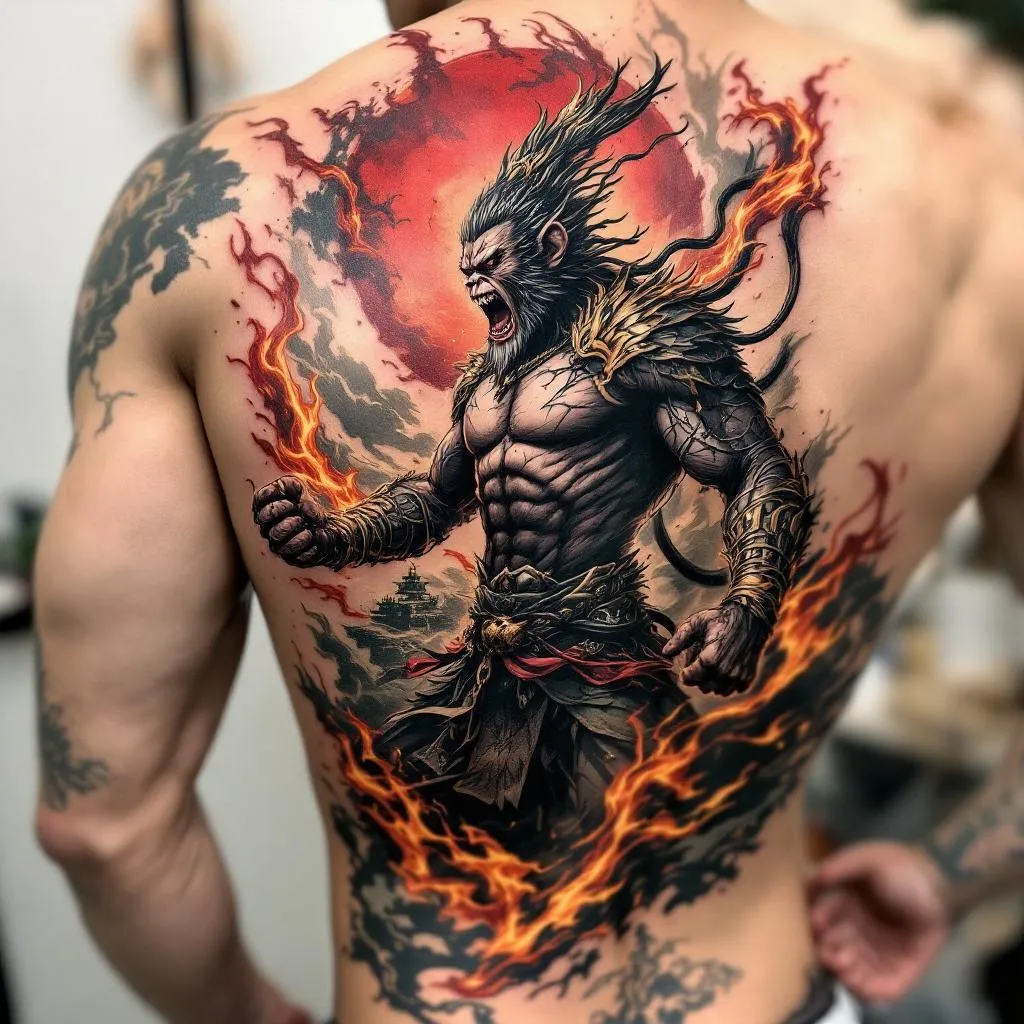
- Sun Wukong mid-air striking with the Ruyi Jingu Bang, clouds swirling — dynamic upper-back piece
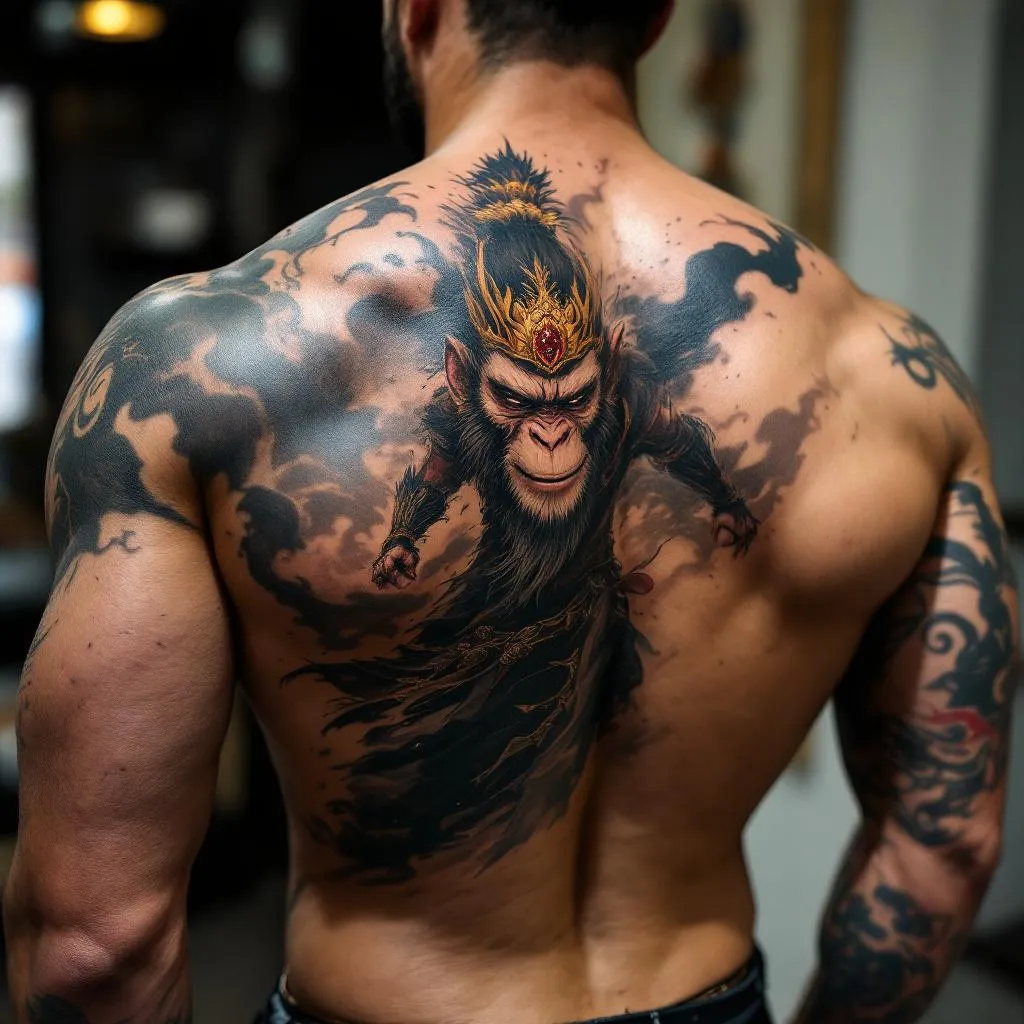
- Close-up portrait of the Monkey King’s face with the golden circlet and battle scars — centered between shoulder blades
- Irezumi-style Monkey King wrestling a dragon across the full back, heavy black shading and traditional waves
- Silhouette of Sun Wukong standing on a ruined flagpole at dusk — minimalist negative-space back piece
- Raw, realistic depiction of a worn Ruyi Jingu Bang embedded in scorched earth with subtle cloud motifs
Conclusion
This specific back tattoo — a victorious Monkey King standing powerful after a fierce battle for a medium-skinned male — is designed to be both an arresting visual and a deliberate personal statement. It balances mythic symbolism with battlefield realism so the image reads as proof as much as art: proof of trials faced, lessons learned, and strength reclaimed. When executed with strong contrast, intentional color choices, and a composition that flows with the spine and shoulder planes, it becomes a lasting emblem of resilience and sovereignty you carry with you every day.
Similar Designs You Might Like


Try On
Preparing your design...
