 InkAI
InkAI 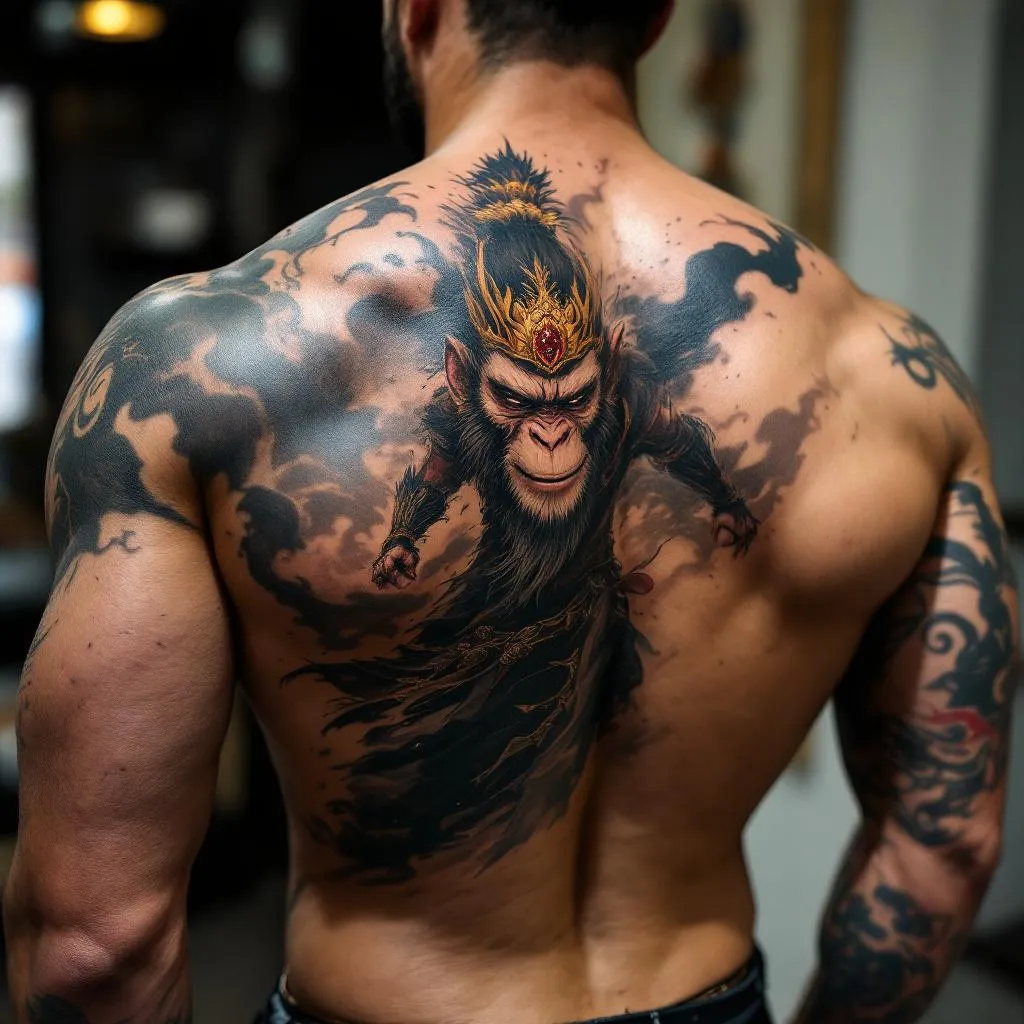
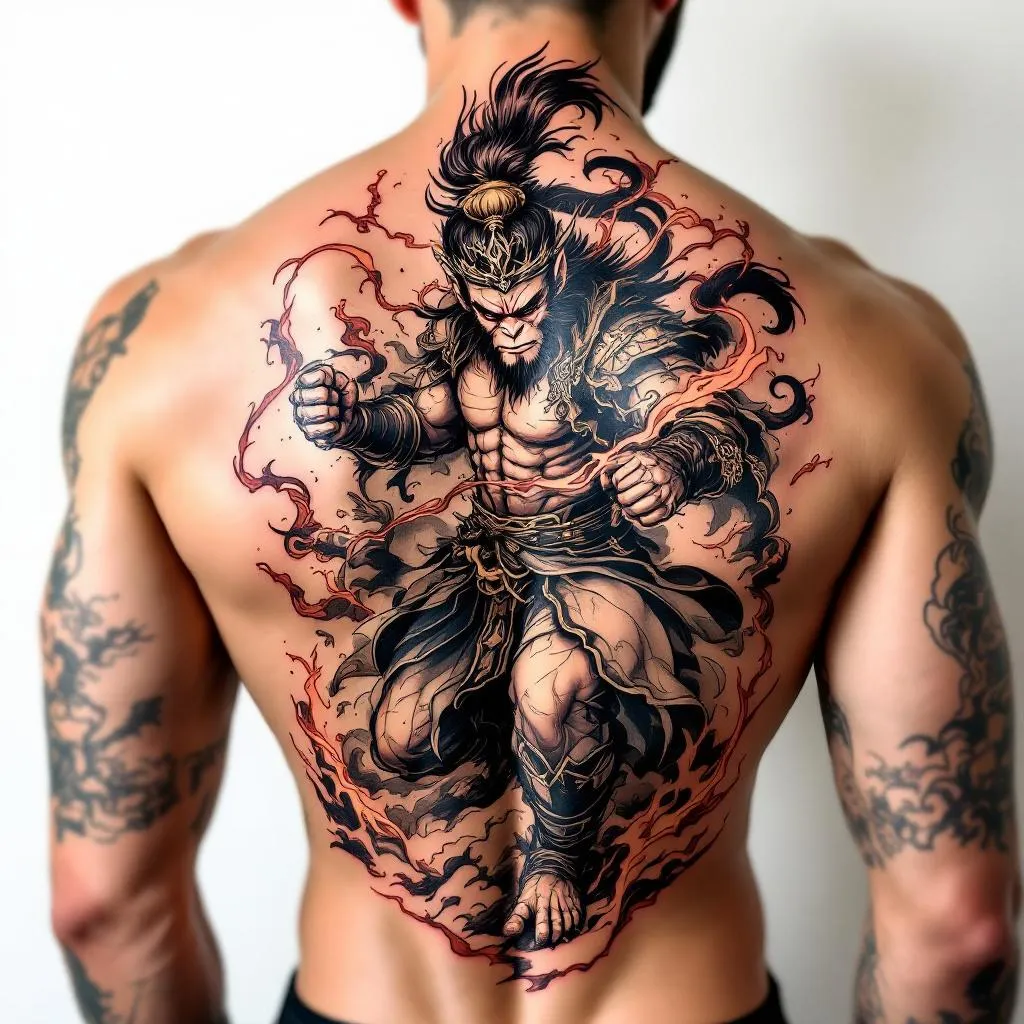
Monkey King, Strength, Triumph Tattoo
Back placement
✨ Design Your Dream TattooDesign Description
Create a dynamic tattoo design for a male with a medium skin tone. The concept involves the Monkey King, depicted victorious and standing powerfully after a fierce battle, located on the back. The style should embody strength and triumph, capturing the essence of the Monkey King's resilience.
Tattoo Meaning & Symbolism
This back piece of the Monkey King (Sun Wukong) captured immediately after a fierce battle reads as a narrative of survival and victory rather than a static portrait. The Monkey King stands tall, chest forward and one foot planted on a shattered celestial pauldron, staff planted in the scorched earth—symbols of dominance over both mortal and divine opposition. Scattered broken chains and dented armor at his feet represent broken restraints and conquered obligations; the battered crown-like golden circlet glints to show discipline and hard-won enlightenment. Subtle fresh wounds and smear marks of blood and ash across his fur turn physical damage into badges of resilience, while a narrow beam of sunlight cutting through distant storm clouds highlights triumph emerging from turmoil. For the wearer, this design specifically signals surviving a crucible moment and standing undefeated: a lived story of endurance, cleverness, and reclaimed agency.
Tattoo Style & Placement
The composition is designed for the upper back, centered along the spine with the Monkey King’s staff running parallel to the vertebrae to use the body’s natural axis as visual support. The figure occupies the area between the shoulder blades and can extend to one shoulder to create a three-dimensional, wraparound effect when the wearer turns. Style-wise, this is a hybrid of dynamic neo-traditional realism with Asian ink-wash influences: crisp line weight to define the staff, circlet, and facial expression; textured brushwork for the fur and smoke; and layered color washes for cloud and embers. Color choices are calibrated for a male with medium skin tone—rich siennas and burnished golds for the circlet and staff, deep indigo and charcoal for shadow planes, and desaturated crimson highlights to read clearly against mid-tone skin. Negative space is used deliberately to create glowing scars and the silhouette of torn banner fabric, improving legibility from a distance. Scale recommendations: full upper-back canvas (roughly 30–40 cm tall) for detail, or a slightly compressed vertical version if the client prefers lower-back extension.
Personal & Cultural Significance
Sun Wukong is both trickster and protector in Chinese literary tradition—this depiction emphasizes his martial mastery and moral resilience rather than only mischievousness. For a male bearer with a medium skin tone who chose a victorious, post-battle portrayal, the tattoo can function as a personal talisman: a reminder of clever strategy under pressure, ferocity in self-defense, and the humility that comes from scars earned honestly. Culturally, the imagery references Journey to the West’s themes of spiritual struggle and liberation; the broken celestial gear and snapped restraints specifically nod to Sun Wukong’s arc of rebelling against oppressive order and eventually achieving higher understanding. If the client has family or lineage stories about overcoming social or personal constraints, placing the Monkey King squarely on the back—closest to the heart and shoulders—can signal carrying history confidently while moving forward.
Similar Tattoo Ideas
- Sun Wukong mid-leap with cloud-somersault trailing across the shoulder blade
- Close-up of the Monkey King’s face with the golden circlet and battle scars on the upper back
- Staff-focused composition: the Ruyi Jingu Bang striking the ground with shockwaves extending along the spine
- Full-back narrative scene: Monkey King standing over a defeated celestial army in ink-wash monochrome
- Minimalist silhouette of the Monkey King with broken chains, sized for the nape of the neck
Conclusion
This winning-back Monkey King design is tailored to a male with medium skin tone who wants a bold statement of resilience: a large, spine-centered composition that turns battlefield scars into a visual creed. It balances traditional iconography—circlet, staff, cloud—with contemporary tattoo techniques so the imagery remains legible and powerful on mid-toned skin. Work with an artist experienced in both Asian mythological motifs and skin-tone-specific color choices to refine scale, contrast, and narrative details (which hand holds the staff, which trophies are at his feet, how visible the wounds are) so the final piece tells your exact story of triumph rather than a generic myth illustration.
Similar Designs You Might Like
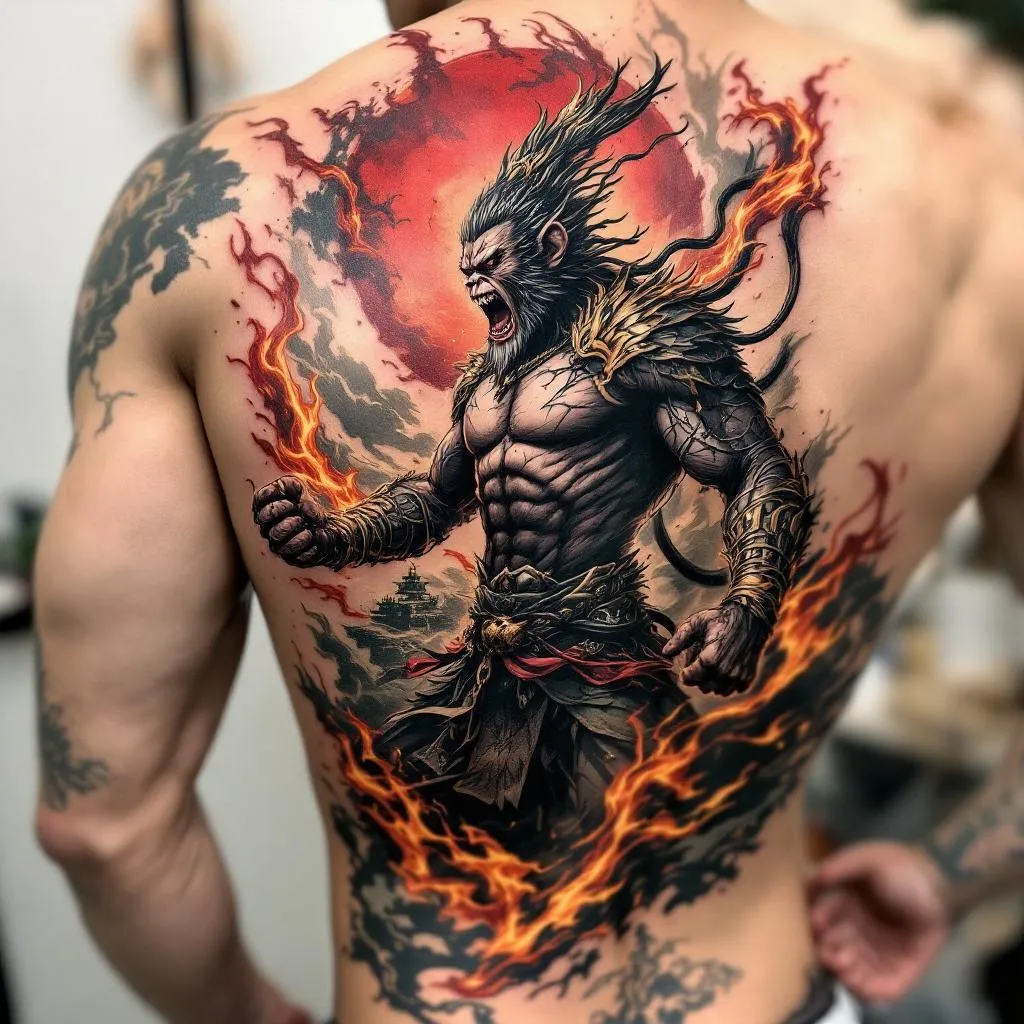
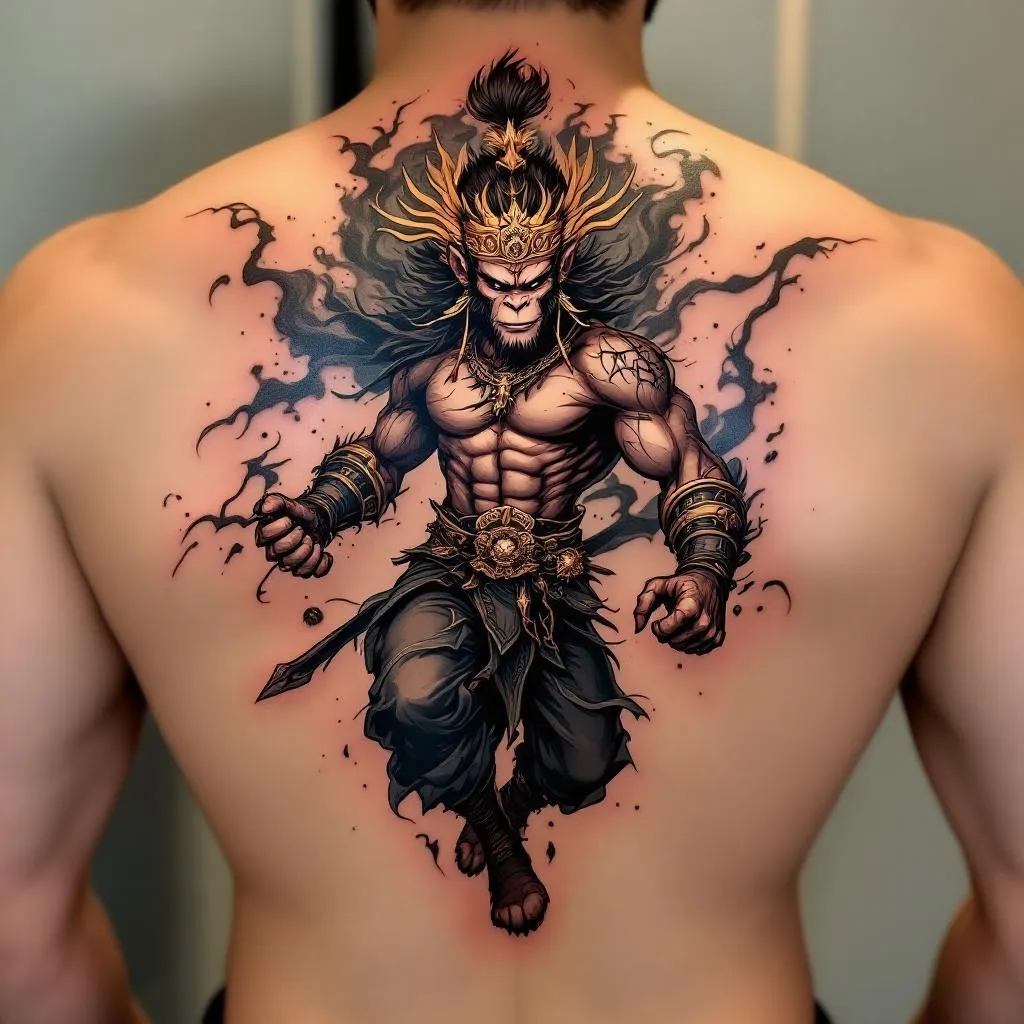
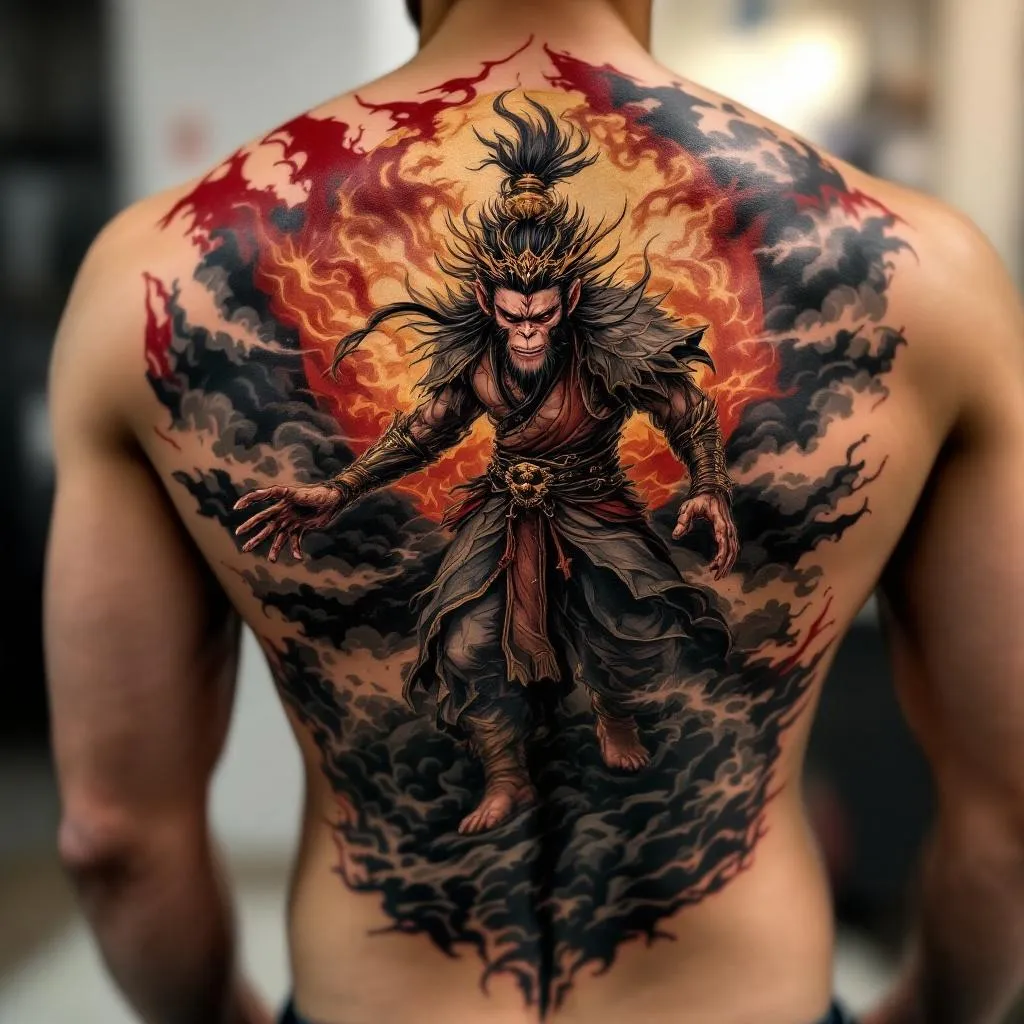


Try On
Preparing your design...
