 InkAI
InkAI 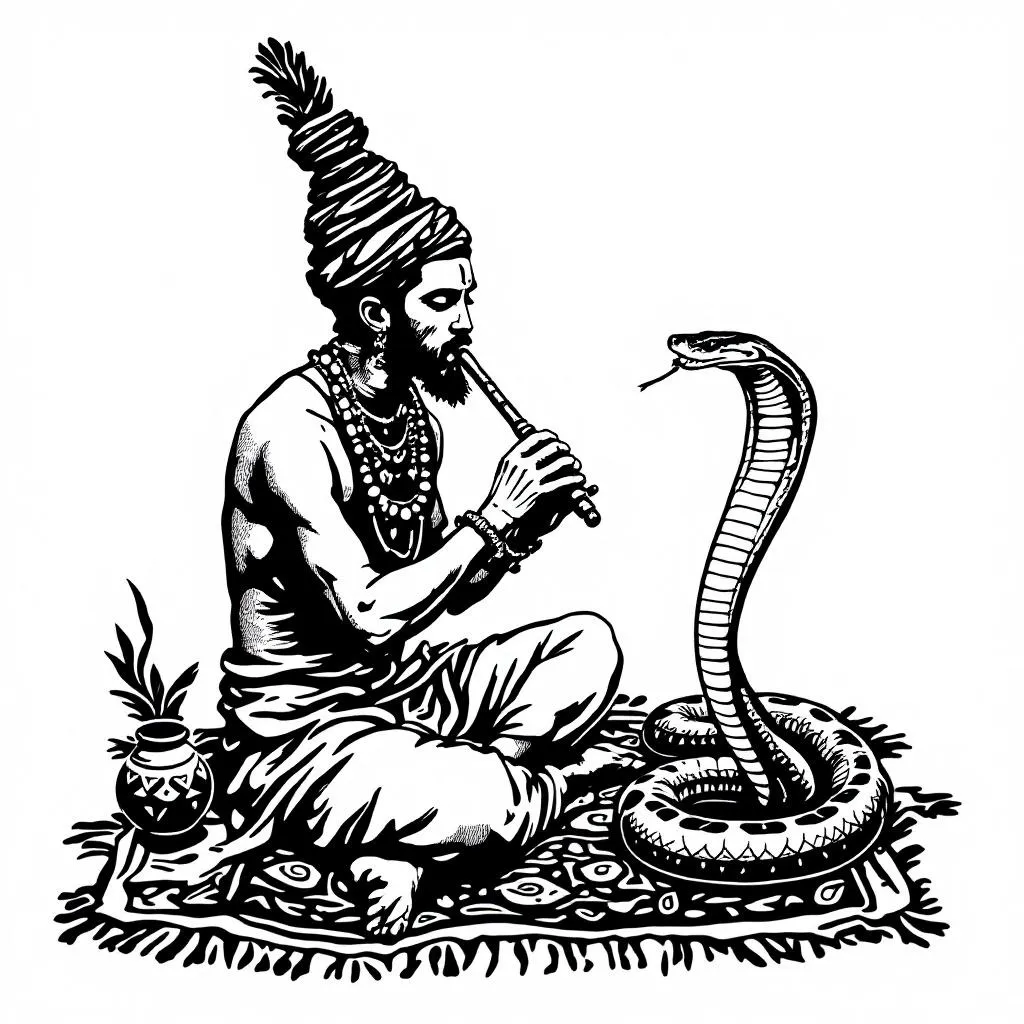
Snake Charmer, Cobra, Black Lines Tattoo
✨ Design Your Dream TattooDesign Description
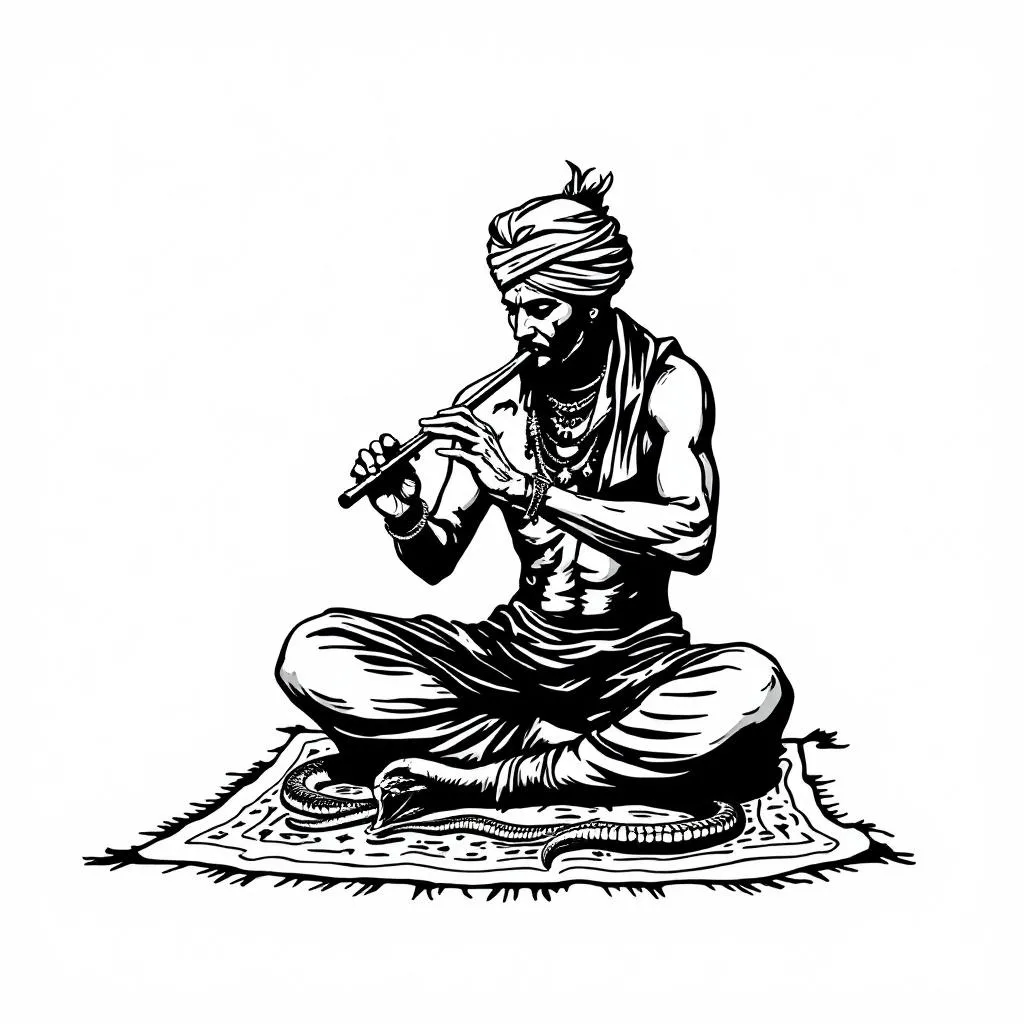
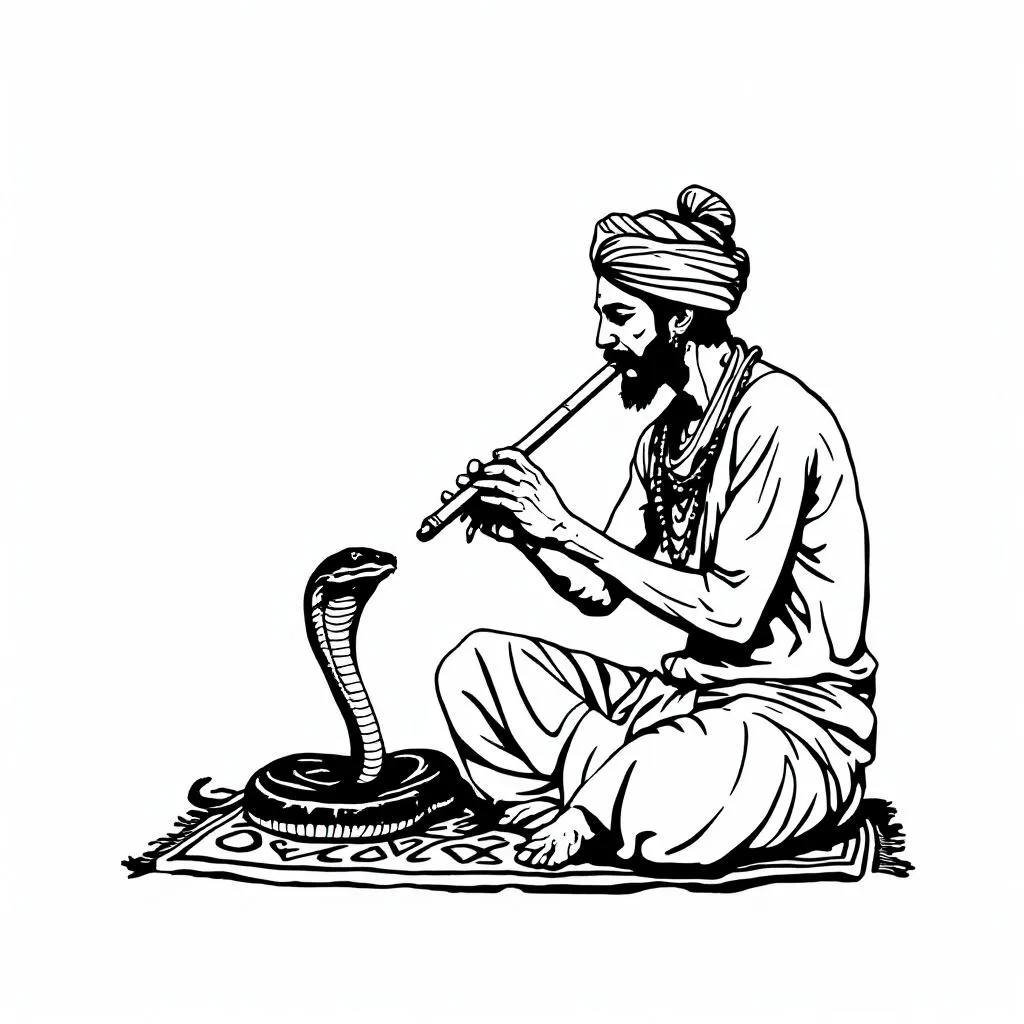
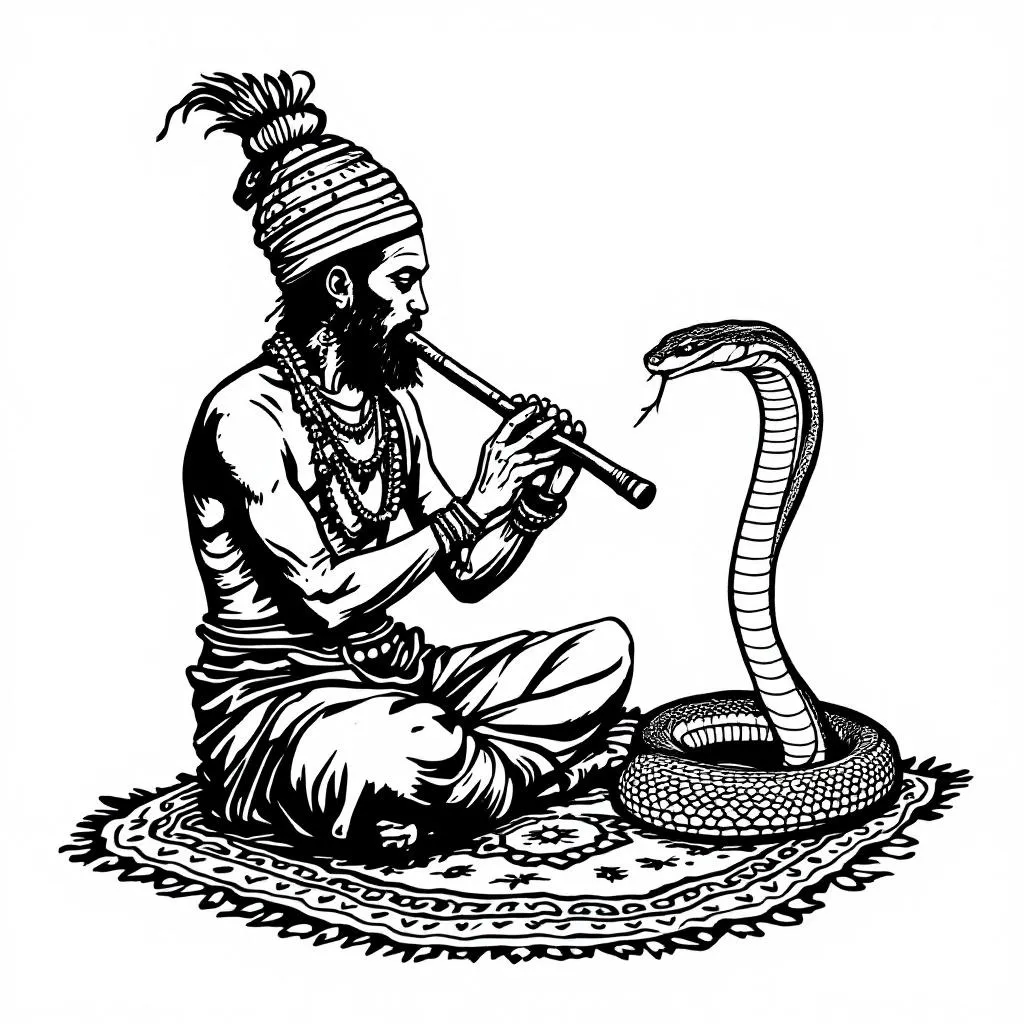
minimalist tattoo illustration of a snake charmer sitting on a rug, playing a flute to a cobra, simple bold black lines, hand-drawn look, flat shading, no background, clean outlines, high contrast, vintage linocut style, suitable for tattoo stencil, symmetrical composition, monochrome, vector look
Tattoo Meaning & Symbolism
This minimalist, vintage-linocut style image of a snake charmer seated on a patterned rug playing a flute to a cobra compresses several layered symbols into a single, high-contrast emblem. The charmer represents human will, art, and persuasion—someone who uses sound and skill to alter animal behavior—while the flute stands for communication, patience, and the power of subtle influence rather than brute force. The cobra, hood flared and attentive, carries associations of danger, protection, vigilance, and spiritual energy (from kundalini to guardian-serpent myths). The rug beneath the duo reads as a stage or threshold: a contained space where ritual, performance, and exchange take place. Together, the scene evokes the tension and harmony between control and wildness, art taming instinct, and a ceremonial meeting of two forces. The symmetrical composition and bold, hand-drawn black lines emphasize balance, timelessness, and an archetypal quality rather than a literal narrative.
Tattoo Style & Placement
This design’s clean outlines, flat shading, and vintage linocut look make it ideal as a stencil-ready monochrome tattoo. The bold black linework and high-contrast shapes will read clearly at moderate sizes; for the hand-drawn, vector-esque appearance to hold over time, keep individual line weights consistent and avoid tiny ornamental rug details smaller than about 0.5–1 mm. Placement that benefits from the symmetry includes the sternum or center chest (vertical alignment with the spine), the upper back between the shoulder blades, or along the inner forearm for a vertical, wearable panel. If scaled smaller (2–3 inches), prefer simpler rug patterns and slightly thicker linework and choose placements with flatter skin such as the outer forearm or calf. For a compact, intimate placement like the wrist or behind the ear, simplify the composition to the charmer and cobra only to preserve legibility.
Personal & Cultural Significance
The motif draws on historical practices associated with South Asian and North African snake charming, and it carries both folkloric resonance and the risk of exoticization. As a personal emblem, it can signify mastery over one’s fears, the transformative power of art and discipline, or a life lived balancing danger and poise. Culturally, acknowledge the design’s origins: snake charming has deep regional histories and was often filtered through colonial-era imagery. If you want the tattoo to honor those roots rather than reproduce a stereotype, consider adapting the rug motifs or charmer’s posture to reference a specific cultural textile or family pattern, or pair the image with a line of text or symbol meaningful to that region. Another approach is to frame the design as an archetype (performer and serpent) rather than a specific ethnic portrayal—keeping facial features and clothing stylized and symbolic supports that intention.
Similar Tattoo Ideas
- Minimalist charmer silhouette with single-line flute and coiled cobra
- Symmetrical cobra pair facing a central musician in linocut style
- Single cobra with patterned rug mandala in bold blackwork
- Kundalini-inspired serpent rising along a flute staff, vintage print look
- Small wrist panel: flute, snake hood, and simplified rug motif
- Negative-space linocut: white lines on black fill of charmer and serpent
- Heritage textile rug pattern under a stylized animal tamer, monochrome
Conclusion
This snake charmer tattoo—simple, bold, and rendered in a vintage linocut vein—functions as a striking personal emblem of dialogue between control and wildness, art and instinct. Its high-contrast, symmetrical design makes it both visually memorable and technically reliable as a tattoo stencil, while the rug, flute, and cobra offer rich opportunities for personal customization or cultural acknowledgement. Work with an experienced blackwork artist to finalize line weights, scale, and any culturally specific details so the final piece reads clearly on skin and reflects the intention you want it to carry.
Similar Designs You Might Like
Try On
Preparing your design...
